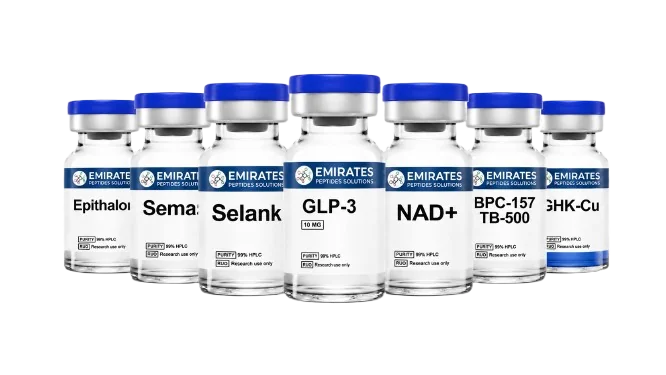

GLP-3 UAE: Complete Research Peptide Guide 2026

Last updated: 19 April 2026 · Reviewed by the Emirates Peptides Research Team · 12-minute read
GLP-3 has become one of the most-discussed investigational peptides in the UAE longevity and metabolic-research community. Unlike single-pathway compounds such as semaglutide or tirzepatide, GLP-3 acts on three distinct incretin receptors at once — producing data in published obesity trials that no earlier peptide has matched. This guide explains how GLP-3 works, how it compares to other GLP-1-class peptides available in Dubai, what to look for when sourcing it for research, and how Emirates Peptides manufactures, tests, and documents every vial.
What is GLP-3?
GLP-3 (development code LY3437943) is a synthetic 39-amino-acid peptide engineered by Eli Lilly. Chemically, it is a modified analog of the native peptide hormones GIP, GLP-1, and glucagon, fused into a single molecule with a C20 fatty-acid side chain that extends its half-life to roughly six days — long enough for convenient weekly dosing protocols in research settings.
In Phase 2 obesity trials published in the New England Journal of Medicine (Jastreboff et al., 2023), subjects receiving the highest GLP-3 dose achieved a mean weight reduction of 24.2% at 48 weeks — exceeding any previously reported outcome for a GLP-1-class peptide. This is why biohackers and metabolic researchers in the UAE have placed GLP-3 at the center of next-generation body-composition and healthspan protocols.
It is classified as investigational and is supplied exclusively for in-vitro research and laboratory use. It is not approved for human administration anywhere in the world as of April 2026.
How GLP-3 works: the triple agonist mechanism
Most weight-management peptides act on a single receptor. GLP-3 is different — it simultaneously activates three signaling pathways that regulate appetite, energy expenditure, and fat oxidation:
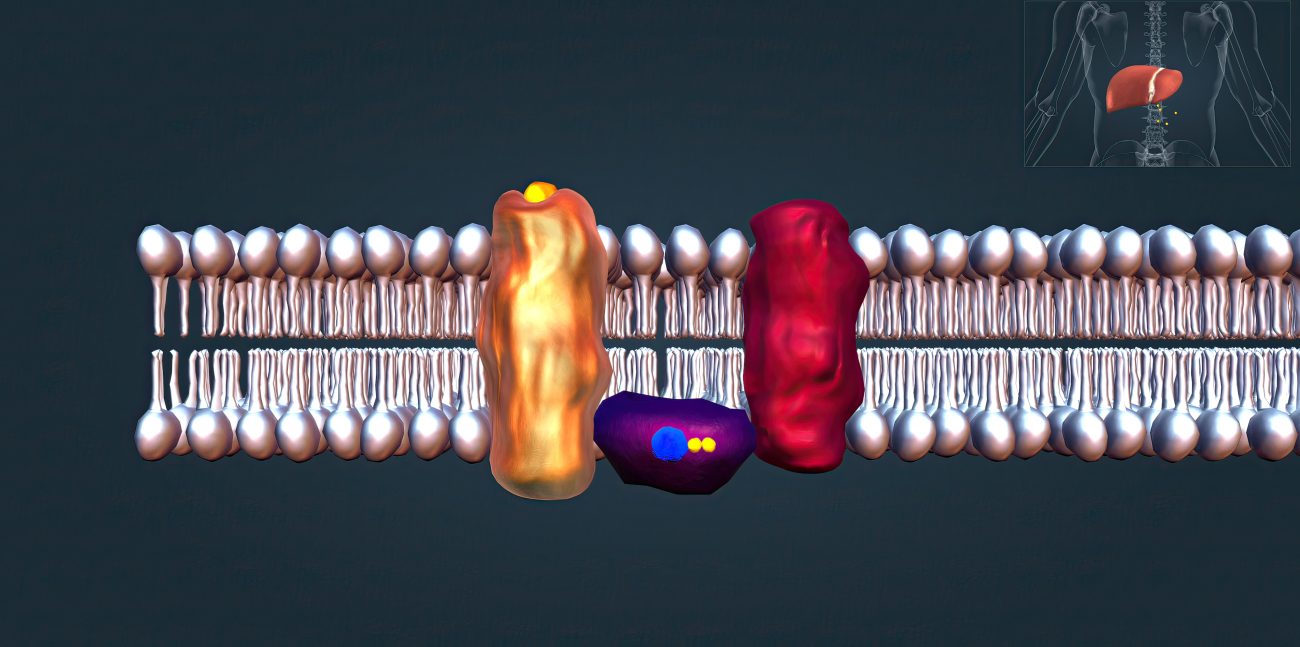
- GLP-1 receptor activation — slows gastric emptying, increases satiety signals to the hypothalamus, and enhances glucose-dependent insulin secretion.
- GIP receptor activation — improves insulin sensitivity and appears to dampen the nausea typical of pure GLP-1 agonists, potentially improving tolerability.
- Glucagon receptor activation — unique to GLP-3 among major GLP-1-class peptides. Glucagon signaling raises resting energy expenditure and promotes hepatic fat oxidation, accelerating adipose tissue loss.
The combined mechanism means research subjects typically experience not only appetite reduction (like semaglutide) and improved glucose handling (like tirzepatide) but also an increase in baseline metabolic rate — a feature that has captured the attention of biohackers tracking body composition rather than scale weight alone.
GLP-3 vs Tirzepatide vs Semaglutide

For researchers comparing candidates, here is how GLP-3 sits against the two most widely studied competitors:
| Feature | GLP-3 (LY3437943) | Tirzepatide (Mounjaro) | Semaglutide (Ozempic / Wegovy) |
|---|---|---|---|
| Receptor targets | GIP + GLP-1 + Glucagon | GIP + GLP-1 | GLP-1 only |
| Phase 2 weight reduction (top dose, 48 weeks) | 24.2% | ~20.9% | ~14.9% |
| Half-life | ~6 days | ~5 days | ~7 days |
| Approval status (April 2026) | Investigational only | FDA approved (Mounjaro / Zepbound) | FDA approved (Ozempic / Wegovy) |
| Energy-expenditure effect | Yes (via glucagon) | Minimal | Minimal |
| Typical research dose range | 2–12 mg/week | 2.5–15 mg/week | 0.25–2.4 mg/week |
The clinical takeaway: GLP-3 produces the largest Phase 2 weight-loss magnitude and adds a metabolic-rate lever the other two compounds lack. For biohackers prioritizing body recomposition rather than simple weight loss, this is the differentiator that matters most.
Why UAE biohackers choose GLP-3
Our customer data at Emirates Peptides is concentrated in high-income UAE residential zones — Dubai Marina, Dubai Hills, Al Furjan, and Abu Dhabi. This population is not buying GLP-3 as a “weight-loss pill.” They treat it as one component of a metabolic stack that may also include MOTS-c (mitochondrial optimization), GHK-Cu (skin and connective tissue), and Kisspeptin (hormonal balance). The reason for GLP-3’s popularity within this group comes down to four practical advantages:

- Measurable body-composition outcomes. Researchers report visible recomposition — reduced visceral fat alongside preserved lean mass — on weekly protocols combined with resistance training.
- Weekly-dose convenience. The 6-day half-life supports Sunday or Monday injections that align with working-week schedules common to UAE residents.
- Appetite regulation that respects social life. At dose titrations tolerable to most subjects, GLP-3 reduces hunger without eliminating the ability to enjoy business dinners and weekend gatherings — a lifestyle priority in Dubai.
- Metabolic-rate support. The glucagon component of GLP-3’s activity is what separates it from tirzepatide for longevity-focused users who track resting metabolic rate through wearables such as Oura, Whoop, or Apple Watch.
Research dosing protocols
Reported research protocols for GLP-3 typically begin at low weekly doses (around 2 mg) and titrate upward over 12–20 weeks to mitigate gastrointestinal side effects. Published trial escalation looks roughly like this:
- Weeks 1–4: 2 mg weekly
- Weeks 5–8: 4 mg weekly
- Weeks 9–12: 6 mg weekly
- Weeks 13–20: 8 mg weekly
- Weeks 21+: 10–12 mg weekly (top dose in Phase 2)
Researchers should note that these dose levels come from human clinical trials conducted by Eli Lilly. GLP-3 supplied by Emirates Peptides is provided strictly for in-vitro research and is not to be used for human administration. Laboratory protocols — cell culture studies, receptor-binding assays, and pharmacokinetic comparisons — typically use concentrations derived from pure peptide mass rather than directly mapped human doses.
Quality standards: what to verify when sourcing GLP-3 in the UAE
The UAE peptide-research market has expanded rapidly since late 2024, and so has the number of suppliers. Not all of them publish verifiable quality data. Before purchasing GLP-3 — or any research peptide — verify the following:
- HPLC purity ≥ 99%. High-Performance Liquid Chromatography separates the target peptide from fragments, truncations, and oxidized species. Anything below 98% purity introduces unacceptable variability into research outcomes.
- Mass-spectrometry confirmation. Purity is only half the equation. Mass spectrometry confirms that the identity of the purified peptide matches the published sequence of GLP-3. Without it, you cannot rule out substitution with a similar-looking but functionally different compound.
- Batch-specific Certificate of Analysis (COA). A generic “99% pure” claim is not evidence. A COA ties a specific analytical result to a specific manufacturing batch and a specific vial. Emirates Peptides labels every vial with its batch number so researchers can match it to its analytical data.
- Lyophilization and inert-atmosphere sealing. GLP-3 is a fragile peptide. Exposure to moisture or oxygen during filling destroys potency before a vial is even reconstituted. Proper freeze-drying under inert nitrogen is non-negotiable.
- Cold-chain handling for UAE delivery. Summer temperatures in Dubai and Abu Dhabi routinely exceed 40°C. Peptide shipments must travel in insulated packaging with cold packs. Emirates Peptides uses same-day cold-chain delivery across Dubai and next-day delivery across all emirates.
Safety profile and side-effect considerations
Published clinical data on GLP-3 identifies a side-effect profile broadly similar to other GLP-1-class peptides, with the expected gastrointestinal events leading the list. In Phase 2, the most commonly reported events were nausea, diarrhea, and reduced appetite. A minority of subjects experienced vomiting or constipation, and these were most frequent during dose-titration weeks rather than at steady state.
A GLP-3-specific observation worth noting: because of its glucagon-receptor component, some subjects experienced a modest elevation in resting heart rate (typically 5–10 bpm) that attenuated over time. This is a direct consequence of increased resting energy expenditure and is expected within the mechanism of action. Researchers should track it rather than be surprised by it.
As with any investigational compound, adverse-event reporting and monitoring are the responsibility of the qualified research professional conducting the study.
Storage, reconstitution, and handling

Lyophilized GLP-3 supplied by Emirates Peptides is stable at 2–8°C (standard refrigerator temperature) for up to 24 months from manufacturing date. Long-term storage at −20°C extends stability further. Once reconstituted with bacteriostatic water, the solution retains potency for approximately 28 days when kept refrigerated and protected from light.
For reconstitution, the standard approach uses bacteriostatic water for injection — not sterile saline, not tap water. The 0.9% benzyl alcohol preservative in bacteriostatic water prevents microbial growth through the 28-day in-use window. Emirates Peptides supplies bacteriostatic water alongside peptide orders for researchers who prefer a single-supplier workflow.
Frequently asked questions
Is GLP-3 legal to purchase in the UAE?
GLP-3 supplied by Emirates Peptides is sold strictly for laboratory and in-vitro research use. It is not approved for human administration by any regulatory authority, including the UAE Ministry of Health and Prevention. Purchasers must comply with all applicable local regulations governing research-chemical import, storage, and use.
How quickly is GLP-3 delivered in the UAE?
Emirates Peptides offers same-day cold-chain delivery across Dubai for orders placed before 4 PM, next-day delivery across all seven emirates, and expedited shipping to neighboring GCC countries on request.
How does GLP-3 differ from Mounjaro?
Mounjaro is the US brand name for tirzepatide, a dual-agonist peptide acting on GIP and GLP-1 receptors. GLP-3 is a triple agonist that adds glucagon-receptor activation. In Phase 2 trials, GLP-3 produced greater weight reduction than tirzepatide at the highest dose. GLP-3 is still investigational; tirzepatide is approved.
What is the purity standard of GLP-3 supplied by Emirates Peptides?
Every batch is independently tested by High-Performance Liquid Chromatography and verified at ≥99% purity. Each vial is lyophilized under controlled conditions, sealed under inert atmosphere, and labeled with a batch number and analytical data that researchers can match to the corresponding Certificate of Analysis.
What vial sizes are available?
GLP-3 is offered in 10 mg, 20 mg, and 30 mg lyophilized vials. The 30 mg vial is the most commonly ordered size for extended research protocols and offers the most efficient per-milligram pricing.
Can GLP-3 be stacked with other peptides?
Research protocols have explored combinations with MOTS-c (mitochondrial-derived peptide targeting insulin sensitivity and cellular energy homeostasis) and Kisspeptin (reproductive hormone peptide supporting endocrine baseline). Emirates Peptides supplies all three as separate research-grade products; stack design is the responsibility of the qualified research professional.
How is GLP-3 reconstituted?
Lyophilized GLP-3 is reconstituted with bacteriostatic water. The preservative (0.9% benzyl alcohol) maintains sterility through a 28-day in-use window when the reconstituted vial is refrigerated.
Where can I see the COA for my batch?
Batch-specific COAs are available on request. Email the batch number printed on your vial label to our research team and we will supply the matching analytical record.
Get research-grade GLP-3 in the UAE
Emirates Peptides offers GLP-3 in 10 mg, 20 mg, and 30 mg lyophilized vials, each independently HPLC-verified, sealed under inert atmosphere, and supplied with cold-chain delivery across the UAE.
View GLP-3 product page & pricing →
Selected references
- Jastreboff AM, Kaplan LM, Frías JP, et al. “Triple-Hormone-Receptor Agonist GLP-3 for Obesity — A Phase 2 Trial.” New England Journal of Medicine. 2023;389(6):514–526.
- Rosenstock J, Frias J, Jastreboff AM, et al. “GLP-3, a GIP/GLP-1/glucagon receptor agonist, for people with type 2 diabetes: a randomised, double-blind, placebo- and active-controlled, parallel-group, phase 2 trial.” The Lancet. 2023;402(10401):529–544.
- Coskun T, Urva S, Roell WC, et al. “LY3437943, a novel triple glucagon, GIP, and GLP-1 receptor agonist for glycemic control and weight loss: From discovery to clinical proof of concept.” Cell Metabolism. 2022;34(9):1234–1247.
Disclaimer: Emirates Peptides supplies GLP-3 as a research-grade lyophilized peptide for laboratory and in-vitro research only. The content of this guide is educational and does not constitute medical advice. GLP-3 is not approved for human administration. Researchers, clinicians, and institutions are responsible for compliance with applicable local and international regulations.
FROM INSTAGRAM