
Blog

For research use only. Material is supplied as a lyophilized reference compound with HPLC purity verification.
- “GLP-3” is a catalogue term; triple agonist is the scientific description
- Phase 2 produced the first substantial human evidence
- What changed in the 2026 Phase 3 program?
- Three research questions remain more useful than the hype
- How UAE laboratories should interpret a GLP-3 listing
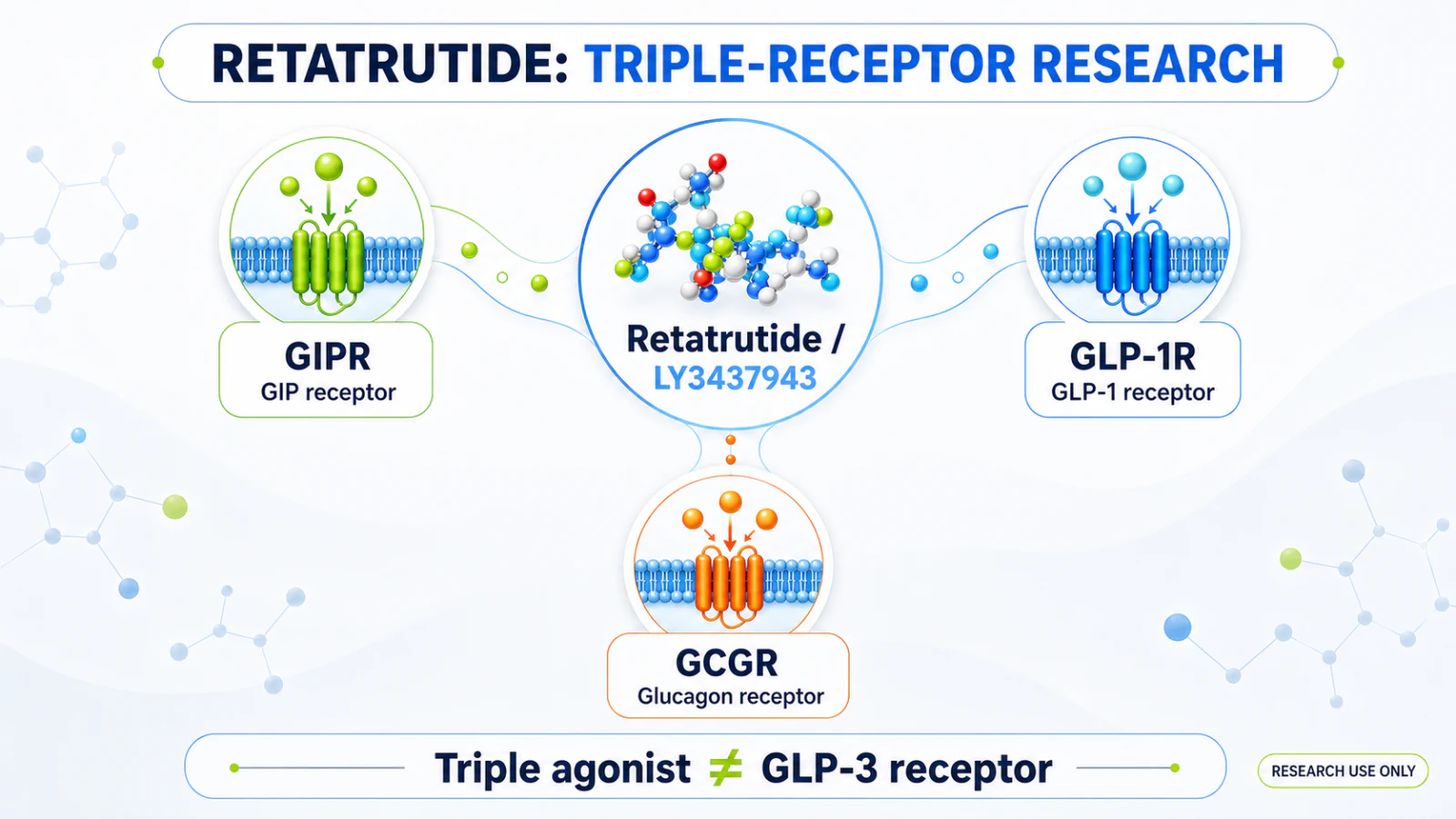
Retatrutide is best described as an investigational triple-receptor agonist, not as a drug that acts on a receptor called “GLP-3.” The GLP-3 name is a convenient catalogue label used by some research suppliers for material associated with triple-agonist research. The scientific literature describes retatrutide, also known as LY3437943, as one molecule designed to activate the GIP, GLP-1 and glucagon receptors.
This distinction matters. A short label can help researchers find a product family, but it should not replace the compound identity, analytical documentation or published terminology. This August 2026 update reviews where retatrutide research stands, what Phase 2 studies established, what has been reported from Phase 3, and which questions remain open. It is educational information for qualified laboratory researchers, not medical advice or a human-use protocol.
01 · “Glp-3”
“GLP-3” is a catalogue term; triple agonist is the scientific description
There is no standard “GLP-3 receptor” in the retatrutide mechanism. The three relevant targets are the glucose-dependent insulinotropic polypeptide receptor (GIPR), glucagon-like peptide-1 receptor (GLP-1R) and glucagon receptor (GCGR). The “three” refers to the number of receptor systems engaged by one peptide.
The original discovery paper described LY3437943 as having balanced activity at the glucagon and GLP-1 receptors, with greater activity at the GIP receptor in the experimental systems used. Preclinical work examined how these signals might combine changes in energy intake, glucose regulation and energy expenditure. Those observations created the rationale for clinical development, but they do not mean every material sold under a GLP-3 label is analytically identical to Lilly’s clinical candidate.
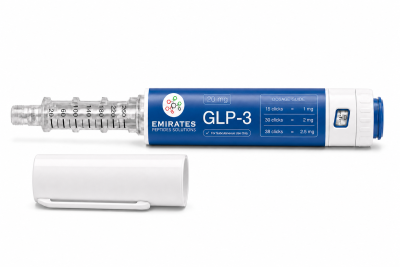
For a simpler introduction to the terminology, read our plain-language GLP-3 explainer. Researchers looking at a catalogue listing can also review the separate GLP-3 research product page. Keeping the educational and commercial pages separate prevents the product label from being mistaken for a universal scientific name.
02 · Phase
Phase 2 produced the first substantial human evidence
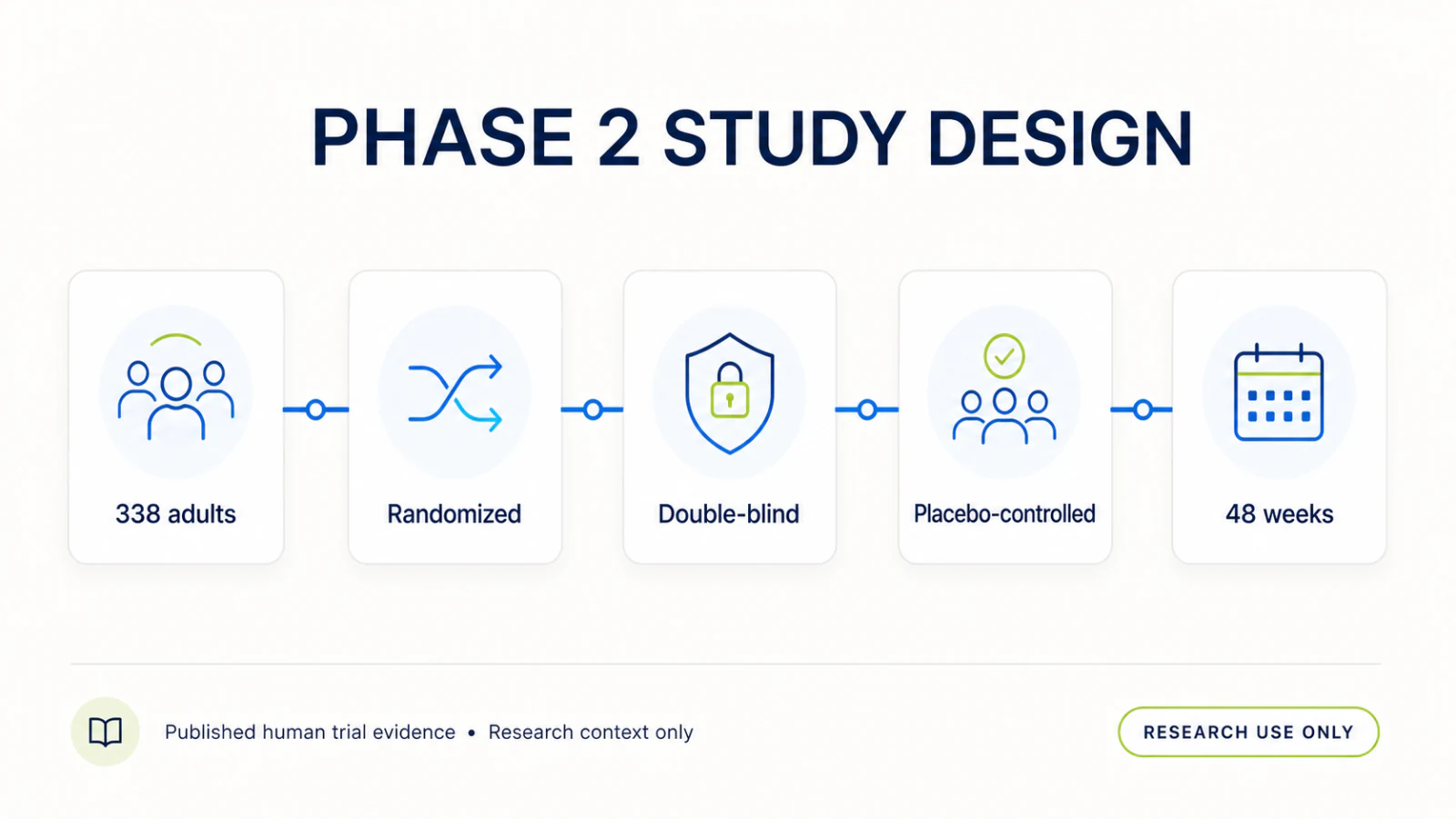
The most frequently cited Phase 2 obesity study was a double-blind, randomized, placebo-controlled trial involving 338 adults. It evaluated several retatrutide groups over 48 weeks. The primary endpoint was percentage change in body weight at 24 weeks, with additional outcomes measured at 48 weeks.
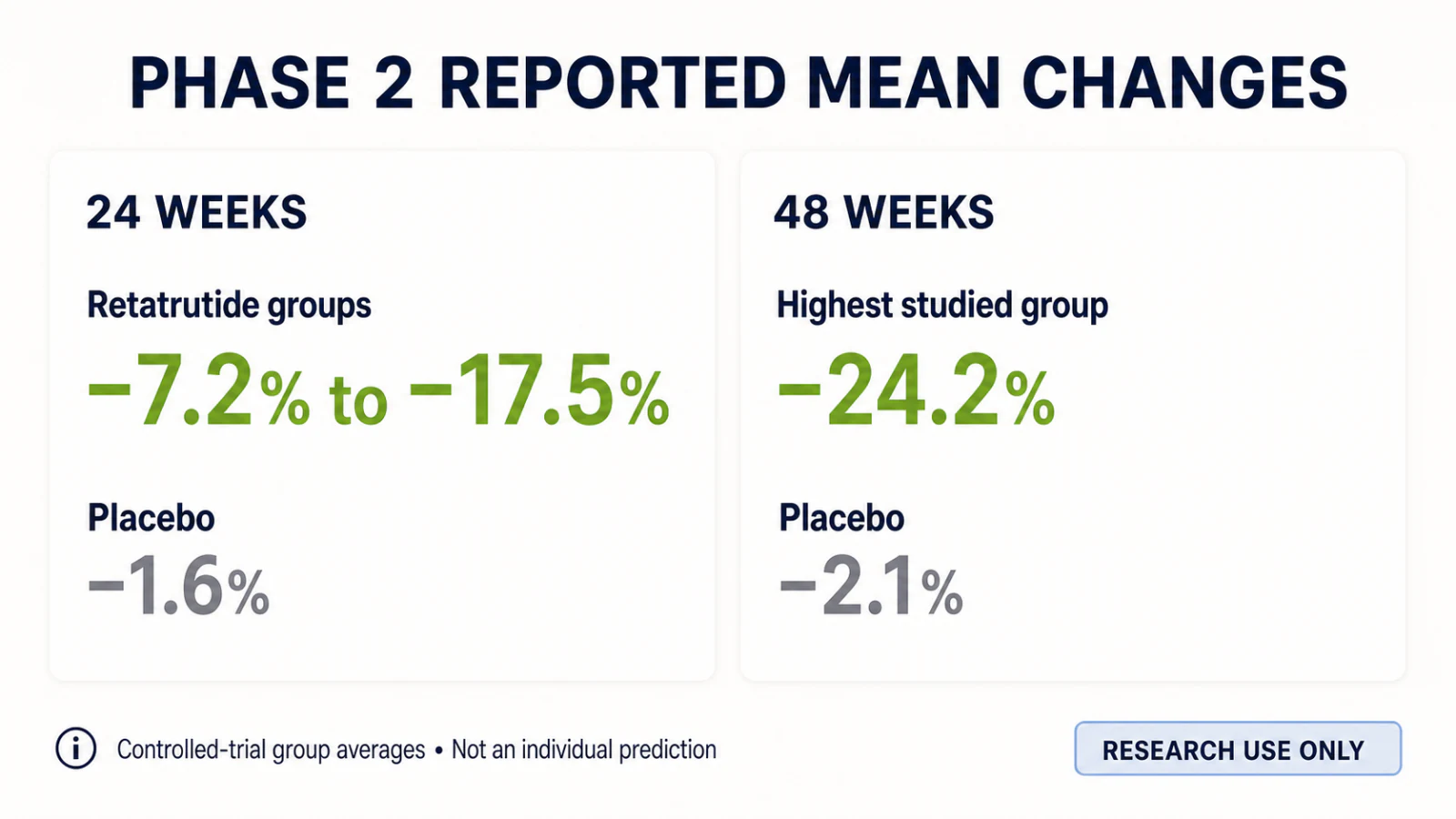
Published results showed a dose-response pattern. At 24 weeks, the reported mean changes ranged from 7.2% in the lowest studied group to 17.5% in the highest group, compared with 1.6% for placebo. At 48 weeks, the highest group reached a reported mean change of 24.2%, compared with 2.1% for placebo. These numbers describe group averages in a controlled clinical trial. They are not a prediction for an individual, a recommendation, or evidence that an independently sourced research material will reproduce the same result.
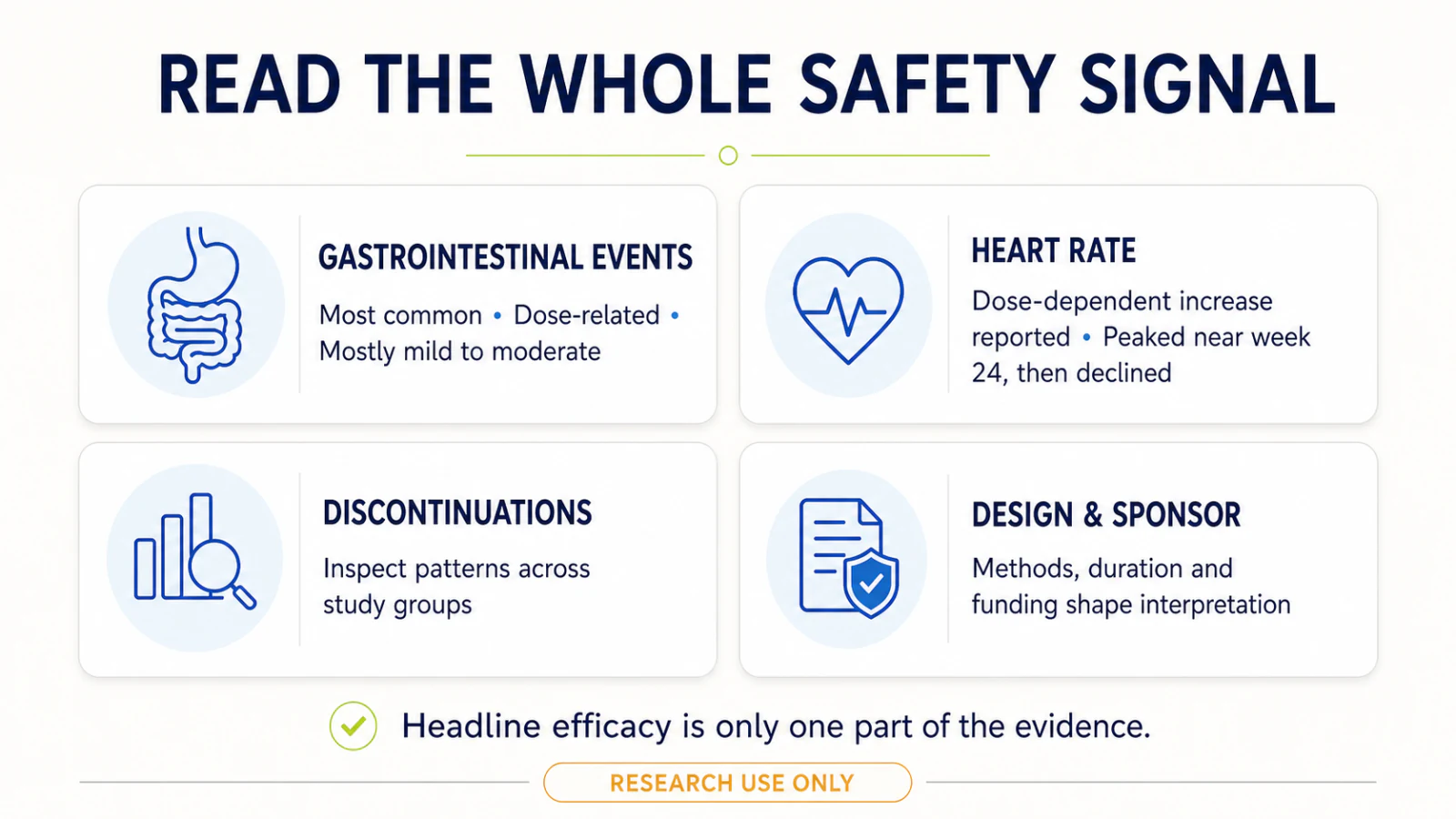
The safety findings are equally important. Gastrointestinal events were the most common and were described as dose-related and mostly mild to moderate. The investigators also reported dose-dependent increases in heart rate that peaked around week 24 and later declined. A proper reading of the study therefore includes adverse-event patterns, discontinuations, trial design and sponsor involvement—not only the headline efficacy result.
A separate randomized Phase 2 trial studied people with type 2 diabetes and compared retatrutide with placebo and an active control. It reported changes in glycated haemoglobin, fasting glucose and body weight. Together, the obesity and diabetes studies supported larger Phase 3 programs, but Phase 2 trials cannot by themselves establish broad long-term safety or performance across every population.
03 · Changed
What changed in the 2026 Phase 3 program?
Latest research insights. No spam, ever.
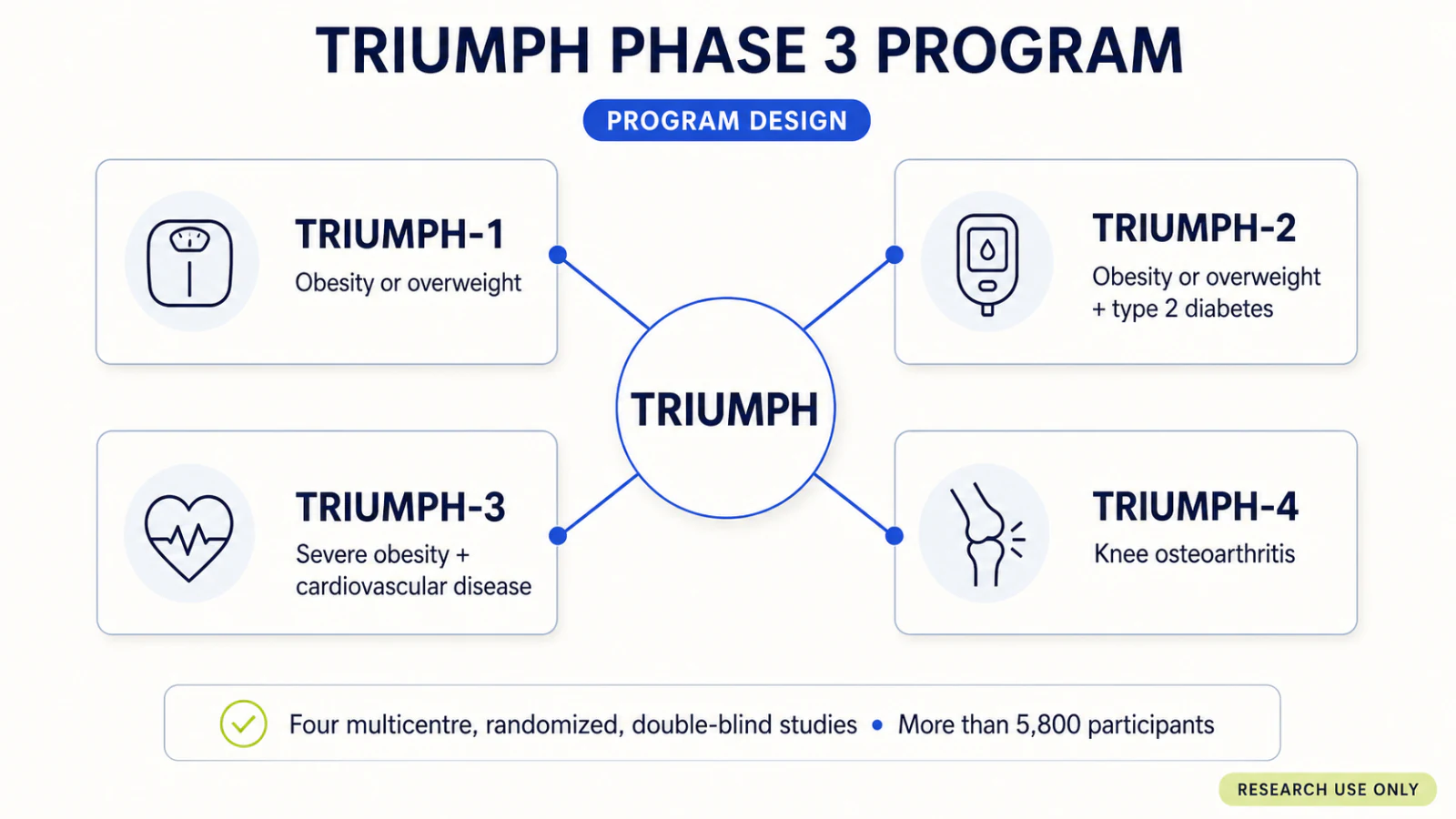
The TRIUMPH program moved retatrutide research into large, multicentre Phase 3 studies. A peer-reviewed design paper describes four randomized, double-blind studies involving more than 5,800 participants. The program includes weight-management studies and nested investigations involving obstructive sleep apnoea, knee osteoarthritis and cardiovascular disease. This basket-style design allows related questions to be assessed under a coordinated program while retaining separate endpoints.
ClinicalTrials.gov lists TRIUMPH-1 under identifier NCT05929066 and marks the study completed, with the record updated in June 2026. During May and July 2026, Lilly announced topline findings from several Phase 3 studies. Those announcements are relevant current information, but they are not a substitute for full peer-reviewed reports. Topline releases normally provide selected endpoints; they may not include the complete statistical analysis, subgroup detail, adverse-event tables or methodological discussion needed for independent assessment.
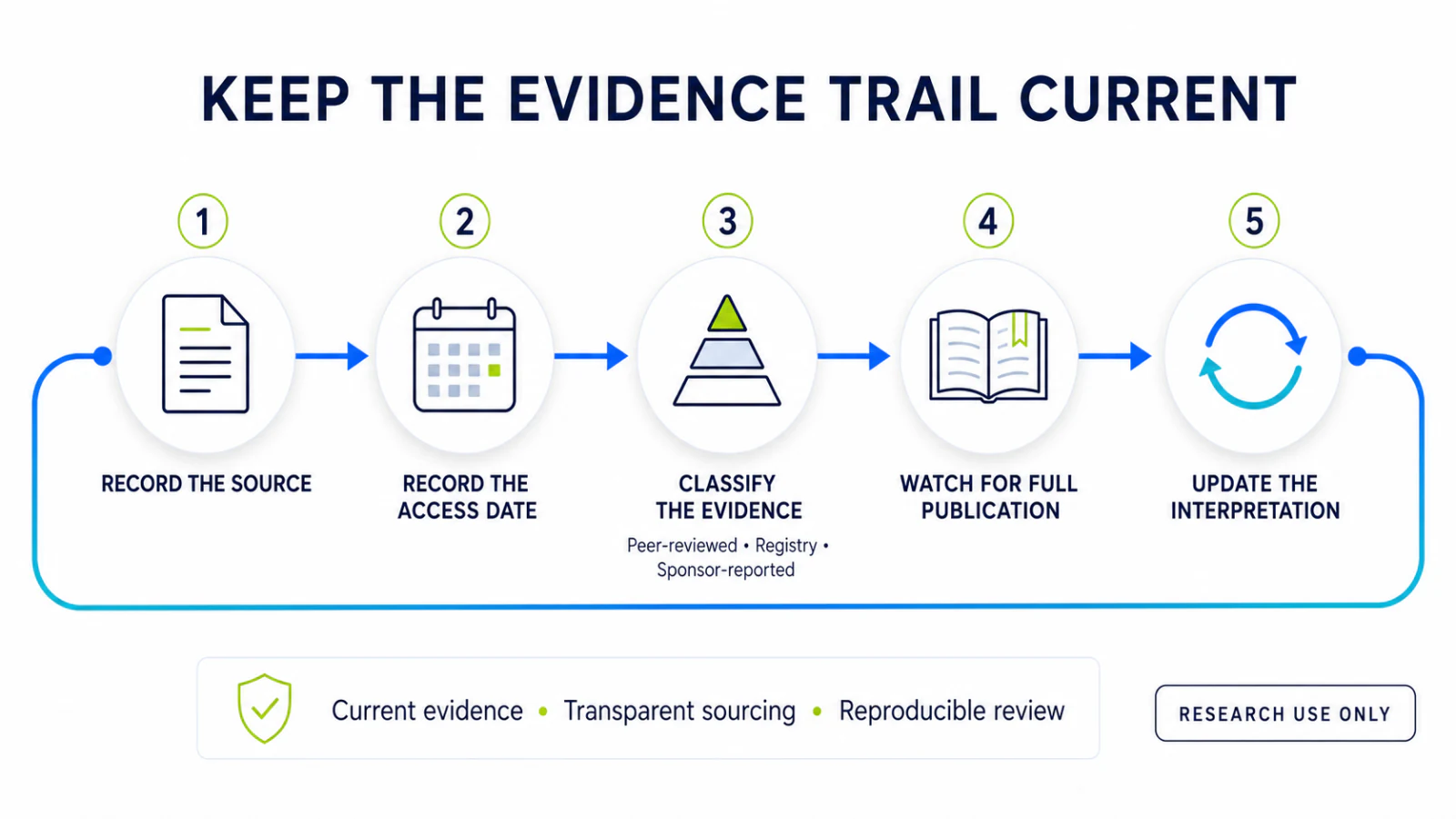
That evidence hierarchy should stay visible:
Peer-reviewed papers
provide methods, prespecified outcomes, limitations and detailed results that can be critically assessed.
Clinical-trial registries
show planned endpoints, study status and record history, but registry completion does not itself prove efficacy or approval.
Company topline announcements
provide timely information, although the sponsor selects what is initially disclosed.
Supplier pages
describe catalogue material and quality documentation; they are not clinical evidence.
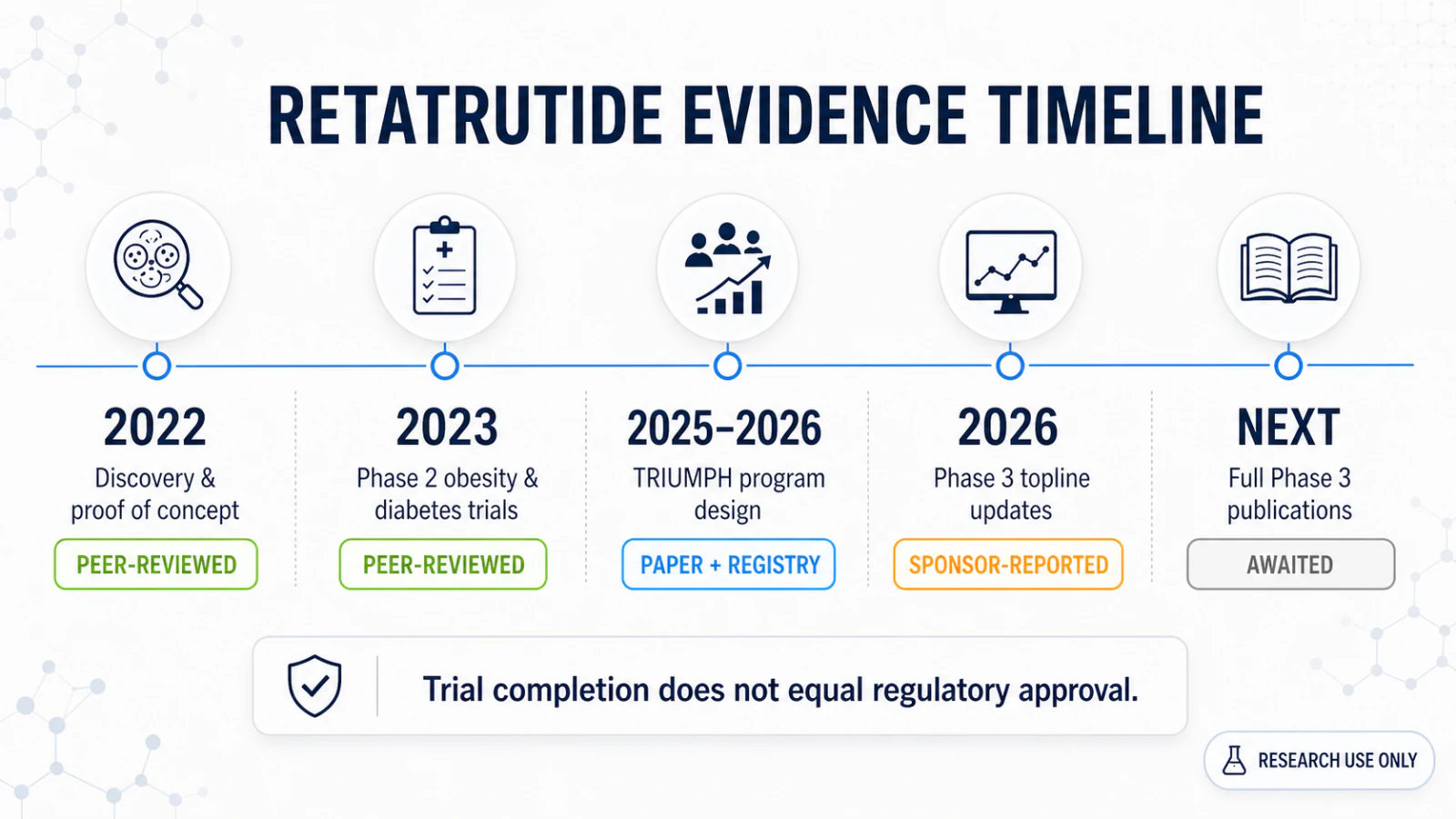
As of August 2026, Lilly continues to describe retatrutide as investigational and not approved by any regulatory agency. Researchers should verify that status from current primary sources because development and regulatory timelines change.
04 · Three
Three research questions remain more useful than the hype
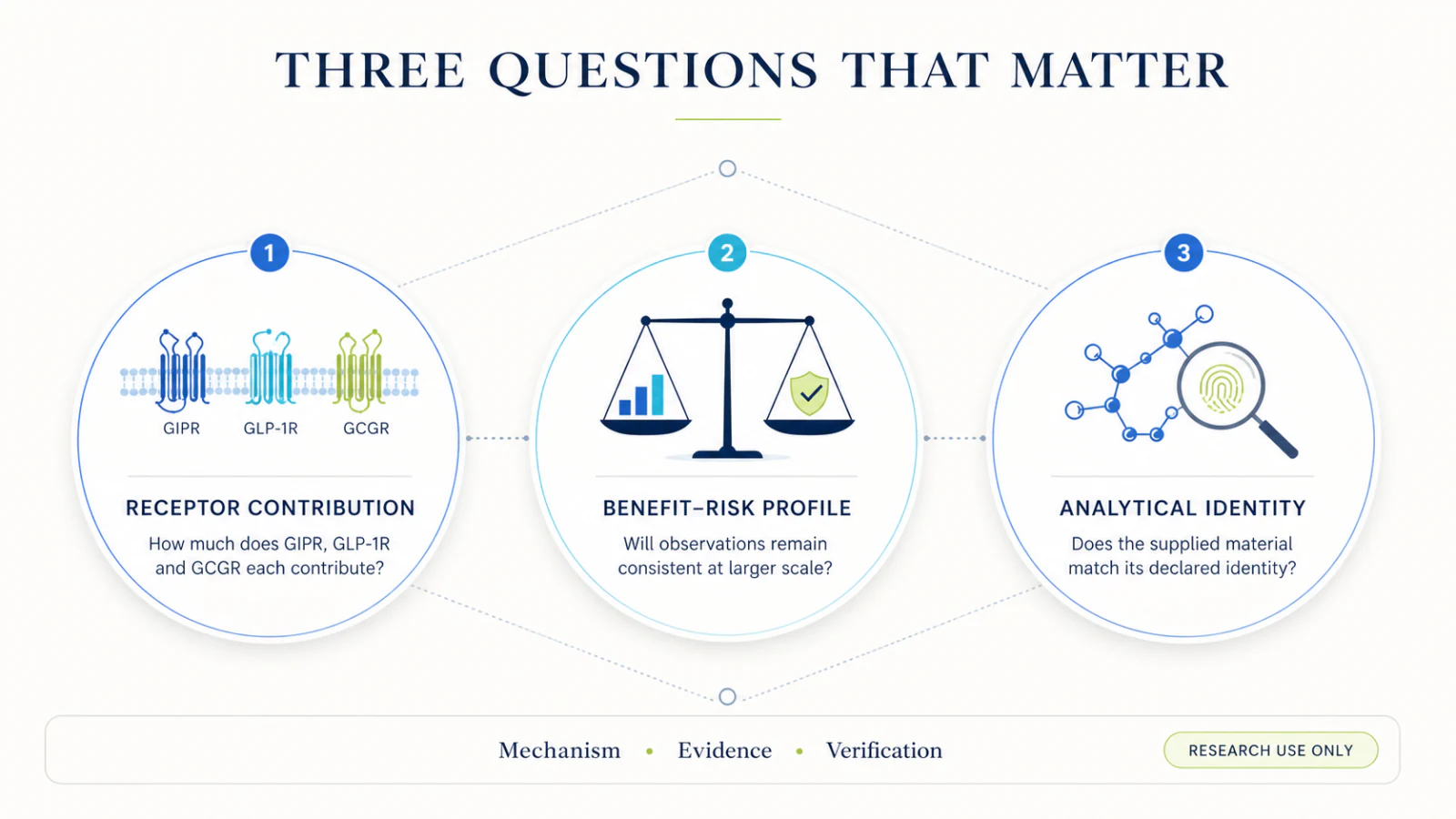
1. How much does each receptor contribute?
A triple agonist is not simply three familiar effects added together. Receptor potency, exposure, tissue distribution and signalling bias can change the combined response. Experimental systems may also produce different apparent activity ratios. Mechanistic studies that isolate GIPR, GLP-1R and GCGR contributions remain important for explaining observed metabolic effects.
2. Will the benefit-risk profile remain consistent?
Larger and longer studies can detect outcomes that smaller trials cannot. Researchers should watch complete adverse-event data, discontinuation patterns, cardiovascular observations, changes in heart rate and results across relevant subgroups. A larger efficacy estimate does not automatically produce a better overall benefit-risk assessment.
3. Can independent laboratories reproduce the analytical identity?
Clinical results apply to the characterized investigational molecule used in those trials. They cannot validate an unrelated vial or pen carrying a similar label. Laboratory procurement therefore requires a separate analytical question: does the supplied material match its declared identity and specification?
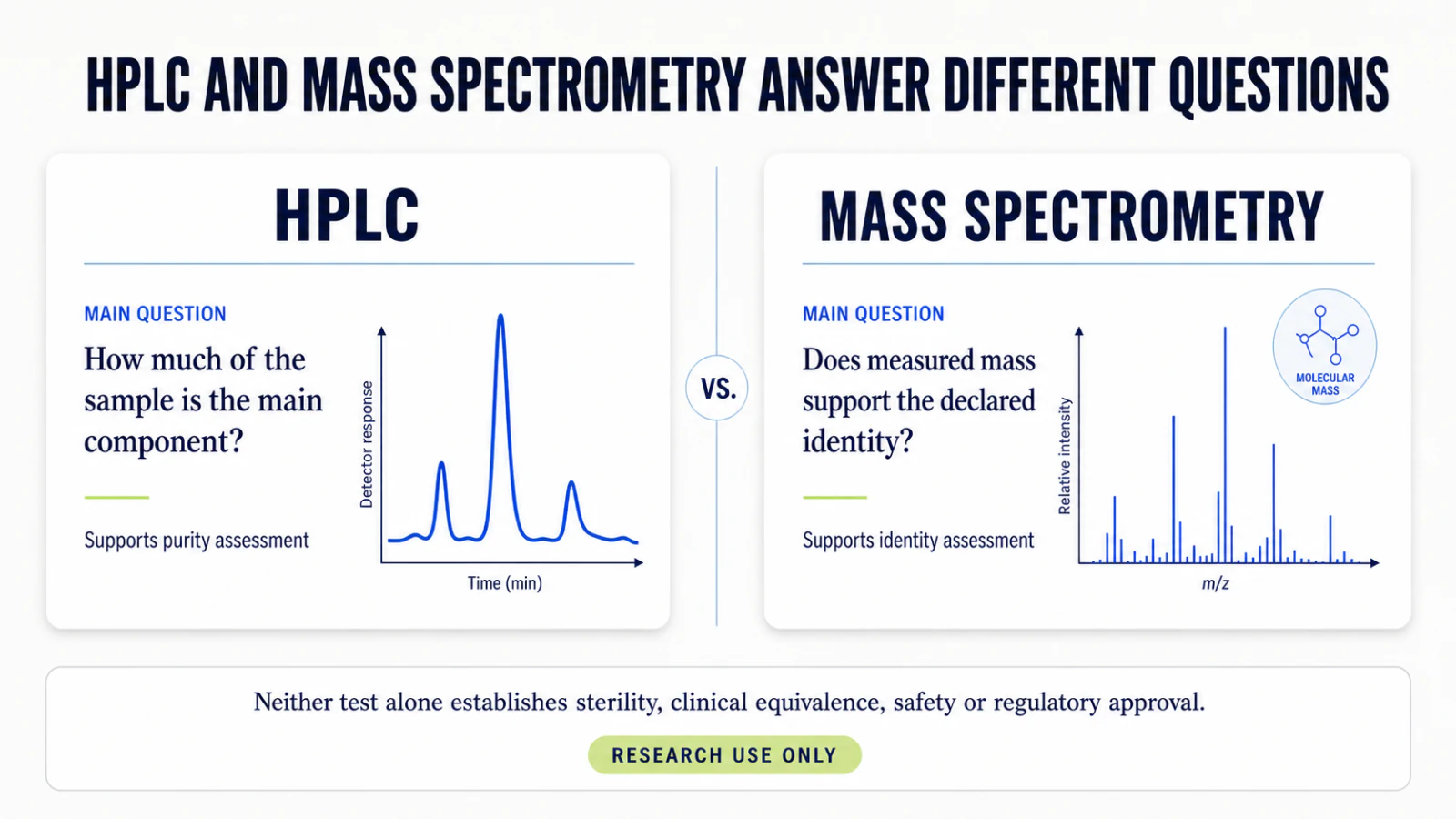
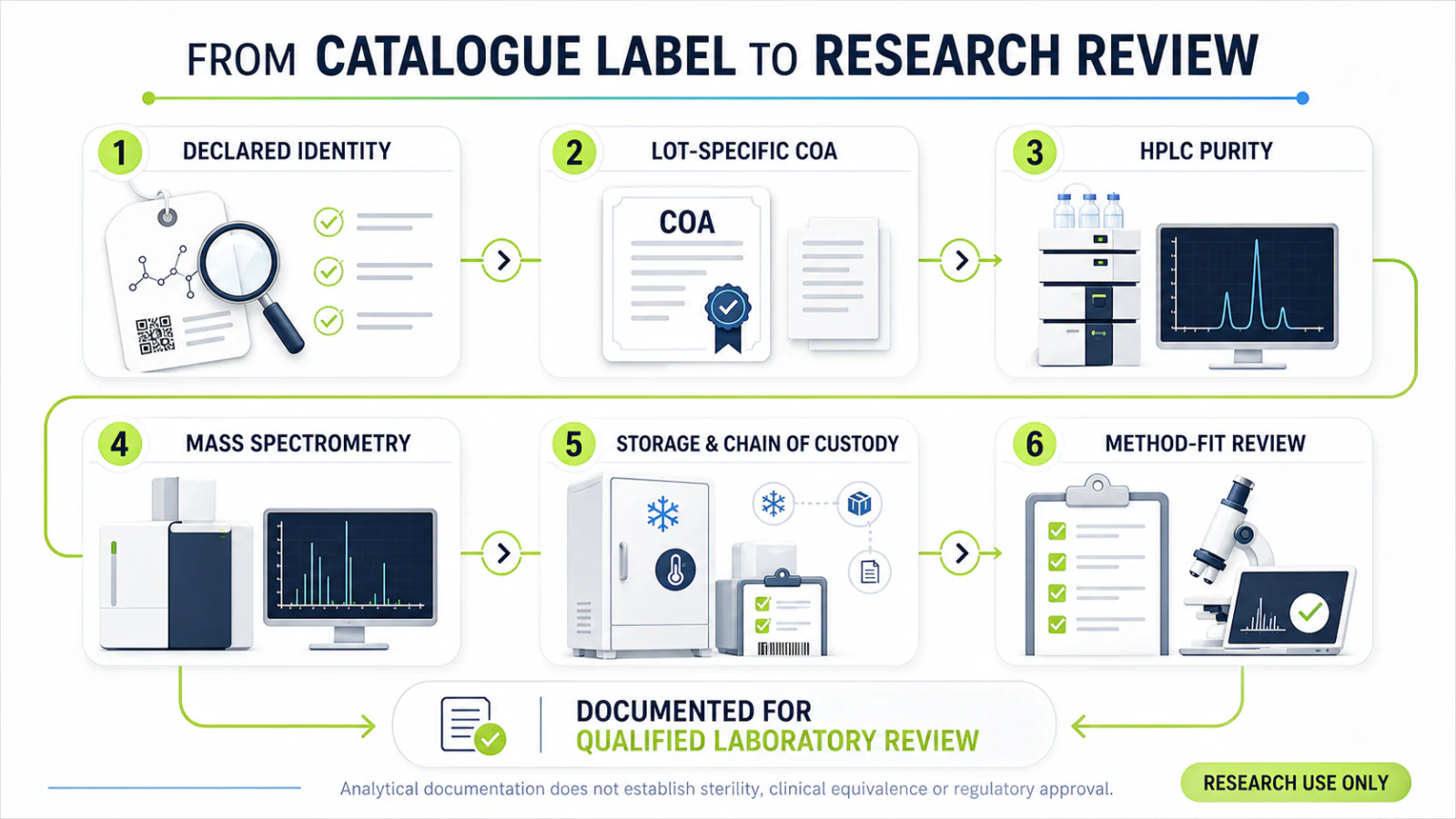
A useful documentation review checks the lot number, test date, method, chromatogram or spectrum, reported purity and whether the certificate can be connected to the physical batch. HPLC can help assess purity, while mass spectrometry can support identity; neither test alone establishes sterility, clinical equivalence, safety or regulatory approval. Storage history and chain of custody also affect whether a document meaningfully represents the material received.
05 · Laboratories
How UAE laboratories should interpret a GLP-3 listing
A GLP-3 catalogue page should be read as a research-product description. It should not be interpreted as authorization for treatment, personal use or clinical substitution. Qualified UAE laboratories should define the intended in-vitro or analytical work, review institutional requirements and select controls appropriate to their methods.
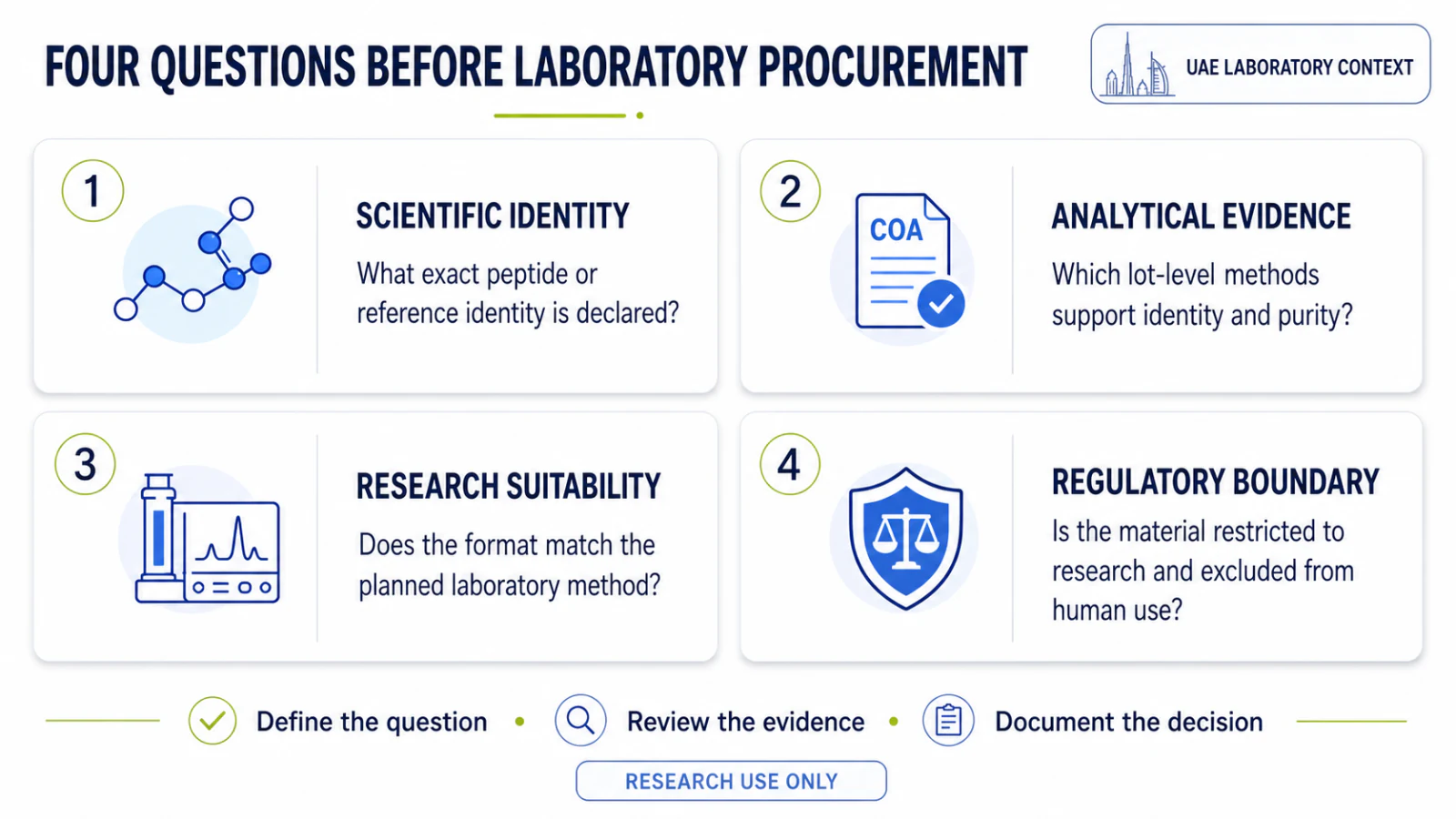
Before procurement, separate four questions that marketing language often mixes together:
- Scientific identity: What exact peptide or reference identity does the listing claim?
- Analytical evidence: Which lot-level methods support identity and purity?
- Research suitability: Does the format match the planned laboratory method?
- Regulatory boundary: Is the material clearly restricted to research and excluded from human use?
This framework is intentionally stricter than asking whether a compound is “the next GLP-1.” Retatrutide is scientifically interesting because it combines three receptor activities in one investigational molecule. That same complexity makes precise naming, transparent sourcing and cautious interpretation more important.
The practical conclusion for a research team is simple: start with the exact question, then choose the evidence needed to answer it. A receptor-assay project, an identity check and a stability study require different controls and documentation. None can be justified by a clinical headline alone. Record the material identifier, batch information, storage conditions, analytical methods and acceptance criteria before work begins. This produces a traceable research record and makes later comparison possible when complete Phase 3 publications, updated registry entries or new analytical results become available.
Researchers should record when each source was accessed. Registry entries, sponsor announcements and regulatory statements can change after publication. Dating the evidence trail helps reviewers distinguish what was known at the time from later updates, corrections or full peer-reviewed results that alter interpretation.
06 · Questions
Frequently asked questions
Is GLP-3 the same as retatrutide?
Not automatically. GLP-3 is used by some suppliers as a catalogue or category label. Retatrutide is the specific investigational molecule LY3437943. Confirm the declared identity and supporting analytical documentation rather than relying on the short label.
Does retatrutide activate a GLP-3 receptor?
No. Published papers describe activity at GIP, GLP-1 and glucagon receptors. “Triple agonist” is the clearer scientific term.
Is retatrutide approved in 2026?
No. As of August 2026, the developer describes it as investigational and not approved by any regulatory agency. Trial completion or positive topline results do not equal regulatory approval.
What is the most important next evidence?
Full peer-reviewed Phase 3 publications are the key next layer. They should provide detailed methods, endpoint analyses, adverse-event tables and limitations that cannot be evaluated completely from topline announcements.
07 · Primary
Primary sources
- Coskun et al., discovery and clinical proof-of-concept paper, Cell Metabolism (2022).
- Jastreboff et al., Phase 2 obesity trial, New England Journal of Medicine (2023).
- Rosenstock et al., Phase 2 type 2 diabetes trial, The Lancet (2023).
- Giblin et al., TRIUMPH Phase 3 rationale and design (2026).
- ClinicalTrials.gov record for TRIUMPH-1, NCT05929066.
- Lilly’s current retatrutide development and regulatory-status summary.
Research-use notice: Emirates Peptides supplies catalogue materials for qualified laboratory research only. This article does not provide medical advice, dosing, reconstitution or administration guidance, and it does not support human or veterinary use.
Was this article helpful?

🔬 Related Research Peptides
Explore Research-Grade Peptides
HPLC-verified, lab-tested peptides for your scientific research. Fast delivery across the UAE.
Browse All PeptidesRelated Articles



Emirates Peptides Research Team
A dedicated coalition of biochemists and clinical researchers focusing on advanced peptide synthesis and pharmacological applications. All data is verified against current clinical trials.
FROM INSTAGRAM