
Blog


- Key Facts at a Glance
- What Is TESA (Tesamorelin)?
- How Does Tesamorelin Work on the GH–IGF-1 Axis?
- Tesamorelin Research: Key Studies and Clinical Evidence
- TESA vs CJC-1295, Ipamorelin and Other GH Secretagogues
TESA (Tesamorelin) is a synthetic GHRH analogue used in published human trials to stimulate pituitary growth hormone release while preserving pulsatile GH dynamics — making it a primary reference compound for UAE researchers studying visceral adiposity, IGF-1 axis signalling, and metabolic endpoints. This guide summarises mechanism, trial evidence, conservative storage (including the 7-day reconstitution window), and documentation checks before sourcing research-grade Tesamorelin in Dubai and the wider UAE.
Below: what TESA is, how it works on the GH–IGF-1 axis, Phase 3 and follow-on trial data with primary citations, comparison to CJC-1295 and Ipamorelin, dosing and storage reference tables, COA verification, and FAQ — all framed for qualified laboratory research contexts only.
02 · TESA
What Is TESA (Tesamorelin)?
Tesamorelin (often abbreviated TESA in peptide research circles) is a synthetic analogue of growth hormone-releasing hormone (GHRH) — the hypothalamic signal that tells the anterior pituitary to secrete growth hormone. The molecule matches native GHRH sequence with an added trans-3-hexenoic acid at the N-terminus, a modification that slows enzymatic degradation and extends circulating half-life relative to native GHRH (PubMed (DOI)).
Because TESA acts upstream at the pituitary, it preserves the normal pulsatile pattern of GH secretion rather than flattening levels the way exogenous GH can. That physiological release profile is why many GH-axis studies prefer GHRH analogues over direct GH for endpoint modelling (PubMed (DOI)).
Among research peptides, Tesamorelin stands out for the depth of published human trial data — particularly visceral adiposity in HIV-associated lipodystrophy, where pooled Phase 3 analyses supported regulatory approval (PubMed (DOI)).
03 · Tesamorelin
How Does Tesamorelin Work on the GH–IGF-1 Axis?
Latest research insights. No spam, ever.
GHRH receptor binding
TESA docks GHRH receptors on anterior pituitary somatotrophs — same receptor class as native hypothalamic GHRH.
Pulsatile GH release
Endogenous GH enters circulation in pulses — especially overnight — rather than as a flat exogenous GH curve.
Hepatic IGF-1
GH stimulates hepatic IGF-1 production — the pharmacodynamic marker tracked in most Tesamorelin trials.
Downstream endpoints
Published models measure VAT imaging, lipids, liver fat, and exploratory cognitive scores — endpoint-specific.
Tesamorelin binds GHRH receptors on somatotroph cells in the anterior pituitary. Receptor activation triggers cAMP-mediated signalling and the pulsatile release of endogenous growth hormone. GH acts on peripheral tissues and stimulates the liver to produce insulin-like growth factor 1 (IGF-1), the primary downstream mediator of GH anabolic and metabolic effects (PubMed (DOI)).
Key mechanisms reported in the literature include:
- Pulsatile GH stimulation — maintains physiologic release dynamics versus continuous GH exposure
- IGF-1 upregulation — measurable within weeks in trial cohorts (PubMed)
- Visceral adipose lipolysis — primary Phase 3 endpoint driver (PubMed (DOI))
- Lean mass preservation — secondary body-composition signals in long trials
- Lipid profile modulation — triglyceride improvements reported alongside VAT loss (PubMed)
~15–18%
04 · Tesamorelin
Tesamorelin Research: Key Studies and Clinical Evidence
Visceral Adiposity and Body Composition
The best-characterised Tesamorelin endpoint is visceral adipose tissue (VAT) reduction. Two Phase 3 randomised trials in HIV-associated lipodystrophy (806 participants pooled) showed significant VAT loss versus placebo — approximately 15–18% — with improved waist circumference and triglycerides (PubMed, PubMed (DOI)). Those data supported FDA approval of Egrifta (tesamorelin) for that specific indication in 2010; research-grade material supplied in the UAE remains for laboratory use outside any approved therapeutic pathway.
| Research lane | Primary endpoint | Typical duration | Evidence tier |
|---|---|---|---|
| HIV lipodystrophy VAT | Visceral adipose tissue (MRI/CT) | 26 weeks · 2 mg/d | Phase 3 RCT · regulatory path |
| IGF-1 axis | Serum IGF-1 pharmacodynamics | 2–26 weeks | Multiple published cohorts |
| NAFLD | Liver fat fraction (MRI-PDFF) | 26 weeks | Placebo-controlled RCT |
| Cognitive (MCI) | Neuropsych battery subsets | 20+ months | Exploratory RCT |
| Body composition (general) | Lean mass + VAT composite | Varies by model | Preclinical + secondary human data |
IGF-1 and GH Axis Restoration
Trials consistently report IGF-1 elevation within the first weeks of daily Tesamorelin, with values returning toward baseline after discontinuation — consistent with a secretagogue mechanism rather than exogenous GH replacement (PubMed). Researchers modelling age-related GH-axis decline often track IGF-1 as a pharmacodynamic biomarker alongside body-composition imaging.
Cognitive Function Research
A randomised trial in older adults with mild cognitive impairment reported exploratory cognitive improvements after extended Tesamorelin exposure, with authors discussing IGF-1-mediated neurotrophic signalling (PubMed (DOI)). This line of research remains active; it does not establish any approved cognitive indication and should be read as hypothesis-generating trial data only.
Non-Alcoholic Fatty Liver Disease (NAFLD)
A placebo-controlled trial in The Lancet Diabetes & Endocrinology reported significant liver-fat reduction with Tesamorelin in NAFLD cohorts (PubMed (DOI)). Hepatic endpoints overlap with the VAT literature (PubMed) and remain a focus for metabolic research models — again, not therapeutic claims for UAE buyers.
05 · TESA
TESA vs CJC-1295, Ipamorelin and Other GH Secretagogues
UAE labs often stack or compare GHRH-pathway and ghrelin-pathway secretagogues. Use published mechanism differences — not marketing labels — when designing a study matrix:
TESA vs CJC-1295 vs Ipamorelin — research profile matrix
| Compound | Mechanism | Human trial depth | Best-fit study | |
|---|---|---|---|---|
| TESA (Tesamorelin) | GHRH analogue | VAT / metabolic imaging | View → | |
| CJC-1295 | DAC-GHRH analogue | Extended IGF-1 models (PubMed (DOI)) | View → | |
| Ipamorelin | GHS-R agonist | Dual-secretagogue pairing | Guide → | |
| Sermorelin | GHRH 1–29 | Legacy GH-axis reference | Shop → |
For a dedicated comparison write-up, see our CJC-1295 + Ipamorelin UAE guide. Many GH-axis protocols in the literature combine a GHRH analogue with a ghrelin mimetic to target complementary receptor populations — always anchor combinations to primary sources.
06 · Tesamorelin
Tesamorelin Dosing Protocol (Research Reference)
The following summarises published trial administration schedules for research literacy only. It is not instructions for human use.
Phase 3 programmes administered 2 mg subcutaneous daily, commonly in the evening to align with nocturnal GH pulses (PubMed). Lower doses (1 mg) appear in some exploratory cohorts; always cite the primary paper when reproducing a model.
Emirates Peptides supplies lyophilised Tesamorelin for laboratory research. Use the peptide reconstitution calculator with bacteriostatic water to model concentrations before any in-vitro or animal work.
| Study context | Dose | Route | Duration | Notes |
|---|---|---|---|---|
| Phase 3 HIV lipodystrophy | 2 mg | SC daily | 26 weeks | Primary VAT endpoint trials |
| Exploratory GH-axis models | 1–2 mg | SC daily | 12–52 weeks | Cite primary paper per model |
| Reconstitution reference | — | BAC water | Use ≤ 7 days | 2–8 °C after mixing |
| Timing convention | Evening dose | SC | — | Aligns with nocturnal GH pulse literature |
Storage Guidelines (UAE Climate Note)
Reconstituted solution:
2–8 °C — use within 7 days (conservative protocol; do not assume the 21-day BAC-water rule used for BPC-157 or TB-500)
Do not freeze
reconstituted solution — aggregation risk rises after freeze–thaw
Documentation:
Log reconstitution date on every vial; discard on day 8 even if solution looks clear
For general peptide cold-chain handling in Gulf conditions, cross-read our peptide storage and handling guide.
07 · Glossary
Glossary: TESA and GH-Axis Terms
- TESA: Research shorthand for Tesamorelin — not a separate compound.
- GHRH: Growth hormone-releasing hormone; hypothalamic peptide that signals pituitary GH secretion.
- GH: Growth hormone (somatotropin) released from anterior pituitary somatotrophs.
- IGF-1: Insulin-like growth factor 1; primary hepatic downstream marker of GH action.
- VAT: Visceral adipose tissue — central fat depot targeted in Phase 3 Tesamorelin trials.
- Secretagogue: Agent that stimulates endogenous release (here, GH) rather than replacing the hormone.
- Lyophilised: Freeze-dried powder form — standard for research peptide distribution.
- COA: Certificate of Analysis — batch-specific purity document; required for institutional receiving.
08 · Research
UAE Research Compliance Notes
Institutional buyers in the UAE should treat Tesamorelin like any imported research reagent: verify end-user research credentials, maintain temperature logs on receipt, and store COA PDFs with batch IDs. Emirates Peptides materials are labelled for laboratory research only and must not be repackaged or represented for clinical, cosmetic, or athletic use. If your protocol requires ethics approval, obtain it before ordering — supplier documentation supports traceability, not protocol sign-off.
09 · TESA
Why TESA Is a Priority Research Compound in the UAE
Regional research interest clusters around metabolic health, body composition, and longevity science — all areas where the GH–IGF-1 axis is actively modelled:
Longevity and wellness research sectors
in Dubai and Abu Dhabi increasingly reference GH secretagogue literature
Human trial depth
gives TESA stronger citation anchors than most research peptides
Combination studies
with MOTS-c or CJC/Ipamorelin stacks appear in preclinical metabolic papers — design with explicit controls
10 · Tesamorelin
Tesamorelin Quality, COA and Purity Standards
A 44-amino acid chain demands rigorous analytical release testing. Before any TESA batch enters your workflow, verify:
Mass spectrometry
confirming MW ~5135.8 Da and expected sequence
Cold-chain integrity
on delivery into UAE summer ambient temperatures
11 · Research-Grade
Where to Buy Research-Grade Tesamorelin in the UAE
Emirates Peptides supplies COA-accompanied Tesamorelin for qualified laboratory researchers across the UAE and GCC. Each batch is independently HPLC-verified, lyophilised under controlled conditions, and shipped with documentation suitable for institutional receiving checks.
- COA-verified, ≥99% purity on release
- Same-day dispatch for Dubai orders before 2 pm UAE time
- GCC shipping (Saudi Arabia, Oman, Qatar, Kuwait, Bahrain)
- Documentation-first packaging for research institutions
View Tesamorelin product page (research supply) →
12 · Questions
Frequently Asked Questions
Is TESA the same as Tesamorelin?
Yes. TESA is common research shorthand for Tesamorelin — the synthetic GHRH analogue discussed throughout this guide and supplied on our Tesamorelin product page for laboratory use only.
Is Tesamorelin the same as growth hormone?
Can Tesamorelin be combined with other peptides?
Published research models sometimes pair GHRH analogues with ghrelin mimetics (e.g. CJC-1295 + Ipamorelin) or mitochondrial peptides such as MOTS-c. Cite primary interaction studies; do not extrapolate to human use.
Is Tesamorelin legal for research in the UAE?
Emirates Peptides supplies Tesamorelin strictly for laboratory research. It is not sold for human consumption and must be handled only by qualified researchers in appropriate institutional settings.
How quickly does Tesamorelin ship in the UAE?
Orders placed before 2 pm UAE time typically dispatch the same business day; Dubai delivery is often next-day, with other emirates in 1–2 business days.
What is the typical Tesamorelin research dose in trials?
Phase 3 HIV lipodystrophy trials used 2 mg subcutaneous once daily for 26 weeks (PubMed). Some models reference 1–2 mg ranges — always trace back to the primary publication.
How long does reconstituted Tesamorelin last?
Is Tesamorelin better than CJC-1295 for research?
What COA checks matter for Tesamorelin?
Confirm batch-specific HPLC purity, MS identity, and reconstitution date logging. Reject material without a matching COA entry in the supplier library.
Disclaimer: For laboratory research and educational context only. Not for human consumption and not medical advice. Researchers are responsible for institutional approvals and local regulations.
Was this article helpful?

🔬 Related Research Peptides
Explore Research-Grade Peptides
HPLC-verified, lab-tested peptides for your scientific research. Fast delivery across the UAE.
Browse All PeptidesRelated Articles
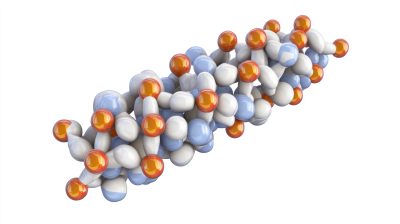



Emirates Peptides Research Team
A dedicated coalition of biochemists and clinical researchers focusing on advanced peptide synthesis and pharmacological applications. All data is verified against current clinical trials.
FROM INSTAGRAM