
Blog
Five peptides studied in cognitive and brain research: evidence, limits and open questions


For research use only. Material is supplied as a lyophilized reference compound with HPLC purity verification.
- The short answer
- Why “brain health” is too broad for a scientific claim
- 1. Semax: an ACTH-derived research peptide
- 2. Selank: stress-circuit and neuropeptide research
- 3. Davunetide: why negative trials matter
Peptide research in the brain covers far more than “cognitive enhancement.” Semax and Selank are investigated as short regulatory peptides. Davunetide was developed from an activity-dependent neuroprotective protein sequence. PACAP is an endogenous neuropeptide with broad signalling effects. GLP-1 receptor agonists connect metabolic signalling with current neurological research. Their evidence bases are different, and several well-designed trials have produced negative or mixed results.
01 · Short
The short answer
No peptide can be called a proven general cognitive enhancer. Semax and Selank have mechanistic, preclinical and limited human research, but international clinical evidence is incomplete. Davunetide reached a large controlled trial and failed its primary endpoints. PACAP remains mainly a mechanistic and preclinical field. GLP-1 medicines have active brain research, with mixed clinical findings that cannot be transferred to unapproved catalogue materials.
That is why a useful comparison focuses on the question each peptide can test. Brain research may measure receptor signalling, neuronal survival, synaptic plasticity, functional connectivity, task performance, imaging biomarkers or disease progression. A positive change in one layer is not proof of improvement in another.
02 · “Brain
Why “brain health” is too broad for a scientific claim
Brain health can refer to attention, working memory, mood, sleep, vascular function, neuroinflammation, neurodegeneration or recovery after injury. These outcomes use different instruments and populations. Even the word cognition includes multiple domains: processing speed, executive function, episodic memory, working memory, language and visuospatial performance.
Peptide studies also face delivery and measurement problems. Many peptides are vulnerable to enzymatic degradation and may not reach the central nervous system in a predictable form. Blood measurements do not necessarily reflect brain exposure. Behavioural results in rodents can be sensitive to strain, stress, handling and task design. Small human studies may be underpowered or exploratory.
A credible review therefore labels the evidence level:
| Evidence level | Example | Responsible conclusion |
|---|---|---|
| Molecular | Binding, calcium signalling or gene-expression change | A mechanism may be plausible under the tested conditions |
| Cellular | Neuronal survival or neurite endpoint | The material affected that cell system |
| Animal | Maze, injury or disease-model result | A preclinical signal exists and needs replication |
| Human biomarker | fMRI connectivity or metabolic imaging | A measured biological signal changed in that study |
| Human cognitive endpoint | Validated task or clinical scale | Performance changed, did not change, or remains uncertain in that population |
| Replicated clinical outcome | Multiple adequate controlled trials | Evidence may support a defined medical use, subject to regulatory review |
03 · Semax
1. Semax: an ACTH-derived research peptide
Latest research insights. No spam, ever.
Semax is a heptapeptide based on the ACTH(4-7) sequence with a Pro-Gly-Pro extension. It has been studied in neuronal, animal and limited human research, particularly in literature from Russia. Proposed research areas include neurotrophic signalling, oxidative stress, metal interactions, neuronal survival and cognitive tasks.
One laboratory study characterised Semax interactions with copper(II) and reported reduced copper-induced cytotoxicity in two cell lines under the tested conditions. Other research has examined BDNF-related expression and neuronal signalling. These findings are mechanistic. They do not establish a broad clinical benefit or prove that any commercial preparation will produce the same effect.
A 2020 functional-connectivity study compared Semax, Selank and placebo in 52 healthy participants. Researchers measured resting-state fMRI before and after administration and reported group and condition differences involving connectivity between the right amygdala and right temporal regions. Functional connectivity is a useful biomarker, but it is not a direct measurement of memory improvement or long-term clinical benefit.
Semax also illustrates the need for regulatory caution. A forensic-analysis paper reported Semax and Selank in seized preparations and stated that, to the authors’ knowledge at that time, the compounds had not completed clinical trials. The FDA now lists Semax among bulk substances for which it has limited safety information and notes potential immunogenicity and peptide-impurity concerns in compounded products.
Best research question: Does an analytically confirmed Semax preparation alter a preselected neuronal or network endpoint in a validated model?
Main gap: Limited, geographically concentrated and heterogeneous human evidence does not support a general “cognitive enhancement” promise.
04 · Selank
2. Selank: stress-circuit and neuropeptide research
Selank is a synthetic heptapeptide derived from the immunomodulatory peptide tuftsin. Research discussions often focus on anxiety-related behaviour, neurotransmitter systems, gene expression and cognitive or stress endpoints. Online marketing frequently calls it a nootropic or anxiolytic. Those labels can imply proven treatment effects that the broader evidence base does not justify.
The same 2020 fMRI study that evaluated Semax also examined Selank. Changes in resting-state connectivity were reported, including patterns involving the amygdala and temporal cortex. The study is valuable because it moves beyond a simple self-report. It remains a small exploratory study with short observation windows, and its imaging findings should not be converted into claims about treating anxiety or improving memory.
Preclinical Selank work has explored immune-neural interactions and expression of genes related to neurotransmission. Those mechanisms may generate testable hypotheses. A gene-expression change is not automatically beneficial, and a behavioural result in a stress model is not equivalent to a diagnosed human condition.
Analytical identity is important because small peptides can be confused with salts, modified forms or degraded products. A laboratory should confirm sequence-related identity and mass, document content and impurities, and use stability data relevant to the planned model. “Selank acetate” and a differently described Selank material should not be assumed identical without documentation.
Best research question: Does a defined Selank material alter a specified stress-circuit, transcriptional or behavioural endpoint relative to appropriate controls?
Main gap: Human safety, exposure and effectiveness data are not sufficient for broad personal-use claims.
05 · Davunetide
3. Davunetide: why negative trials matter
Davunetide, also known as NAP, is an eight-amino-acid peptide derived from activity-dependent neuroprotective protein. It attracted interest through preclinical work involving microtubule stability, tau biology and neuronal protection. Unlike many catalogue peptides, davunetide advanced into a large multicentre clinical trial.
The phase 2/3 trial in progressive supranuclear palsy randomised 313 participants to davunetide or placebo for 52 weeks. The treatment groups did not differ on the primary clinical endpoints. The investigators concluded that davunetide was not effective for progressive supranuclear palsy. Nasal adverse events were also more common in the davunetide group.
This negative result is scientifically useful. It shows that a plausible mechanism and encouraging preclinical findings can fail when tested against meaningful clinical outcomes. It also demonstrates why evidence reviews must include negative studies. Selecting only positive cell and animal papers would give readers a distorted view of peptide translation.
Davunetide should not be described as a failed peptide in every context. A failed trial answers a defined question about a molecule, disease, formulation, route, duration and endpoints. It does, however, block the claim that preclinical microtubule findings were enough to predict effectiveness in that disease.
Best research question: Which translational assumptions caused promising preclinical signals not to produce clinical benefit in the PSP trial?
Main gap: The central clinical programme did not meet its primary effectiveness endpoints.
06 · PACAP
4. PACAP: powerful biology, difficult translation
Pituitary adenylate cyclase-activating polypeptide, or PACAP, exists mainly as PACAP38 and PACAP27. It signals through PAC1, VPAC1 and VPAC2 receptors and participates in stress, autonomic, vascular, endocrine and neural processes. Brain research has examined neuronal survival, inflammation, synaptic function and injury responses.
Classic preclinical work reported that PACAP38 reduced hippocampal neuronal death in a rat forebrain-ischaemia model. That result helped establish PACAP as a neuroprotection research target. Later work has explored downstream cAMP, MAPK and PI3K-related pathways. Yet broad receptor distribution can complicate translation because a peptide may influence vascular, endocrine and sensory systems as well as the intended neural target.
PACAP is not a simple cognition candidate. It is also implicated in migraine biology and stress responses. A mechanism that appears protective in one injury model may create unwanted effects in another context. Stability, receptor selectivity, peripheral actions and delivery to the relevant brain compartment all matter.
For an institution, PACAP research is often most useful as a systems-biology problem: how receptor subtype, timing, tissue and disease state change the response. It is not evidence for casual personal experimentation.
Best research question: Which receptor, cell type and timing window explain a PACAP-related effect in the chosen neural model?
Main gap: Broad signalling and delivery challenges limit direct translation from animal neuroprotection to a general human cognitive claim.
07 · GLP-1
5. GLP-1 receptor agonist peptides: metabolic signalling meets neuroscience
GLP-1 receptor agonists are established medicines for specific metabolic indications, but their possible effects in neurological conditions are a separate research question. Receptors and signalling relevant to energy balance, inflammation and neuronal function have prompted trials in Alzheimer’s disease, mild cognitive impairment and psychiatric populations.
The clinical picture is mixed. An early randomised study of liraglutide in Alzheimer’s disease reported an imaging signal involving cerebral glucose metabolism, while cognitive scores did not change. A later phase 2b trial in 204 participants with mild to moderate Alzheimer’s disease found no significant difference in its primary cerebral glucose-metabolism outcome. A small proof-of-concept exenatide trial in mild cognitive impairment found no significant between-group effect on its primary cognitive measure.
Other 2025 and 2026 studies continue to examine semaglutide, imaging and cognition in selected populations. Those studies should be read according to design. A single-arm imaging study cannot establish causality. A trial in people with a defined metabolic or psychiatric condition does not prove cognitive enhancement in healthy people.
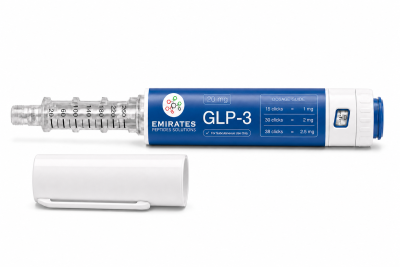
There is also a product-identity boundary. Evidence for approved liraglutide, exenatide or semaglutide products cannot validate an unapproved catalogue material called “GLP-3.” GLP-3 is not a universal scientific molecule name. On Emirates Peptides it is a catalogue convention associated with triple-receptor research, but that convention must not be generalised to literature or other suppliers.
Best research question: Does a named, regulated GLP-1 medicine change a predefined neurological endpoint in a specified clinical population?
Main gap: Mixed outcomes and strong confounding from metabolic change make “cognitive enhancer” an unjustified category claim.
08 · Comparison
Comparison table
| Candidate | Primary research idea | Highest evidence discussed here | Most important caution |
|---|---|---|---|
| Semax | ACTH-derived neuronal and network signalling | Small human imaging study plus preclinical work | Limited international clinical evidence |
| Selank | Stress circuitry, transcription and neuroimmune signalling | Small human imaging study plus preclinical work | Anxiolytic marketing exceeds the evidence |
| Davunetide | Microtubule and tau-related neuroprotection | Large phase 2/3 randomised trial | Primary clinical endpoints were negative |
| PACAP | Receptor-mediated neuronal survival and systems signalling | Extensive preclinical research | Broad actions and translation barriers |
| GLP-1 agonists | Metabolic-neural signalling | Multiple human trials with mixed results | Medicine-specific data cannot be transferred to RUO products |
09 · Read
How to read a cognitive peptide paper
Start with the molecule. Record the full sequence, modification, salt form and mass. If the paper uses a natural neuropeptide but the catalogue uses a fragment, do not merge the evidence. Check whether the method confirms identity and whether the tested preparation is described well enough to reproduce.
Then identify the endpoint. “Neuroprotection” may mean cell survival after a laboratory insult. “Memory” may mean performance in one animal task. “Connectivity” means a statistical relationship between signals in brain regions. “Cognition” in a clinical trial should be tied to a validated test and a prespecified analysis.
Look at the comparator and masking. Cell experiments need vehicle and toxicity controls. Animal behaviour studies benefit from blinded scoring and randomisation. Human trials require adequate allocation, masking where possible, a prespecified primary endpoint and handling of missing data. A before-and-after change without a control group can reflect practice effects, expectation or time.
Finally, check whether the conclusion matches the data. If a clinical trial did not meet its primary endpoint, secondary or subgroup signals are hypothesis-generating. If a study measures a biomarker but not performance, the article should not claim cognitive improvement.
10 · Quality
Quality requirements for brain-peptide research
Neural models can respond strongly to impurities, endotoxin, solvent conditions and concentration errors. A certificate of analysis should be batch-linked and should separate identity, purity and content. Mass spectrometry supports molecular mass; chromatography characterises the main peak and impurities under the stated method; peptide-content testing addresses how much actual peptide is present. None of these alone proves biological activity.
Where relevant, laboratories should assess endotoxin and bioburden, verify solution compatibility, document adsorption to labware and define stability during the experiment. A material that degrades during a long assay may expose cells to a changing mixture. Repeated freeze-thaw cycles, light, oxidation and surface interactions can affect some peptides.
Brain research also requires strong governance. Work involving humans needs ethics and regulatory approval. Animal studies need institutional review and welfare standards. Research-use labelling does not bypass those obligations.
11 · Questions
Frequently asked questions
What are cognitive research peptides?
The phrase refers loosely to peptides studied for neural signalling, behaviour, memory-related endpoints or neuroprotection. It is not a regulatory class and does not mean the peptides are approved cognitive enhancers. Each molecule has a separate identity, mechanism, evidence base and risk profile.
Are Semax and Selank proven nootropics?
No broad claim is justified. Both have preclinical and limited human research, including exploratory functional-connectivity findings. The evidence is not equivalent to replicated, internationally accepted proof of general cognitive enhancement, and regulatory agencies note limited safety information.
Which is better for cognition, Semax or Selank?
That is not a scientifically answerable personal-selection question. They are different sequences studied across different mechanisms and endpoints. A laboratory comparison would require a defined model, matched materials, prespecified outcomes and appropriate controls.
Does a change in BDNF prove better memory?
No. BDNF-related expression or concentration is a biomarker, not a direct measure of memory. The relationship depends on tissue, timing, assay and biological context. Cognitive improvement requires suitable behavioural or clinical endpoints.
Why include davunetide if its major trial was negative?
Negative trials are essential evidence. Davunetide shows how preclinical mechanisms can fail to produce clinical benefit. Including the result prevents selective reporting and helps researchers improve translational models.
Do GLP-1 medicines improve brain health?
Research is active, but outcomes vary by molecule, population and endpoint. Some studies report biomarker or imaging signals, while others do not show significant primary cognitive or metabolic-brain outcomes. These findings should not be turned into a universal brain-health claim.
Is GLP-3 the same as a GLP-1 medicine?
No. GLP-3 is not a universal molecule name. It may be used as a catalogue label for triple-receptor research. Evidence for semaglutide, liraglutide or another named medicine applies to that defined medicine and study, not automatically to a GLP-3-labelled material.
Can research peptides be used to self-treat memory or anxiety problems?
This article does not support self-treatment. Memory change, anxiety and other neurological symptoms need qualified medical assessment. Emirates Peptides materials are restricted to laboratory research and are not intended for human use.
12 · Conclusion
Conclusion
The most important finding from cognitive peptide research is not a winner. It is the distance between a molecular idea and a dependable human outcome. Semax and Selank have interesting but limited translational evidence. Davunetide shows the value of a definitive negative trial. PACAP demonstrates the complexity of broad neuropeptide systems. GLP-1 research shows how mixed results can emerge as a field moves from metabolism into neurology.
A responsible 2026 article keeps those differences visible. It names negative results, separates biomarkers from cognition, identifies the exact peptide and refuses to convert research materials into personal recommendations. That approach is more useful to researchers and more trustworthy to readers.
13 · Practical
Practical takeaway for research teams
Select the cognitive domain before selecting the peptide. A network-connectivity study, neuronal-survival assay and working-memory task need different hypotheses and controls. Record whether the outcome is mechanistic, behavioural or clinical and do not substitute one for another. Include negative comparators, verify brain-relevant exposure where possible and preregister the primary analysis for confirmatory work. The literature becomes much easier to interpret when each result is labelled by molecule, model, endpoint, time and evidence layer.
14 · References
References
- Panikratova YR, et al. Functional connectomic approach to studying Selank and Semax effects. Doklady Biological Sciences. 2020.
- Tabbì G, et al. Semax, an ACTH4-10 peptide analog with high affinity for copper(II) ion and protective ability against metal induced cell toxicity. Journal of Inorganic Biochemistry. 2015.
- Vanhee C, et al. The occurrence of putative cognitive enhancing research peptides in seized pharmaceutical preparations. Drug Testing and Analysis. 2020.
- Boxer AL, et al. Davunetide in patients with progressive supranuclear palsy: a randomised, double-blind, placebo-controlled phase 2/3 trial. Lancet Neurology. 2014.
- Uchida D, et al. Prevention of ischemia-induced death of hippocampal neurons by pituitary adenylate cyclase activating polypeptide. Brain Research. 1996.
- Gejl M, et al. In Alzheimer’s disease, 6-month treatment with GLP-1 analog prevents decline of brain glucose metabolism. 2016.
- Mullins RJ, et al. A pilot study of exenatide actions in Alzheimer’s disease. 2019.
- Hölscher C, et al. Long-acting exenatide does not prevent cognitive decline in mild cognitive impairment. 2024.
- Edison P, et al. Liraglutide in mild to moderate Alzheimer’s disease: a phase 2b clinical trial. 2025.
- US Food and Drug Administration. Bulk drug substances that may present significant safety risks.
15 · Interpret
How to interpret and apply this evidence
Cognitive and brain research requires unusually careful endpoint selection. Learning, memory, attention, anxiety-like behaviour, neuroprotection and neuronal signalling are related but not interchangeable. A change in one task or molecular marker cannot support a broad claim of cognitive enhancement. Studies should describe task validity, baseline behaviour, blinding, handling effects and whether multiple comparisons were planned before the data were examined.
Delivery and model context create additional limits. Cell systems do not reproduce circulation or the blood-brain barrier, while animal behaviour may be influenced by movement, stress or sensory changes unrelated to cognition. Human evidence, when available, must be assessed separately for design quality, population, comparator and outcome relevance. Mechanistic findings are valuable for hypothesis generation but do not substitute for controlled outcome evidence.
Researchers should verify the precise peptide identity because similar catalogue descriptions can hide different sequences, salts or modifications. Lot-specific analytical documentation, content, storage conditions and assay controls are necessary for reproducibility. This guide compares research evidence and open questions only. It does not recommend nootropics, treatment, personal use, dosing, nasal or injectable administration, or any other human protocol.
Was this article helpful?

🔬 Related Research Peptides
Explore Research-Grade Peptides
HPLC-verified, lab-tested peptides for your scientific research. Fast delivery across the UAE.
Browse All PeptidesRelated Articles




Emirates Peptides Research Team
A dedicated coalition of biochemists and clinical researchers focusing on advanced peptide synthesis and pharmacological applications. All data is verified against current clinical trials.