
Blog
Melanotan 2 UAE: Melanocortin Research Peptide Guide — What It Is and Where to Buy (2026)
 ·
·
5 min read
·
·
5 min read

For research use only. Material is supplied as a lyophilized reference compound with HPLC purity verification.
- Key Facts at a Glance
- What Is Melanotan 2?
- How Does Melanotan 2 Work?
- Melanotan 2 Research: Key Areas
- Melanotan 2 vs PT-141
Melanotan 2 (MT-2) is one of the most extensively researched melanocortin receptor agonists available. Originally developed at the University of Arizona as part of a pigmentation research programme, Melanotan 2 has since been studied across a broad range of applications — from skin pigmentation and photoprotection to sexual function and appetite regulation — making it one of the most multi-functional research peptides in the field.
02
What Is Melanotan 2?
Melanotan 2 is a synthetic analogue of alpha-melanocyte stimulating hormone (α-MSH) — a naturally occurring peptide derived from the proopiomelanocortin (POMC) protein. The amino acid sequence of MT-2 is a cyclic heptapeptide: Ac-Nle-c[Asp-His-D-Phe-Arg-Trp-Lys]-NH₂. The cyclic structure and D-Phe substitution confer significantly greater potency and metabolic stability compared to native α-MSH.
MT-2 was developed in the early 1990s by researchers at the University of Arizona Cancer Center, initially with the goal of creating a “tanning agent” that could protect fair-skinned individuals from UV-induced skin damage. Research rapidly expanded to reveal a much broader pharmacological profile through its agonism of melanocortin receptors MC1R through MC5R.
03 · Work
How Does Melanotan 2 Work?
Latest research insights. No spam, ever.
MT-2 exerts its effects by binding to and activating melanocortin receptors (MCRs). Different receptor subtypes mediate different physiological effects:
MC1R (skin):
Stimulates melanogenesis — production of melanin in melanocytes — producing a tanning effect independent of UV exposure
MC3R and MC4R (brain/hypothalamus):
Regulate energy homeostasis, appetite suppression, and sexual arousal pathways
MC4R (CNS):
The primary receptor mediating MT-2’s effects on sexual function — activates pro-erectile pathways in the brain and spinal cord
MC5R (exocrine glands):
Regulates sebaceous and exocrine gland secretion
04 · Research
Melanotan 2 Research: Key Areas
Skin Pigmentation and Photoprotection
The original application of MT-2 research was photoprotection. University of Arizona clinical trials demonstrated that MT-2 produced significant skin darkening in fair-skinned volunteers, with effects persisting for weeks after the last administration. The hypothesis was that increased melanin would provide natural photoprotection against UV-induced DNA damage and skin cancer risk.
Sexual Function Research
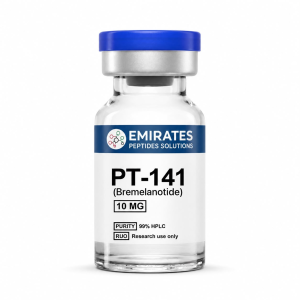
Perhaps the most surprising finding in MT-2 research was its potent pro-erectile effects, discovered serendipitously in early human trials. Subsequent research confirmed MC4R activation in the hypothalamus and spinal cord as the mechanism — triggering central pro-erectile signalling independent of peripheral vascular mechanisms. This led to the development of PT-141 (Bremelanotide), a derivative now FDA-approved for hypoactive sexual desire disorder.
Appetite and Energy Balance
MC3R and MC4R activation in the hypothalamus suppresses appetite and increases energy expenditure. Research in obese animal models has shown significant reductions in food intake and body weight with MT-2 administration — an area of ongoing investigation given the growing interest in melanocortin pathways for metabolic disease.
05 · PT-141
Melanotan 2 vs PT-141
| Compound | Structure | MC1R (pigmentation) | MC4R (sexual function) | Status |
|---|---|---|---|---|
| Melanotan 2 | Cyclic heptapeptide | Strong agonist | Strong agonist | Research only |
| PT-141 (Bremelanotide) | MT-2 metabolite | Minimal | Strong agonist | FDA-approved (Vyleesi) |
| α-MSH (native) | Linear 13-aa peptide | Moderate agonist | Weak agonist | Endogenous |
06 · Research
Research Dosing Protocol (Reference)
For research reference only. Not approved for human use.
In clinical research, MT-2 has been administered via subcutaneous injection at doses ranging from 0.025mg/kg to 0.1mg/kg. Emirates Peptides supplies Melanotan 2 in 10mg vials. Reconstitute with bacteriostatic water.
Storage
Lyophilised:
Store at 2-8°C, protect from light
Reconstituted:
2-8°C, use within 28 days
07
Where to Buy Melanotan 2 in the UAE
- ✅ COA-verified, ≥99% purity
- ✅ 10mg vials
- ✅ Fast delivery to Dubai, Abu Dhabi and all UAE emirates
- ✅ GCC shipping available
- ✅ Cash on delivery in Dubai
08 · Questions
Frequently Asked Questions
Is Melanotan 2 the same as PT-141?
No. PT-141 (Bremelanotide) is a metabolite of Melanotan 2 that’s been refined to be more selective for sexual function endpoints (MC4R). MT-2 is the parent compound with non-selective melanocortin receptor activity covering pigmentation, appetite, and sexual function research.
What is the typical Melanotan 2 research dose?
A loading phase of 0.25–0.5 mg daily for 1–2 weeks, followed by maintenance at 0.5–1 mg weekly. Slow titration is standard to manage common side effects like nausea and flushing.
What are the common side effects in MT-2 research models?
The most commonly reported side effects in research are nausea (especially in the first 1–2 weeks), flushing, transient appetite suppression, and increased libido. These typically attenuate after the loading phase ends. Slow titration is the standard mitigation.
Does Melanotan 2 cause skin darkening immediately?
No. MT-2 stimulates melanin synthesis via MC1R activation, but visible pigmentation requires concurrent UV exposure to drive the melanogenesis process. Research subjects without UV exposure show minimal pigmentation change despite full MT-2 dosing.
How does MT-2 relate to appetite regulation?
MT-2 activates MC3R and MC4R — the central melanocortin receptors that signal satiety in the hypothalamus. This is why temporary appetite suppression is one of the consistent observations in MT-2 research, particularly during the loading phase.
Is Melanotan 2 legal in the UAE?
Melanotan 2 is supplied strictly for laboratory research use and is not a controlled substance in the UAE. Note that MT-2 is not approved for human therapeutic use in any jurisdiction worldwide.
Disclaimer: For laboratory research use only. Not approved for human use. Not medical advice.
Was this article helpful?

🔬 Related Research Peptides
Explore Research-Grade Peptides
HPLC-verified, lab-tested peptides for your scientific research. Fast delivery across the UAE.
Browse All PeptidesRelated Articles


Selected Research References
Selected scientific references for research context only. Products remain for laboratory research use and are not for human use.

Emirates Peptides Research Team
A dedicated coalition of biochemists and clinical researchers focusing on advanced peptide synthesis and pharmacological applications. All data is verified against current clinical trials.