
Blog
Klow Blend UAE: BPC-157, TB-500, KPV and GHK-Cu Research Stack Guide (2026)
 ·
·
5 min read
·
·
5 min read
- Key Facts at a Glance
- What Is the Klow Blend?
- Formulation per vial
- Why KPV is in this blend
- Full mechanism overview
For laboratory research and development purposes. Not for human consumption. Not approved for therapeutic use.
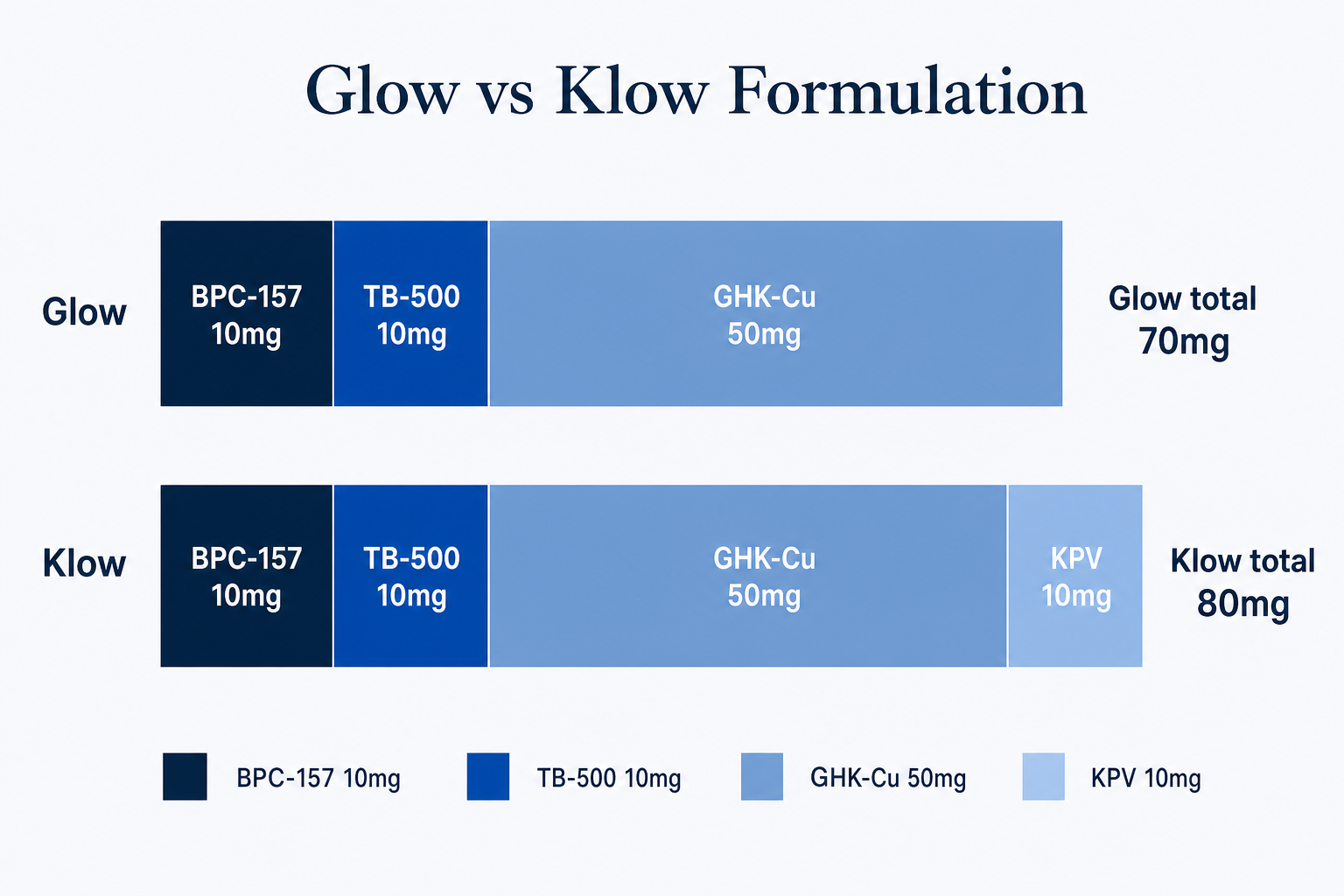
For researchers who need the Glow Blend repair-and-matrix core plus KPV in one reconstitution, the Klow Blend from Emirates Peptides combines four research peptides in a fixed ratio: BPC-157, TB-500, KPV, and GHK-Cu at 10 mg / 10 mg / 10 mg / 50 mg — 80 mg total per vial.
Klow is not a stronger Glow. BPC-157, TB-500, and GHK-Cu amounts match Glow exactly; Klow adds 10 mg KPV. For full formulation, QC, and procurement comparison, read the Glow vs Klow comparison guide.
02 · Klow
What Is the Klow Blend?
The Klow Blend is a four-peptide pre-blended research vial with fixed masses:
BPC-157 — 10 mg:
Repair signalling, angiogenesis, soft-tissue models
TB-500 — 10 mg:
Cell migration, actin-related repair pathways
KPV — 10 mg:
Anti-inflammatory tripeptide (Lys-Pro-Val) studied in gut and NF-κB models
GHK-Cu — 50 mg:
Matrix remodelling, collagen-related readouts
03 · Formulation
Formulation per vial
Latest research insights. No spam, ever.
Peptide mass composition — Klow (80 mg)
| Component | Mass | In Glow? |
|---|---|---|
| BPC-157 | 10 mg | Yes — same |
| TB-500 | 10 mg | Yes — same |
| KPV | 10 mg | Klow only |
| GHK-Cu | 50 mg | Yes — same |
| Total | 80 mg | Glow = 70 mg (no KPV) |
04 · Blend
Why KPV is in this blend
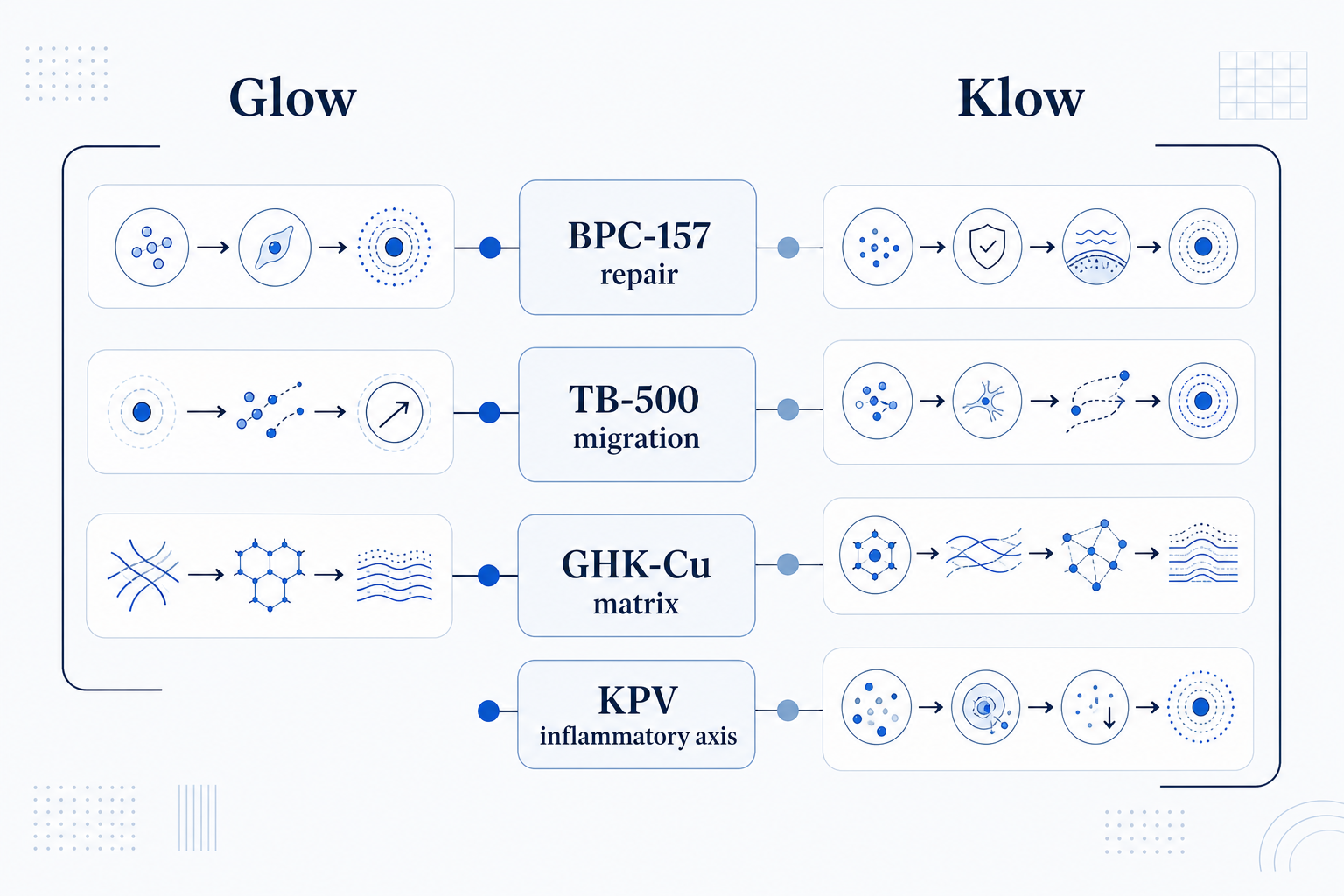
BPC-157
Same repair core as Glow.
TB-500
Same migration axis as Glow.
GHK-Cu
Same matrix peptide as Glow.
KPV
Inflammatory-modulation axis — the only addition vs Glow.
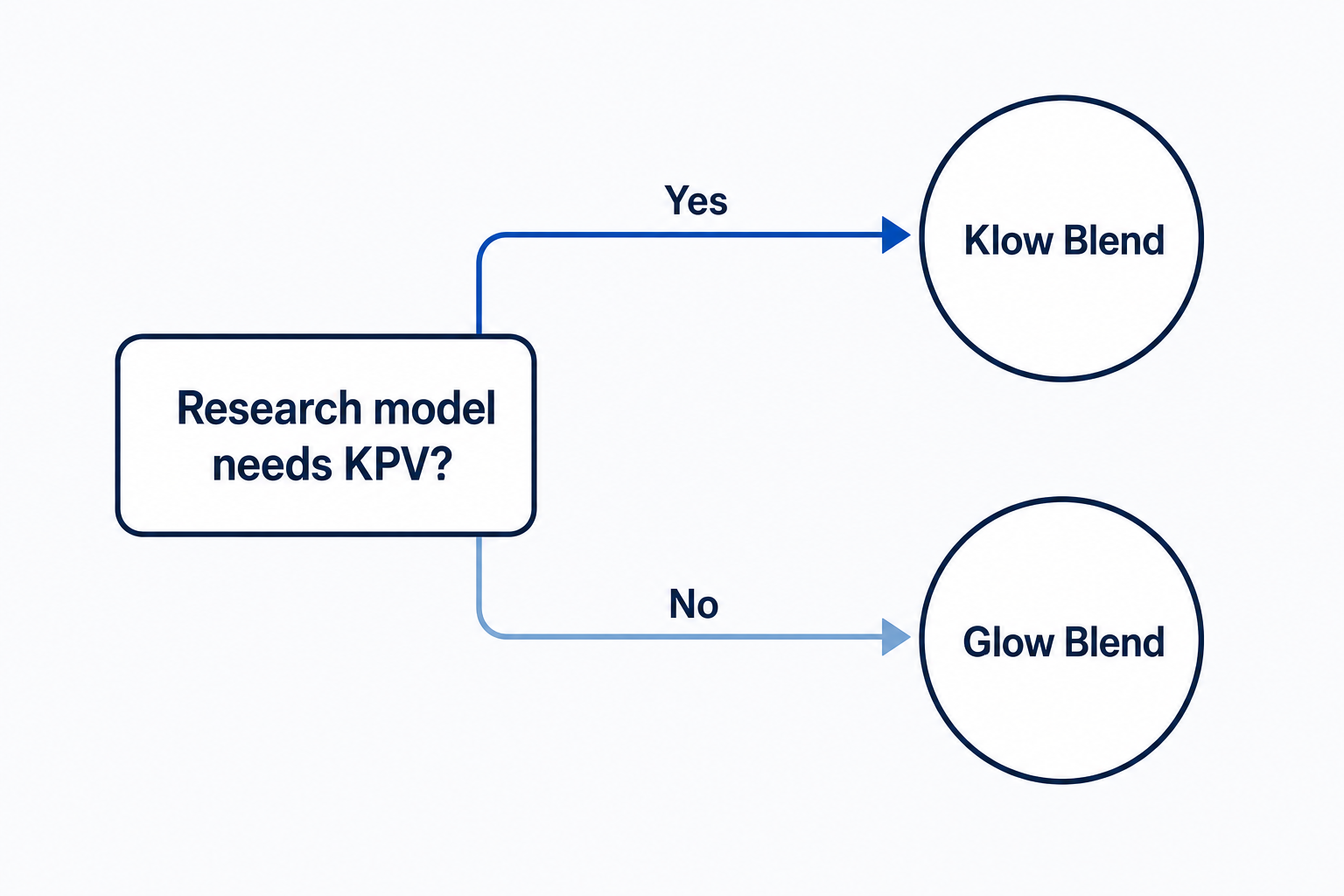
June 2026 procurement note: Klow Blend (SKU EP-BPC1572, 80 mg per vial) is listed at AED 780. QC should resolve four HPLC peaks (BPC-157, TB-500, GHK-Cu, KPV) — not three. If your model does not need KPV in the same reconstitution, the three-peptide Glow Blend is the simpler stack.
+10
Same BPC, TB, and GHK-Cu as Glow. Klow adds KPV and 10 mg total mass — a variant for models that need an inflammatory axis in one reconstitution, not a potency upgrade.
KPV (Lysine-Proline-Valine) is a short tripeptide investigated in preclinical models of intestinal inflammation, gut-barrier permeability, and NF-κB pathway modulation. Researchers who would otherwise buy standalone KPV alongside Glow may prefer Klow for one reconstitution — at the cost of a fourth analytical target on incoming QC.
- Studied in colitis and intestinal inflammation rodent models
- NF-κB-related inflammatory signalling in preclinical literature
- Complements BPC-157’s repair framing through a distinct mechanism family
05 · Mechanism
Full mechanism overview
| Component | Mass | Primary mechanism | Typical research framing |
|---|---|---|---|
| BPC-157 | 10 mg | Repair signalling, angiogenesis | Soft-tissue injury models |
| TB-500 | 10 mg | Cell migration | Wound-healing kinetics |
| KPV | 10 mg | Inflammatory modulation | Gut-barrier, IBD-adjacent models |
| GHK-Cu | 50 mg | Matrix remodelling | Collagen, fibroblast assays |
06 · Klow
Klow vs Glow: which to choose?
| Factor | Glow Blend | Klow Blend |
|---|---|---|
| Peptides | 3 | 4 |
| Total mass | 70 mg | 80 mg |
| BPC / TB / GHK | 10 / 10 / 50 mg | 10 / 10 / 50 mg (identical) |
| KPV | — | 10 mg |
| QC complexity | 3 peaks | 4 peaks |
| Default pick | Repair + matrix without KPV | Repair + matrix + KPV in one vial |
07 · Reconstitution
Reconstitution and storage
Reconstitute with bacteriostatic water. Use our peptide calculator for aliquot math. GHK-Cu dominates mass — swirl gently, protect from light, refrigerate after reconstitution.
Storage
Lyophilised:
2–8 °C, protect from light
Reconstituted:
2–8 °C per your validated SOP
UAE arrival:
Same-day refrigerator storage mandatory in summer months
08 · Klow
Where to buy Klow Blend in the UAE
- Pre-blended 10/10/10/50 mg per vial — COA per batch
- Per-peptide identity on certificate of analysis
- Same-day UAE dispatch when in stock
- GCC shipping available
Order Klow Blend → · Compare with Glow Blend →
09 · Questions
Frequently Asked Questions
What’s the difference between Klow and Glow? +
Is Klow just an upgraded Glow? +
What does KPV add that BPC-157 does not? +
When is Klow the right SKU? +
Is Klow harder to validate on incoming QC? +
Is Klow Blend legal in the UAE for research? +
10 · References
References
- Sikiric P et al. Stable gastric pentadecapeptide BPC 157. Curr Pharm Des. PubMed
- Goldstein AL et al. Thymosin beta-4. Ann NY Acad Sci. PubMed
- Brzoska T et al. KPV anti-inflammatory tripeptide. Endocr Rev. PubMed
- Kannengiesser K et al. KPV inhibits inflammatory signaling in intestinal epithelial cells. PLoS One. PubMed
- Dalmasso G et al. KPV uptake reduces intestinal inflammation. Gastroenterology. PubMed
- Pickart L, Margolina A. GHK-Cu regenerative actions. Int J Mol Sci. PubMed
Disclaimer: For laboratory research use only. Not approved for human use. Not medical advice.
Was this article helpful?

🔬 Related Research Peptides
Explore Research-Grade Peptides
HPLC-verified, lab-tested peptides for your scientific research. Fast delivery across the UAE.
Browse All PeptidesRelated Articles



Emirates Peptides Research Team
A dedicated coalition of biochemists and clinical researchers focusing on advanced peptide synthesis and pharmacological applications. All data is verified against current clinical trials.