Blog
Glow Blend UAE: BPC-157, TB-500 and GHK-Cu Research Peptide Stack Guide (2026)
 ·
·
5 min read
·
·
5 min read
- Key Facts at a Glance
- What Is the Glow Blend?
- Formulation per vial
- How Each Component Works
- Why this combination is stacked
For laboratory research and development purposes. Not for human consumption. Not approved for therapeutic use.
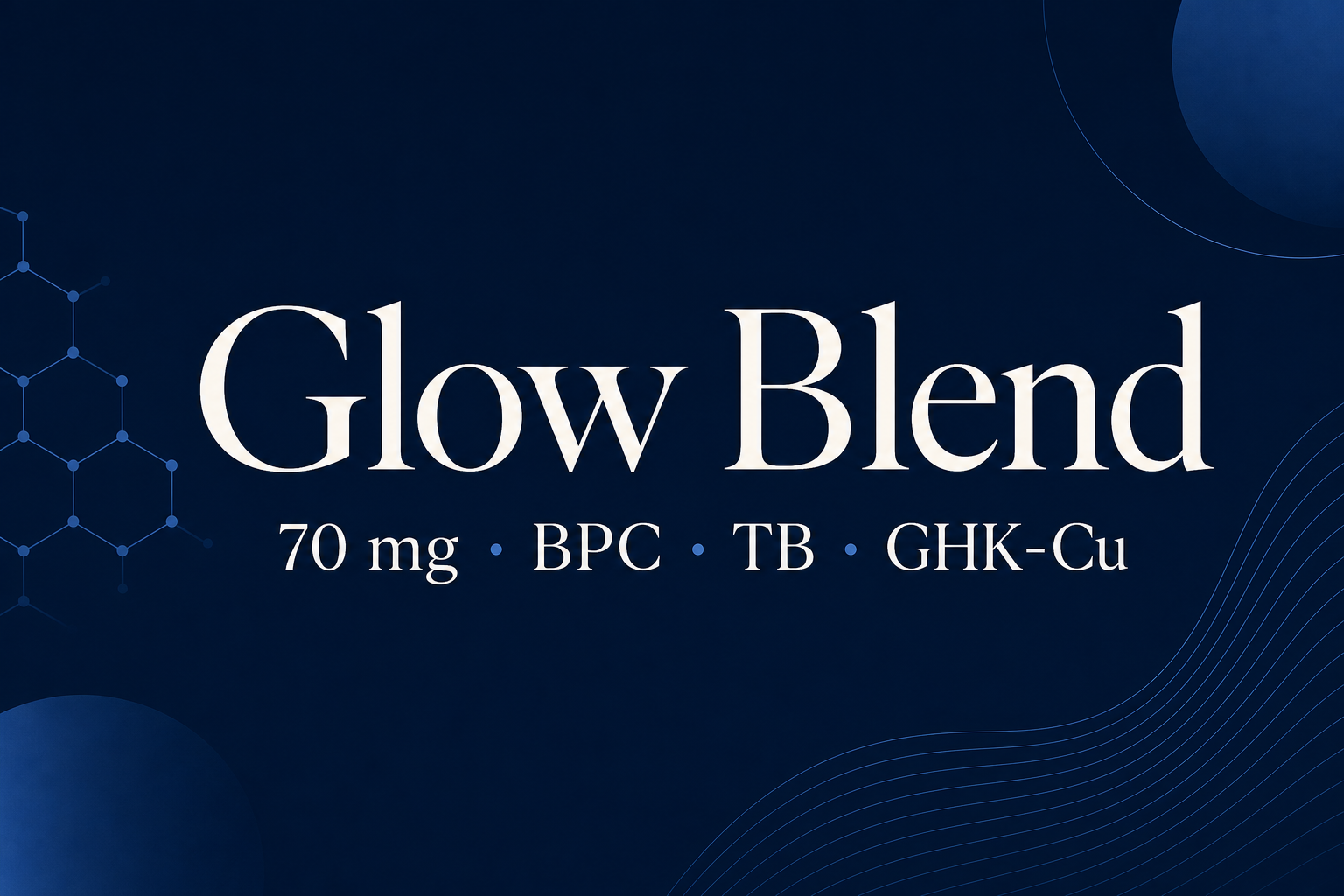
For UAE researchers seeking a multi-peptide repair and matrix stack in one vial, the Glow Blend from Emirates Peptides combines three well-studied research peptides: BPC-157, TB-500, and GHK-Cu in a fixed 10 mg / 10 mg / 50 mg ratio — 70 mg total peptide mass per vial.
This guide covers formulation, mechanism, handling, and UAE procurement. Choosing between Glow and Klow Blend? See our full Glow vs Klow comparison guide for formulation, QC, and decision logic.

02 · Glow
What Is the Glow Blend?
The Glow Blend is a pre-blended research peptide combination containing three complementary compounds:
BPC-157 — 10 mg:
Synthetic pentadecapeptide studied in soft-tissue repair, angiogenesis, and growth-factor pathway models.
TB-500 — 10 mg:
Thymosin beta-4 fragment associated with actin binding, cell migration, and angiogenesis in preclinical literature.
GHK-Cu — 50 mg:
Copper-binding tripeptide with extensive in vitro matrix and fibroblast research — the majority mass fraction in this vial.
03 · Formulation
Formulation per vial
Latest research insights. No spam, ever.
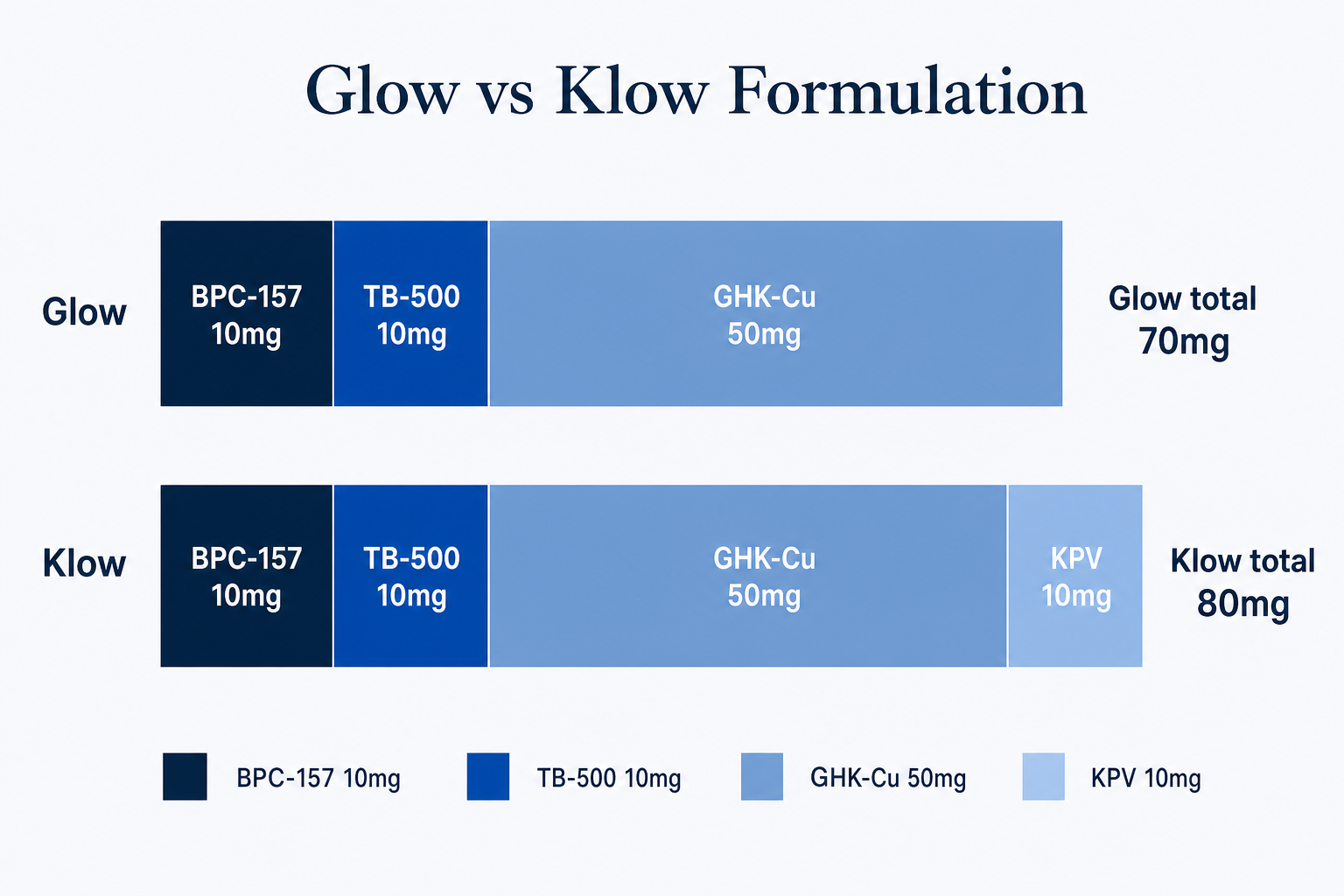
Peptide mass composition — Glow (70 mg)
| Component | Mass | Role |
|---|---|---|
| BPC-157 | 10 mg | Repair signalling, angiogenesis |
| TB-500 | 10 mg | Cell migration, cytoskeletal remodelling |
| GHK-Cu | 50 mg | Extracellular matrix, collagen gene expression |
| Total | 70 mg | Three-peptide fixed-ratio blend |
04 · Each
How Each Component Works
BPC-157
Repair signalling and angiogenesis in soft-tissue injury models.
TB-500
Cell migration and cytoskeletal remodelling alongside BPC.
GHK-Cu
Matrix remodelling — majority mass fraction (~71%).
June 2026 procurement note: Glow Blend (SKU EP-BPC157TB500GHKCU, 70 mg per vial) is listed at AED 620 for UAE research buyers. Verify per-peptide quantities on the batch COA before reconstitution — a COA that only reports total peptide mass is insufficient for this three-component vial.
70
Three peptides, fixed ratio. GHK-Cu supplies ~71% of total mass — most of what you reconstitute is copper peptide. Simpler incoming QC than the four-peptide Klow SKU.
BPC-157 — Repair signalling
BPC-157 appears in preclinical literature on angiogenesis, fibroblast migration, and growth-factor receptor modulation in soft-tissue injury models. At 10 mg it anchors the repair narrative but is not the dominant mass fraction.
TB-500 — Cell migration
TB-500 (thymosin beta-4 fragment) is studied for actin-related cell migration and angiogenesis. Researchers pair it with BPC-157 when models span multiple repair pathways. Both blends use TB-500 at 10 mg, matching BPC-157 gram-for-gram.
GHK-Cu — Matrix remodelling
GHK-Cu is a copper-chelating tripeptide with decades of in vitro literature on collagen expression, fibroblast behaviour, and extracellular matrix remodelling. At 50 mg it drives most of what you dissolve and reconstitute — handle with gentle swirling and light protection.
05 · Combination
Why this combination is stacked
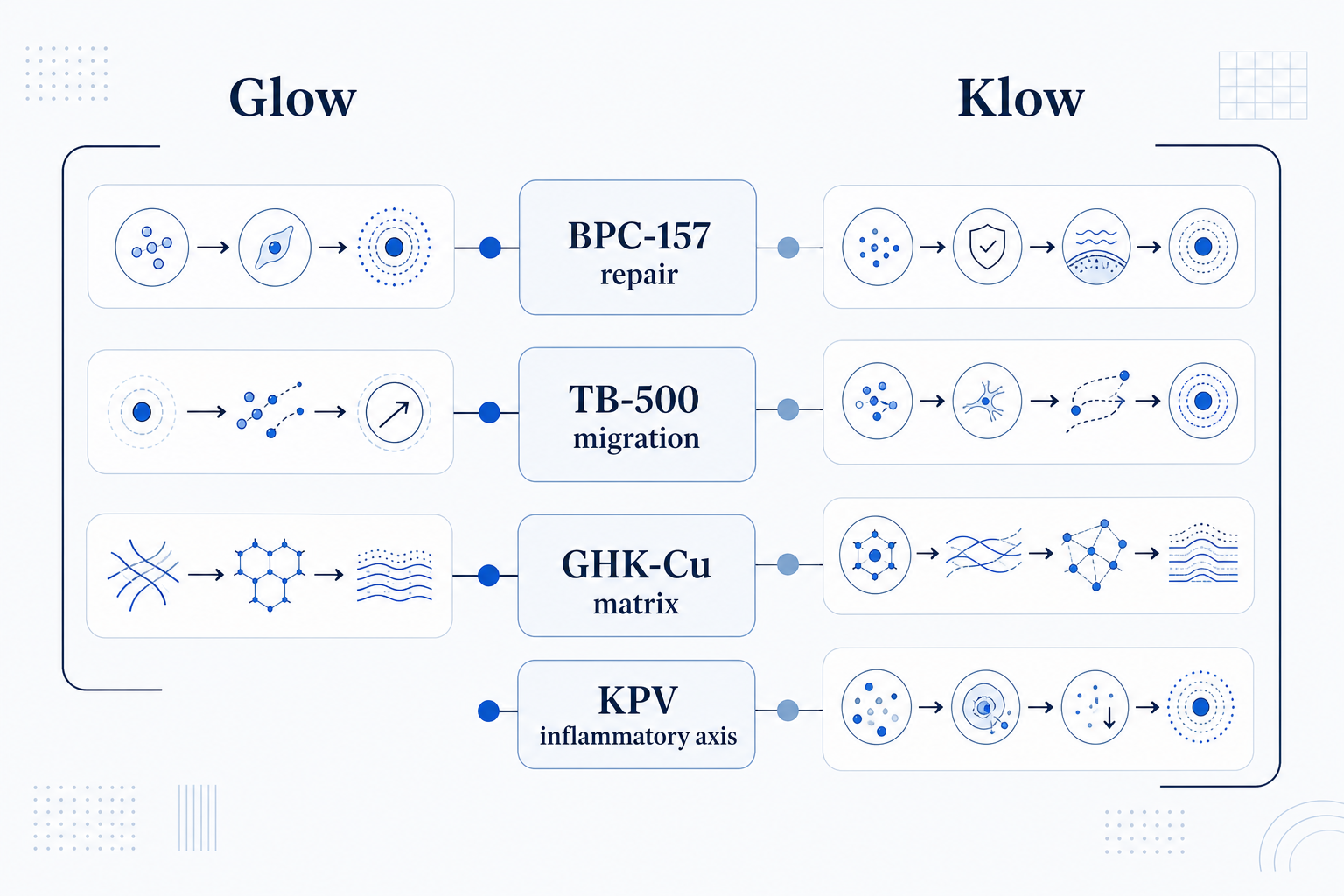
| Component | Primary role | Complementary effect |
|---|---|---|
| BPC-157 (10 mg) | Repair signalling | Angiogenesis, fibroblast recruitment |
| TB-500 (10 mg) | Cell migration | Cytoskeletal remodelling at injury sites |
| GHK-Cu (50 mg) | Matrix remodelling | Collagen and ECM gene expression |
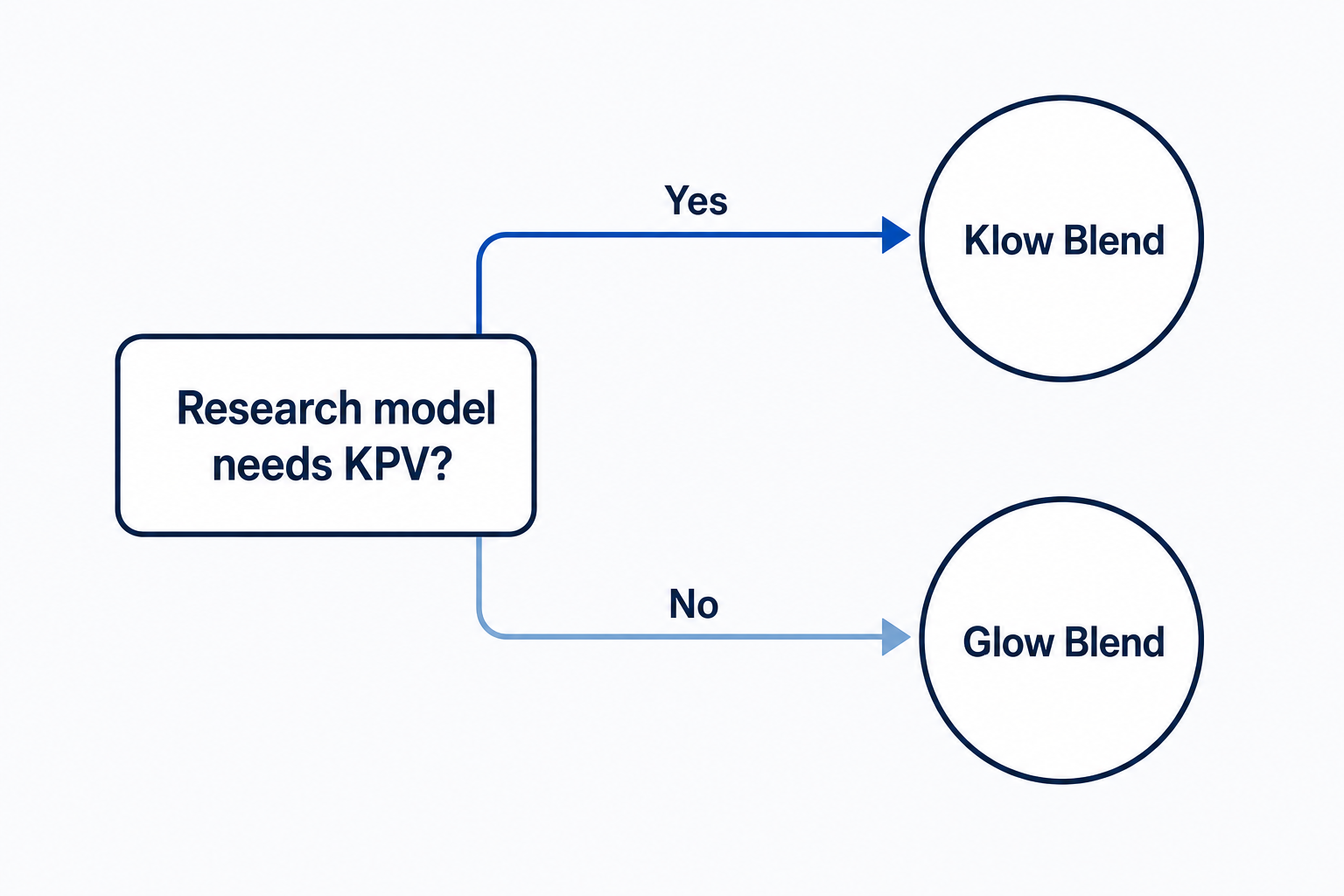
The three peptides act through distinct pathways. BPC-157 initiates repair signalling, TB-500 supports cell migration, and GHK-Cu addresses matrix architecture. If your model also needs KPV in the same vial, see Klow Blend or the side-by-side comparison.
06 · Reconstitution
Reconstitution and storage
Reconstitute with bacteriostatic water for multi-dose research use. Use our peptide calculator for concentration math. Because GHK-Cu dominates mass, swirl gently and protect from light; copper peptides are photosensitive.
Storage
Lyophilised:
2–8 °C, protect from light
Reconstituted:
2–8 °C; document time-from-reconstitution per your validation SOP
UAE arrival:
Refrigerate same day — do not leave vials in ambient heat
07 · Glow
Where to buy Glow Blend in the UAE
- Pre-blended BPC-157 / TB-500 / GHK-Cu — 10/10/50 mg per vial
- COA-verified, per-component identity on batch documentation
- Same-day UAE dispatch when in stock
- GCC shipping available
Order Glow Blend → · Compare with Klow Blend →
08 · Questions
Frequently Asked Questions
Why is GHK-Cu paired with BPC-157 and TB-500? +
Glow Blend vs Klow Blend — which should I order? +
What should the reconstituted solution look like? +
Is Klow just an upgraded Glow? +
What should appear on the COA? +
Is Glow Blend legal in the UAE for research? +
09 · References
References
- Sikiric P et al. Stable gastric pentadecapeptide BPC 157. Curr Pharm Des. PubMed
- Goldstein AL et al. Thymosin beta-4 and actin-sequestering protein. Ann NY Acad Sci. PubMed
- Pickart L et al. GHK peptide in tissue remodeling. BioMed Res Int. PubMed
- Pickart L, Margolina A. Regenerative actions of GHK-Cu. Int J Mol Sci. PubMed
- Gwyer D et al. BPC 157 and musculoskeletal soft tissue healing. Cell Tissue Res. PubMed
- Chang CH et al. BPC 157 and growth hormone receptor in tendon fibroblasts. Molecules. PubMed
Disclaimer: For laboratory research use only. Not approved for human use. Not medical advice.
Was this article helpful?

🔬 Related Research Peptides
Explore Research-Grade Peptides
HPLC-verified, lab-tested peptides for your scientific research. Fast delivery across the UAE.
Browse All PeptidesRelated Articles

Emirates Peptides Research Team
A dedicated coalition of biochemists and clinical researchers focusing on advanced peptide synthesis and pharmacological applications. All data is verified against current clinical trials.