
Blog


For research use only. Material is supplied as a lyophilized reference compound with HPLC purity verification.
- The short answer
- Why the percentage can mislead
- Seven quality questions, not one
- Step 1: verify the exact peptide identity
- Step 2: read the HPLC report, not just the result
Choosing a research peptide is not a hunt for the highest purity percentage. A defensible purchase requires the correct sequence, batch-linked identity evidence, a meaningful chromatographic method, actual peptide content, suitable microbiological information, stable transport and a supplier who can trace the material. “99% HPLC” answers only one part of that quality problem.
01 · Short
The short answer
To assess high-purity research peptides in the UAE, verify the legal supplier, exact molecule, batch number and certificate before relying on a purity claim. Look for mass-spectrometry identity, a complete HPLC report, peptide-content information, relevant impurity tests and documented storage. Treat sterility, endotoxin, stability and activity as separate claims. Reject generic or mismatched COAs.
02 · Percentage
Why the percentage can mislead
An HPLC result commonly reports the main peak as a percentage of total detected chromatographic peak area. That can be useful for comparing detectable related components under a stated method. It is not the percentage of the vial mass that is necessarily the target peptide.
A sample can show a high chromatographic main peak and still contain water, counter-ions, residual solvents or other material that the detector does not represent in the same way. It may also contain a co-eluting impurity hidden under the main peak. If the wrong peptide is cleanly synthesised, the chromatogram can still look excellent.
USP reference-standard work illustrates the difference. A peptide reference material can have high HPLC purity while its assigned peptide content is lower after water, counter-ion and other components are included. Laboratories therefore separate identity, purity and quantitative content.
03 · Seven
Seven quality questions, not one
Latest research insights. No spam, ever.
| Quality question | Typical evidence | What it does not prove alone |
|---|---|---|
| Is it the expected molecule? | Mass spectrometry, sequence-related methods, NMR where appropriate | Purity, amount or sterility |
| How many detectable related components are present? | Stability-indicating HPLC or UPLC | Complete identity or actual peptide content |
| How much peptide is present? | Validated assay, amino-acid analysis or mass-balance approach | Biological activity |
| What impurities matter? | LC-MS, peptide mapping, residual-solvent and chiral methods | Microbiological quality |
| Is it microbiologically suitable for the model? | Bioburden, endotoxin or sterility tests as required | Chemical identity or long-term stability |
| Will it remain suitable? | Batch-specific stability data under defined conditions | Performance outside those conditions |
| Does it perform in the assay? | Relevant functional test with controls | Safety or effectiveness in humans |
A supplier does not need every test for every early laboratory application. It does need to state clearly which questions were tested and avoid implying answers to the rest.
04 · Step
Step 1: verify the exact peptide identity
Start with the complete name and amino-acid sequence. Record terminal modifications, cyclisation, lipidation, PEGylation, metal complex, salt or counter-ion and expected molecular formula or mass. Short catalogue labels can conceal important differences.
Examples of identity traps include:
- GHK, GHK-Cu and AHK-Cu;
- full-length thymosin beta-4 and an LKKTETQ fragment sold as TB-500;
- CJC-1295 with or without a drug-affinity-complex modification;
- amidated and non-amidated sequences;
- acetate and trifluoroacetate forms;
- a GLP-3 catalogue label and a named triple-receptor agonist.
Mass spectrometry can support the expected molecular mass. It is much stronger when the sample ID and batch match the vial and COA. A cropped spectrum with no sample information has limited value. For more complex or high-risk work, sequence confirmation, peptide mapping, MS/MS or other orthogonal methods may be appropriate.
05 · Step
Step 2: read the HPLC report, not just the result
A useful chromatographic report includes the sample identifier, batch, method or method reference, column, detection conditions, run date, chromatogram, integration and result. The laboratory should be identifiable.
Ask these questions:
- Does the COA batch exactly match the vial?
- Is the chromatogram for the finished material or a representative historical batch?
- Is the main peak clearly integrated?
- Are small peaks visible and reported?
- Is the method capable of separating expected related impurities?
- Is the result from release testing or a later retest?
- Does the specification match the laboratory’s protocol requirement?
Different HPLC methods can produce different apparent purity values for the same sample. Gradient, column, temperature, wavelength and integration rules matter. A result without a method is difficult to interpret.
06 · Step
Step 3: distinguish purity from peptide content
Peptide content addresses the amount of actual peptide in a stated mass of material. This is crucial for quantitative research. If a vial is labelled by total lyophilised mass but contains water and counter-ion, using the label as pure peptide mass can create concentration error.
USP authors describe value assignment for synthetic peptide reference standards using multiple laboratories and mass-balance approaches. The broader lesson is simple: an analytical standard needs a defensible assigned value, not only a clean chromatogram.
For routine research, procurement teams should ask what the vial amount represents. Is it net peptide, peptide plus counter-ion, or total fill? Is overfill used? Is content uniformity assessed across vials? The answer should be documented rather than inferred.
07 · Step
Step 4: examine peptide-related impurities
Synthetic peptides can contain deletion sequences, incomplete coupling products, truncated sequences, oxidation products, deamidated forms, epimers, protecting-group remnants and process-related contaminants. Some impurities can co-elute with the target under a simple method.
Chiral purity is a specialised example. D-amino-acid impurities can enter through starting materials or racemisation during synthesis and storage. A 2023 study described chiral HPLC-ESI-MS/MS for detecting D-isomer substitutions in synthetic peptide therapeutics. This is not required for every exploratory assay, but it shows why “one main peak” is not a full impurity map.
Risk determines depth. A short discovery screen may use a basic identity and purity panel. A quantitative mechanistic study may need content and impurity characterisation. Work intended to support clinical development requires a much larger validated quality system.
08 · Step
Step 5: keep chemical and microbiological quality separate
HPLC cannot establish sterility. Mass spectrometry cannot establish endotoxin status. A vial can be chemically pure and microbiologically unsuitable for a sensitive cell or animal model.
The required tests depend on the experiment. Endotoxin can strongly alter immune and inflammatory endpoints, so a low or unknown endotoxin level can confound biological interpretation. Bioburden may matter even when human administration is not involved. Sterility testing is a defined test with method limitations; the word “sterile” should not appear because a vial looks sealed.
Researchers should set acceptance criteria before receipt. If microbiological status is not known, do not describe it as sterile or suitable for a use that requires sterility. Filtration performed later does not retroactively prove the original product’s quality.
09 · Step
Step 6: verify stability and UAE transport conditions
Peptide stability depends on sequence, formulation, physical state, temperature, humidity, light, pH, oxygen, agitation, concentration and surface contact. UAE heat makes shipment and receipt records important, but a universal “keep cold” statement is still insufficient.
Ask for storage conditions supported by the supplier’s data. Review whether the statement applies to the unopened lyophilised material, a prepared solution or both. These states can have very different stability.
At receipt, laboratories should document package condition, transit time, temperature monitor where used, vial and seal condition, batch, COA match and time transferred to controlled storage. A suspected excursion should trigger quarantine and batch-specific review, not a guess based on appearance.
The supplier should have a process for deviations and complaints. “Delivered in Dubai” is a location statement, not evidence of an intact cold chain.
10 · Step
Step 7: check the supplier as carefully as the COA
A polished certificate cannot compensate for an untraceable business. Verify the legal entity, contact information, UAE presence and commercial scope. Check whether the site consistently states research-only use or quietly provides personal dosing and treatment claims elsewhere.
Reliable supplier behaviour includes:
- a batch number on both vial and COA;
- access to documentation before or at purchase;
- clear product identity and format;
- a named testing laboratory;
- stable document links or version records;
- a quality-complaint process;
- correction of errors rather than deletion or evasion;
- no invented regulatory approval;
- no claim that a trade licence makes a peptide medically approved.
Warning signs include copied chromatograms, identical reports across unrelated products, hidden sample identifiers, impossible dates, inconsistent molecular mass, cropped laboratory details and a certificate that cannot be tied to the shipped batch.
11 · Assess
How to assess an independent laboratory
“Third-party tested” is useful only when the third party and scope are real. Identify the laboratory and determine whether the method falls within its competence or accreditation scope. Accreditation does not automatically cover every technique or analyte.
Check whether the report was issued directly by the lab, whether the sample was submitted by the supplier and whether chain of custody is documented. A supplier-submitted sample does not prove every production vial is identical, but batch sampling and content-uniformity systems can reduce uncertainty.
If the research risk is high, the buying laboratory can perform incoming identity or purity checks. An independent result is most useful when the method is planned before seeing the supplier’s value.
12 · Practical
A practical UAE procurement scorecard
| Area | Pass signal | Hold or reject signal |
|---|---|---|
| Legal identity | Verifiable UAE entity and contact | Anonymous or conflicting company details |
| Product identity | Full name, sequence/form and expected mass | Marketing nickname only |
| Batch traceability | Vial and COA match | Generic certificate or missing batch |
| Identity testing | Batch-linked MS or suitable orthogonal evidence | HPLC percentage presented as identity |
| Purity | Complete chromatogram and method context | Number only, cropped or mismatched report |
| Content | Amount basis is clear | Label mass assumed to be pure peptide |
| Microbiology | Relevant test reported when required | “Sterile” with no method |
| Stability | State- and condition-specific evidence | Universal shelf-life claim |
| Shipment | Receipt and excursion process | No temperature or deviation record |
| Claims | Research-only, evidence-bounded wording | Dosing, treatment or guaranteed outcomes |
A single failure may not always mean the chemistry is poor. It can still mean the material is not suitable for a reproducible study because the uncertainty is too high.
13 · “Pharmaceutical
What “pharmaceutical grade” means and why it is often misused
Pharmaceutical quality is a system, not an adjective. It normally involves qualified facilities, controlled manufacturing, validated methods, specifications, release, stability, change control, deviation handling and regulatory oversight for a defined product.
A research peptide does not become pharmaceutical grade because it has 99% HPLC purity, a sterile-looking vial or a UAE address. A supplier should use that term only when it can substantiate the exact standard and product status. “Laboratory research grade” is also not a universal regulatory specification, so the supporting tests still need to be stated.
14 · Emirates
How Emirates Peptides should present quality evidence
For each live product, the public page should identify the research-only status, molecule and format. The COA library should make batch matching straightforward. If HPLC and mass-spectrometry evidence are available, they should be labelled accurately. Peptide content, sterility, endotoxin and stability should not be implied unless supported.
Product links in educational articles must be checked live. Stock, price, variation, COA and batch status can change. A statement such as “COA available” is time-sensitive and should point to the current document or explain how the batch report can be requested.
The best trust signal is correction. If a certificate or label is wrong, quarantine the affected batch, preserve the record, investigate and publish the corrected information. Quietly replacing a PDF without a version trail weakens confidence.
15 · Incoming
Incoming acceptance workflow for UAE laboratories
Procurement approval should not automatically release a shipment to the bench. Place new material in a defined receipt or quarantine status until the package, label and documents are checked. The reviewer should confirm that the ordered sequence, modification, amount basis and batch match the study specification.
Document the shipment condition and any temperature evidence. Compare the vial batch with the COA, mass report and chromatogram. Confirm that dates are plausible and that the testing laboratory and sample identifier remain visible. If the method or result falls outside the planned acceptance criteria, hold the material while the investigator and quality lead decide whether more testing is justified.
For higher-risk or quantitative work, use a risk-based incoming test. Identity confirmation may be prioritised for a new supplier. Purity or content verification may be repeated when the batch is central to a long programme. Endotoxin can be essential for immune assays. The decision and rationale should be documented even when no repeat testing is performed.
Release the batch with a unique internal material code linked to supplier, report and storage location. If a later deviation affects the batch, that code allows every experiment and remaining vial to be found. This is the difference between buying a vial and qualifying a research material.
16 · Questions
Frequently asked questions
What does 99% HPLC purity mean?
It usually means the main chromatographic peak represented about 99% of detected integrated peak area under the reported method. It does not necessarily mean 99% of the vial mass is active peptide and does not prove identity, sterility, stability or activity.
Is mass spectrometry enough to confirm a peptide?
It can strongly support expected molecular mass. Depending on the molecule and risk, sequence, isomer, modification and impurity questions may require additional methods. A mass result should be batch-linked and interpreted with chromatography and content data.
What is peptide content?
Peptide content is the quantity of actual target peptide relative to the material or vial basis. Water, counter-ions and other components can make content lower than total fill mass even when chromatographic purity is high.
Does a COA prove the whole batch is good?
A COA reports results for the tested sample and sampling system. Confidence depends on chain of custody, representative sampling, method quality, batch controls and content uniformity. It is stronger when the exact shipped vial matches the reported batch.
Are all third-party laboratories equivalent?
No. Laboratories differ in accreditation scope, methods, instruments and peptide experience. Verify the laboratory, report, sample ID and method rather than relying on a logo.
Does freeze-dried powder remain stable in UAE heat?
Not universally. Lyophilisation can improve stability, but the result depends on sequence, formulation, moisture, packaging and temperature history. Use batch- and state-specific storage information and investigate excursions.
Is research grade safe for human use?
Research grade is not approval for human use. Research products may lack the manufacturing, clinical, regulatory and quality controls required for medicines. Emirates Peptides materials are not intended for human or veterinary use.
Where can UAE laboratories buy high-purity peptides?
This guide does not rank suppliers. Laboratories should use the identity, COA, method, batch, content, microbiology, stability and governance checks above. Emirates Peptides product pages and documentation should be assessed by the same standard.
Can a clear solution be assumed sterile?
No. Clarity is a visual observation. Sterility and endotoxin require suitable testing. Invisible microorganisms or pyrogens cannot be ruled out by appearance.
17 · Conclusion
Conclusion
High-purity peptide procurement is a chain of evidence. The label names a molecule. Mass spectrometry supports identity. Chromatography describes detected components. Content testing addresses quantity. Microbiological tests, stability data and transport records answer other questions. The supplier connects those records to the exact batch.
For Dubai and UAE laboratories, the practical standard is simple: do not buy a percentage. Buy a traceable, fit-for-purpose material with enough evidence to support the experiment. When evidence is missing, record the uncertainty or choose another source.
This page carries commercial-investigation intent, so its company-specific proof must be unusually strict. Before publication, sample several live products and confirm that the public label, batch number, COA, HPLC report and mass evidence align. Check the current COA-library route and remove any link that lands on a generic or missing document. If Emirates Peptides cannot currently substantiate an attribute, the article should explain how to ask for it rather than claim it is universal. Quality education is credible only when the seller applies the same checklist to itself.
18 · Practical
Practical takeaway for procurement teams
Create a one-page material specification and do not change it to fit the supplier’s available paperwork. Require exact identity, batch match, fit-for-purpose purity and a clear content basis. Add microbiological or stability requirements only when the experiment needs them, but never imply they were tested when they were not. Score the document trail before price and delivery. A supplier that explains an uncertainty accurately can be more useful than one that promises every quality attribute with no method.
19 · References
References
- Macherla S, et al. Reference standards to support quality of synthetic peptide therapeutics. Pharmaceutical Research. 2023.
- United States Pharmacopeia. Standards to support the quality of peptide materials.
- Strege MA, et al. Enantiomeric purity analysis of synthetic peptide therapeutics by chiral HPLC-ESI-MS/MS. 2023.
- Zapadka KL, et al. Factors affecting the physical stability of peptide therapeutics. 2017.
- UAE Ministry of Health and Prevention. Transfer of pharmaceutical quality and research services to the Emirates Drug Establishment. 2026.
20 · Interpret
How to interpret and apply this evidence
Purity is one part of material quality, not a complete verdict. A percentage should be interpreted together with the analytical method, detection conditions, integration approach, chromatogram, identity evidence and lot information. A clean chromatographic profile does not by itself prove that the principal peak is the intended peptide, while mass confirmation does not quantify every impurity or establish the amount of active peptide in a container.
Supplier assessment should therefore test traceability as well as documentation. Useful records connect the label, lot number, certificate, analytical files, receipt condition and storage history. Researchers should be able to resolve discrepancies and understand whether testing was performed on the supplied lot by a competent laboratory. Generic certificates, unexplained identifiers and results without underlying method information weaken confidence even when the headline purity number appears high.
UAE laboratories should combine these checks with their own institutional procurement, biosafety, import, storage and waste requirements. Regulatory and operational requirements can change, so current official guidance must be checked for the exact material and activity. This article is a research-quality checklist, not an endorsement of a supplier or a statement that a product is approved, sterile, clinically suitable or intended for human use.
Was this article helpful?

🔬 Related Research Peptides
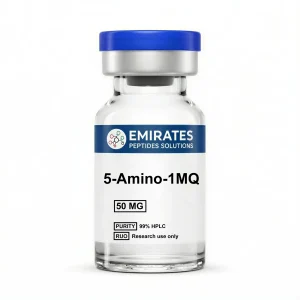
Explore Research-Grade Peptides
HPLC-verified, lab-tested peptides for your scientific research. Fast delivery across the UAE.
Browse All PeptidesRelated Articles


Emirates Peptides Research Team
A dedicated coalition of biochemists and clinical researchers focusing on advanced peptide synthesis and pharmacological applications. All data is verified against current clinical trials.