
Blog

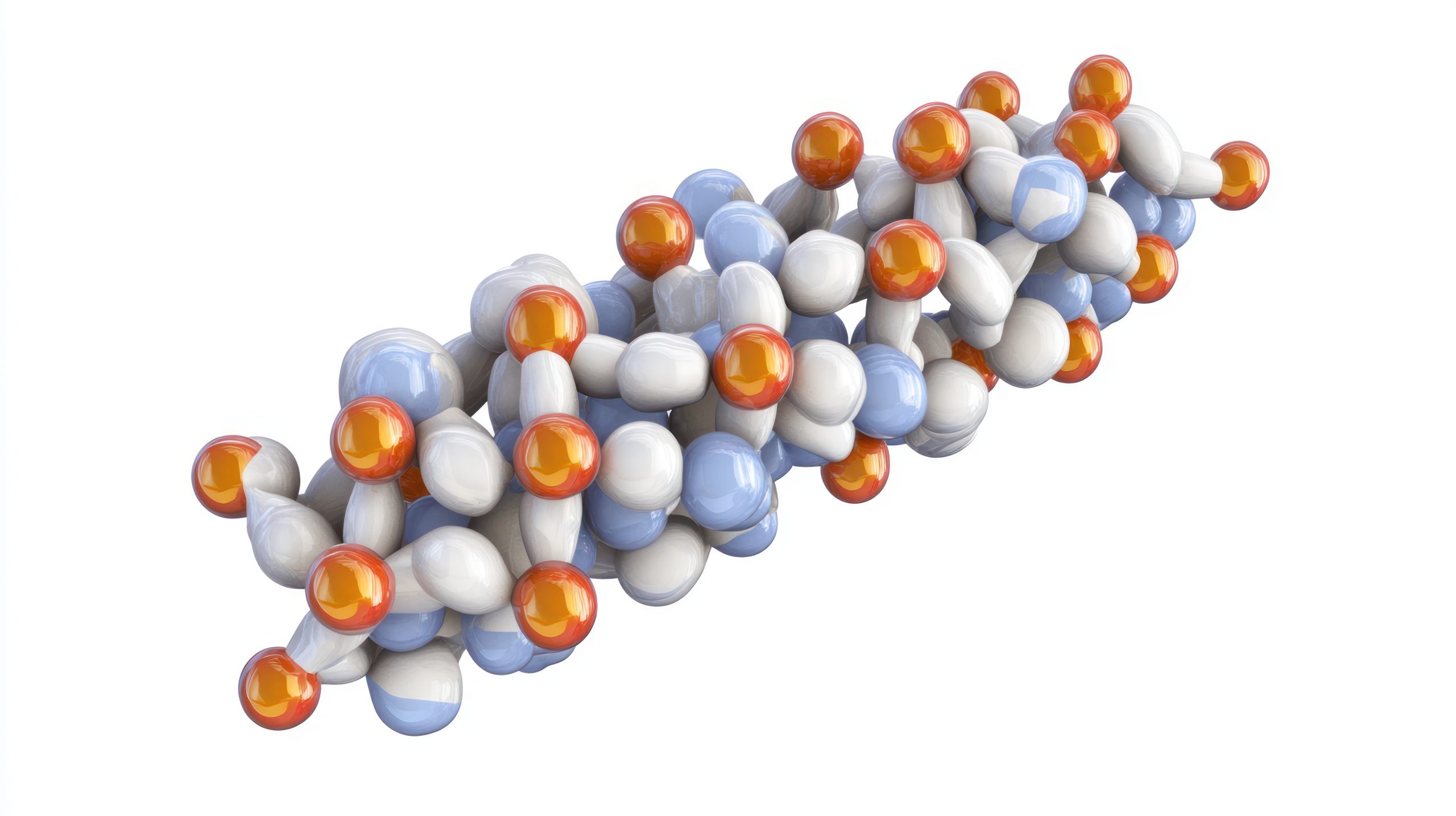
For research use only. Material is supplied as a lyophilized reference compound with HPLC purity verification.
- Key Facts at a Glance
- GLP-3 is a synthetic peptide developed by Eli Lilly
- Why is GLP-3 called a "triple agonist"?
- Where did GLP-3 come from?
- What are people studying with GLP-3?
Last updated: 19 April 2026 · Reviewed by the Emirates Peptides Research Team · 7-minute read
GLP-3 is a name that has moved quickly from academic journals into UAE biohacker conversations. If you have heard the term but are not sure what it actually is, where it comes from, or why researchers are paying attention, this is the plain-language explanation.
02 · Synthetic
GLP-3 is a synthetic peptide developed by Eli Lilly
GLP-3 — development code LY3437943 — is a 39-amino-acid synthetic peptide created by pharmaceutical company Eli Lilly. The “peptide” label simply means it is a short chain of amino acids. In this case, GLP-3 is modeled on three natural human hormones: GIP, GLP-1, and glucagon. All three exist in your body already; GLP-3 is engineered to mimic them simultaneously in a single molecule.
A C20 fatty-acid side chain attached to the peptide extends its circulating half-life to roughly six days, which is why research dosing protocols use weekly rather than daily injections.
03 · Called
Why is GLP-3 called a “triple agonist”?
Latest research insights. No spam, ever.
“Agonist” means a molecule that activates a specific receptor. GLP-3 activates three different receptors at once:
GLP-1 receptor
same target as Semaglutide (Ozempic, Wegovy). Controls appetite signaling and gastric emptying.
GIP receptor
same target as Tirzepatide (Mounjaro, Zepbound) shares with GLP-1. Improves insulin sensitivity.
Glucagon receptor
unique to GLP-3 among major research peptides in this class. Increases resting energy expenditure and hepatic fat oxidation.
Calling it a “triple agonist” is just shorthand for hitting all three at once. The combined mechanism is why GLP-3 produces the largest Phase 2 weight-reduction magnitude yet reported for a peptide of this class.
04 · Come
Where did GLP-3 come from?
GLP-3’s development traces through several publications. The discovery and early preclinical characterization were published by Coskun et al. in Cell Metabolism in 2022. Phase 2 obesity trial results appeared in the New England Journal of Medicine (Jastreboff et al., 2023). Parallel Phase 2 data in type-2 diabetes were published in The Lancet (Rosenstock et al., 2023).
As of April 2026, Phase 3 trials are in progress. GLP-3 is not yet FDA approved for any indication. All material supplied by Emirates Peptides and other research-peptide suppliers is classified as investigational and sold strictly for laboratory and in-vitro research use.
05 · People
What are people studying with GLP-3?
The research questions currently under investigation span several metabolic domains:
Obesity research.
The marquee use case. Phase 2 data showed 24.2% weight reduction at 48 weeks at the top dose — the largest yet reported for a GLP-1-class peptide.
Type-2 diabetes research.
Parallel studies examine glucose control, HbA1c reduction, and comparisons to tirzepatide in diabetic populations.
Body-composition research.
Biohackers and longevity researchers are particularly interested in the glucagon-receptor effect on resting energy expenditure, which distinguishes GLP-3 from its competitors.
Metabolic-rate studies.
Basic-science research is examining how the glucagon component of the molecule drives increased fatty-acid oxidation and hepatic metabolic flexibility.
06 · Different
How is GLP-3 different from what I’ve heard about?
The most common points of confusion:
GLP-3 vs Ozempic
Ozempic is the brand name for semaglutide, a single-agonist GLP-1 peptide. GLP-3 is a triple-agonist peptide that includes the GLP-1 action plus two additional receptors. In head-to-head comparisons, GLP-3 produces greater weight reduction.
GLP-3 vs Mounjaro
Mounjaro is the brand name for tirzepatide, a dual-agonist (GIP + GLP-1). GLP-3 adds the glucagon receptor to this pair, making it a triple agonist with a modestly superior weight-reduction profile.
GLP-3 vs Wegovy / Zepbound
Wegovy is the same molecule as Ozempic (semaglutide) at a higher dose, approved for obesity. Zepbound is the same as Mounjaro (tirzepatide) at a higher dose, also for obesity. GLP-3 is mechanistically distinct from both because of the glucagon-receptor activation.
Is GLP-3 a “weight loss pill”?
No. GLP-3 is an injectable peptide supplied as a lyophilized powder that is reconstituted with bacteriostatic water before use. There is no oral GLP-3 formulation currently in development.
07 · Anyone
Can anyone buy GLP-3 in the UAE?
GLP-3 is available in the UAE strictly through research-peptide suppliers — including Emirates Peptides — and is sold for laboratory and in-vitro research only. It is not approved for human administration anywhere in the world. Purchasers must comply with all applicable UAE regulations governing research-chemical import, storage, and use.
For a full explanation of how GLP-3 works, dosing protocols reported in the research literature, quality standards to verify, and side-effect profiles, see our GLP-3 UAE guide.
08 · Questions
Frequently asked questions
What does LY3437943 mean?
LY3437943 is Eli Lilly’s internal development code for GLP-3. “LY” identifies the company; the number is a sequential identifier. You will see LY3437943 in scientific publications and clinical-trial registries even though the name “GLP-3” is now used in most public-facing material.
Is GLP-3 natural or synthetic?
GLP-3 is synthetic. It is manufactured through solid-phase peptide synthesis. The molecule is designed to resemble the native hormones GIP, GLP-1, and glucagon, but no part of the molecule is extracted from a natural source.
How long does GLP-3 stay in the body?
GLP-3 has a circulating half-life of approximately six days. This means a single dose takes about a week to drop to half its initial concentration. It is this long half-life that makes weekly research dosing practical.
Is GLP-3 safe?
Phase 2 safety data report a side-effect profile similar to other GLP-1-class peptides — nausea, diarrhea, and reduced appetite are the most common events. A modest elevation in resting heart rate (5–10 bpm) has been reported, attributable to the glucagon-receptor component. The long-term safety database is still being built through ongoing Phase 3 trials.
Where can I find published GLP-3 research?
Key papers include: Jastreboff AM et al., New England Journal of Medicine, 2023 (TRIUMPH-1 obesity); Rosenstock J et al., The Lancet, 2023 (TRIUMPH-2 diabetes); Coskun T et al., Cell Metabolism, 2022 (discovery and pre-clinical proof of concept).
Is GLP-3 the same as Mounjaro?
No. Mounjaro is the brand name for Tirzepatide — a dual GIP + GLP-1 agonist. GLP-3 is a triple agonist that adds glucagon-receptor activation to the GIP + GLP-1 framework. Both are developed by Eli Lilly, but they are different molecules with different mechanisms and ceilings.
Why does the glucagon component matter?
Glucagon receptor activation increases resting energy expenditure — the body burns more calories at rest, independently of appetite suppression. This counteracts the metabolic slowdown that normally occurs during caloric deficit, which is why GLP-3 produces larger weight-reduction figures than Semaglutide or Tirzepatide in head-to-head Phase 2 comparisons.
When will GLP-3 be FDA approved?
Phase 3 trials (TRIUMPH-3, TRIUMPH-4, TRIUMPH-5) are scheduled to read out through 2026–2028. An FDA approval decision typically follows 6–12 months after pivotal trial completion. Estimated earliest approval window is 2027–2028, though regulatory timelines can shift.
Continue reading
- GLP-3 UAE: Complete Research Peptide Guide
- MOTS-c UAE: Mitochondrial Peptide Research Guide
- GLP-3 vs Tirzepatide vs Semaglutide
Research-use-only disclaimer: GLP-3 supplied by Emirates Peptides is for laboratory and in-vitro research only, not for human administration.
Was this article helpful?

🔬 Related Research Peptides
Explore Research-Grade Peptides
HPLC-verified, lab-tested peptides for your scientific research. Fast delivery across the UAE.
Browse All PeptidesRelated Articles



Selected Research References
Selected scientific references for research context only. Products remain for laboratory research use and are not for human use.
- Triple-Hormone-Receptor Agonist Retatrutide for Obesity - A Phase 2 Trial
- Tirzepatide Once Weekly for the Treatment of Obesity
- Tirzepatide as Compared with Semaglutide for the Treatment of Obesity
- Once-Weekly Semaglutide in Adults with Overweight or Obesity
- Once-weekly cagrilintide for weight management in people with overweight and obesity

Emirates Peptides Research Team
A dedicated coalition of biochemists and clinical researchers focusing on advanced peptide synthesis and pharmacological applications. All data is verified against current clinical trials.
FROM INSTAGRAM