
Blog


For research use only. Material is supplied as a lyophilized reference compound with HPLC purity verification.
- Key Facts at a Glance
- Actin dynamics and why TB-500 dose talk is in milligrams
- Loading vs maintenance patterns in research discussion
- Preclinical strength and clinical gap
- Schedule variants and BPC-157 stack context
Last updated: 13 Jul 2026 · Reviewed by the Emirates Peptides Research Team · 22-minute read · 16 sources cited
TB-500 dosing protocol notes online often collapse a thymosin beta-4 fragment, full-protein medicine-pipeline stories, and informal mg loading schedules into one undifferentiated claim. This guide separates each layer: the actin-migration mechanism framing that underpins Tβ4 biology, the research-discussion loading and maintenance patterns and why they exist, the laboratory reconstitution math needed for mg-scale draws, UAE-specific storage constraints driven by extreme ambient heat, evidence limits that keep every schedule firmly in the research-use lane, stack-verification requirements when TB-500 is studied alongside BPC-157, and a direct comparison between the two peptides’ dosing languages. Readers who understand the fragment-versus-full-protein distinction — and what it means for interpreting any publication — will be able to treat these schedules as what they are: informed research-community parameters, not clinical prescriptions.
Loading and maintenance milligram figures below appear in research-community discussion and must be labelled as such. TB-500 from Emirates Peptides is supplied for laboratory research only — not as injury treatment, recovery coaching, or human therapeutic dosing guidance.
01 · Mechanism
Actin dynamics and why TB-500 dose talk is in milligrams
Migration-oriented biology sets a different scale than BPC-157’s mcg language.
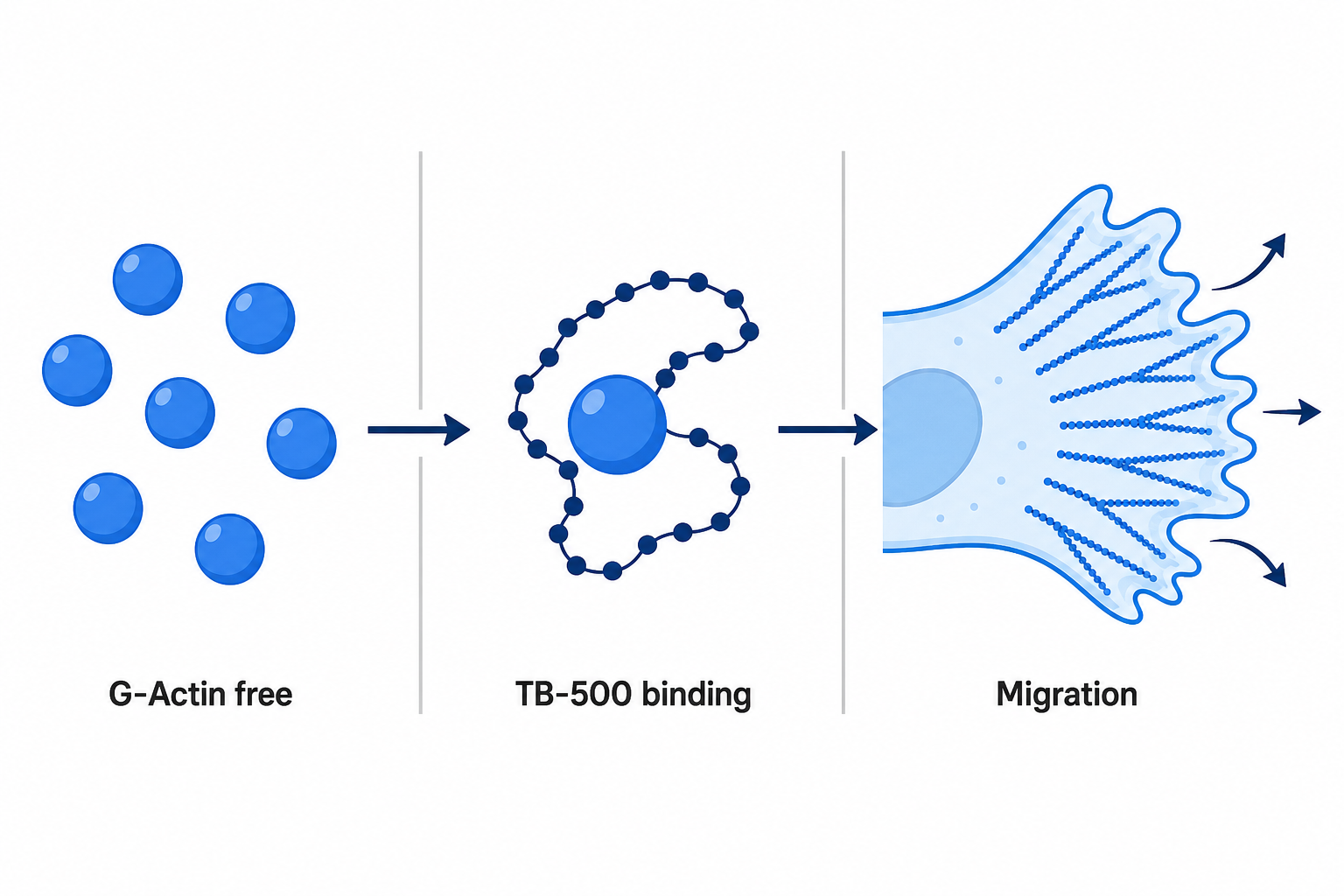
Full thymosin beta-4 is a 43-amino-acid protein with a deep literature on actin binding and tissue-response models spanning wound, corneal, and cardiac experimental systems. Research-market TB-500 is typically a shorter active-region fragment. Understanding why requires a short detour into actin chemistry.
Actin exists in two equilibrium states inside cells: globular G-actin monomers and filamentous F-actin polymers. The ratio between these states governs cell shape and the ability of the cell’s edge to extend into surrounding tissue — a process directly relevant to wound closure, vascular repair models, and corneal epithelial migration studies. Thymosin beta-4 acts as a G-actin sequestering protein: it binds monomeric actin and holds it in a pool that can be rapidly deployed when the cell needs to extend protrusions. Disrupting this sequestration mechanism (by competing with, or supplementing, endogenous Tβ4 activity) alters how quickly a cell’s leading edge advances.
The six-amino-acid sequence Leu-Lys-Lys-Thr-Glu-Thr (LKKTEF) within the thymosin beta-4 protein is considered a central actin-binding motif in multiple binding studies. Research-supply TB-500 is most often described as a synthetic version of this fragment region rather than the complete 43-AA protein. This distinction carries practical consequences: papers describing full Tβ4 in cardiac or ocular development programmes do not automatically validate the biological properties of a shorter synthetic fragment available from a research supplier. Confusing “Tβ4 appeared in a clinical development pipeline” with “my TB-500 vial is clinically validated” is a category error with documentation consequences. Pathway context: TB-500 tissue repair research.
Beyond direct actin sequestration, thymosin beta-4 biology implicates integrin-linked kinase (ILK) activation. ILK sits at focal adhesions and integrates signals from the extracellular matrix into the cytoskeleton; Tβ4 has been shown in experimental systems to activate ILK, promoting cell survival signalling pathways alongside the migration enhancement. In wound-model contexts this means the mechanism is not solely mechanical (actin remodelling) but involves downstream kinase cascades that influence matrix metalloproteinase (MMP) expression, angiogenesis initiation, and collagen remodelling. Each of these downstream arms has its own literature, its own caveats, and its own gap between preclinical observation and validated human therapeutic endpoint.
The mg-scale of TB-500 research discussion — 2 to 5 mg weekly totals — contrasts sharply with the mcg-scale of BPC-157 (typically 200–500 mcg daily in community discussion). This is not simply historical accident: shorter peptides with primarily receptor-level activities often operate at much lower concentrations, while a fragment competing for a bulk structural role (actin sequestration) may require greater absolute mass to shift a biologically meaningful pool ratio. No formal pharmacodynamic analysis establishes this reasoning for research-use fragment supply, but it is the mechanistic logic that makes multi-mg weekly totals at least coherent with the biology framing, even without clinical validation.
02 · Protocol
Loading vs maintenance patterns in research discussion
Latest research insights. No spam, ever.
Document community schedules without promoting them as clinical standards.
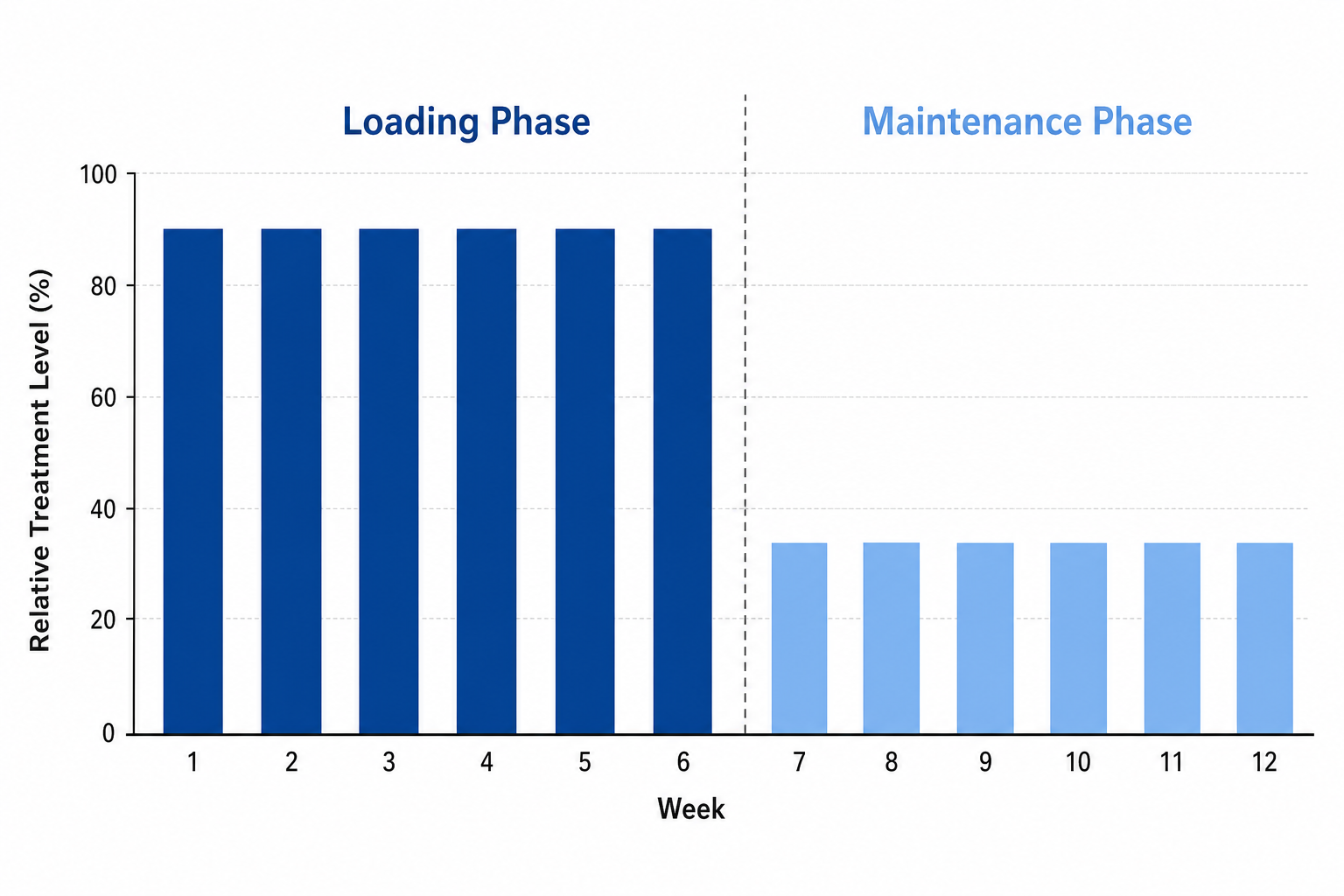
Loading vs maintenance — evidence strength by phase
Loading phase
~2–2.5 mg 2×/wk × ~4–6 weeks
Label: Informal research discussion only
Maintenance phase
~2–2.5 mg 1×/wk after loading
Label: Informal research discussion only
Higher weekly totals
5 mg+/wk variants floated online
Label: Even weaker documentation — treat cautiously
Approved therapeutic dose
Not established for TB-500 fragment RUO
Label: Do not invent a clinical standard
Loading phase
~2–2.5 mg 2×/wk
Label: Informal research discussion
Maintenance phase
~2–2.5 mg 1×/wk
Label: Informal research discussion
Higher weekly totals
5 mg+/wk
Label: Treat cautiously
Approved therapeutic dose
Not established
Label: Do not invent
The two-phase shape — a higher-frequency loading period followed by a lower-frequency maintenance period — recurs across many peptide-research communities and is not unique to TB-500 discussion. The implicit logic is that an initial saturation phase is needed to establish a biologically relevant tissue presence, after which a reduced frequency is sufficient to sustain the parameter being studied. Whether this logic applies to a research-supply fragment at the concentrations achievable with typical vial sizes is never formally demonstrated; it is imported reasoning from pharmacokinetic frameworks designed for drugs with characterised half-lives and distribution volumes. Researchers citing these schedules should be explicit that the loading/maintenance split is a community heuristic, not a validated two-phase regimen.
Subcutaneous administration is the most commonly discussed route in online research communities for TB-500, consistent with its larger molecular size relative to very small peptides. This contrasts with BPC-157 where oral-route animal-model data also exists. Injection site rotation, needle gauge, and injection volume considerations all follow standard subcutaneous research practices: volumes above 1 mL per site are typically split across sites in research discussion, and lower-gauge needles (27–30 G) are standard for abdominal or other subcutaneous sites.
Protocol authors should prefer primary Tβ4/fragment papers for mechanism justification and keep mg schedules in a clearly labelled “community research parameters” appendix unless a specific peer-reviewed regimen is being replicated exactly. When writing research records, the distinction between “this parameter was derived from community discussion” and “this parameter replicates a specific published regimen” is materially important for reproducibility and institutional review purposes.
03 · Evidence
Preclinical strength and clinical gap
What migration and wound models support — and what they do not.
The preclinical literature for thymosin beta-4 biology is substantive. Malinda and colleagues demonstrated Tβ4 acceleration of wound healing in a series of animal model experiments. Philp and collaborators showed that Tβ4 promotes MMP expression alongside cell migration — an important finding because it frames Tβ4 activity as involving matrix remodelling, not merely cellular motility in isolation. Sosne and colleagues published extensively on corneal wound healing and inflammatory modulation in ocular models. Smart, Bock-Marquette, and Hinkel contributed to cardiac experimental-system literature showing roles in vessel development and cardiomyocyte survival after injury.
These represent genuine contributions to understanding Tβ4 biology. They do not, however, constitute validation of a research-use fragment supply product:
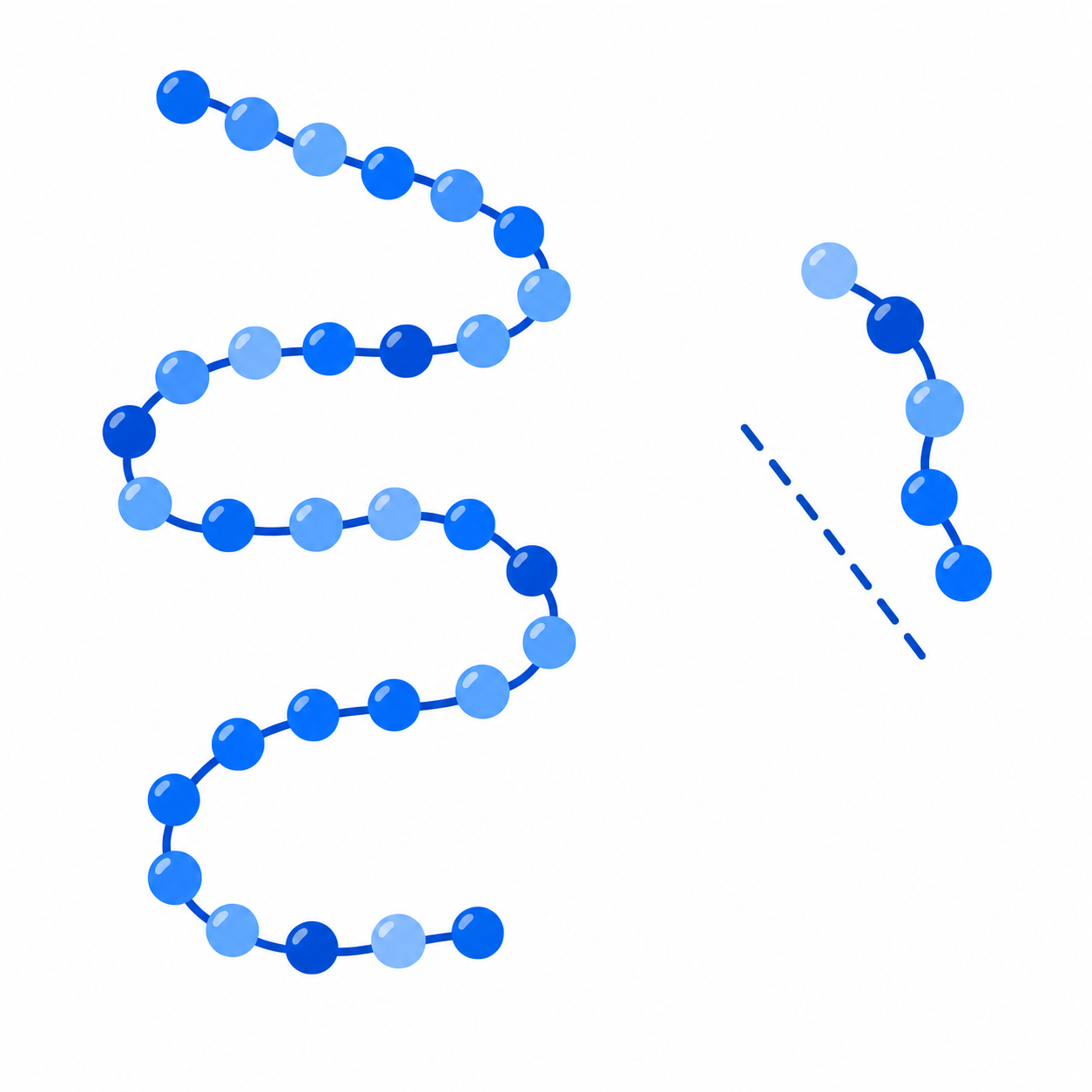
Fragment identity gap
Experiments using recombinant full-length Tβ4 or endogenous protein cannot be assumed to replicate results with a shorter synthetic fragment unless the active domain responsible for each endpoint is specifically characterised as present and intact in the fragment.
Species extrapolation
Animal wound models and in vitro cell-migration assays occupy different evidence tiers from controlled human trials. Translation across species for peptide biology is not guaranteed.

Route and concentration differences
Academic experiments often use concentrations and administration routes selected for model convenience, not to mimic a real-world research-supply scenario.

Supplier batch independence
A paper’s biological conclusions are independent of any particular supplier’s manufacturing quality. A high-quality research publication cannot serve as a COA substitute for a specific commercial batch.
The clinical pipeline for full-length thymosin beta-4 — distinct from fragment research supply — has seen exploratory programmes in areas including cardiac and ocular endpoints. A search of ClinicalTrials.gov under “thymosin beta-4” surfaces a small number of programmes. These are medicine-development activities for full-protein pharmaceutical preparations, which involve characterised active pharmaceutical ingredients, regulatory submissions, and formal safety monitoring. They are not roadmaps for interpreting research-use fragment supply dosing, and treating them as such conflates two entirely different regulatory and scientific categories. The clinical gap between a ClinicalTrials programme for a full 43-AA pharmaceutical and a community discussion schedule for a shorter research-use fragment is not a minor nuance — it is the central compliance distinction every protocol author needs to document.
04 · Alternates
Schedule variants and BPC-157 stack context
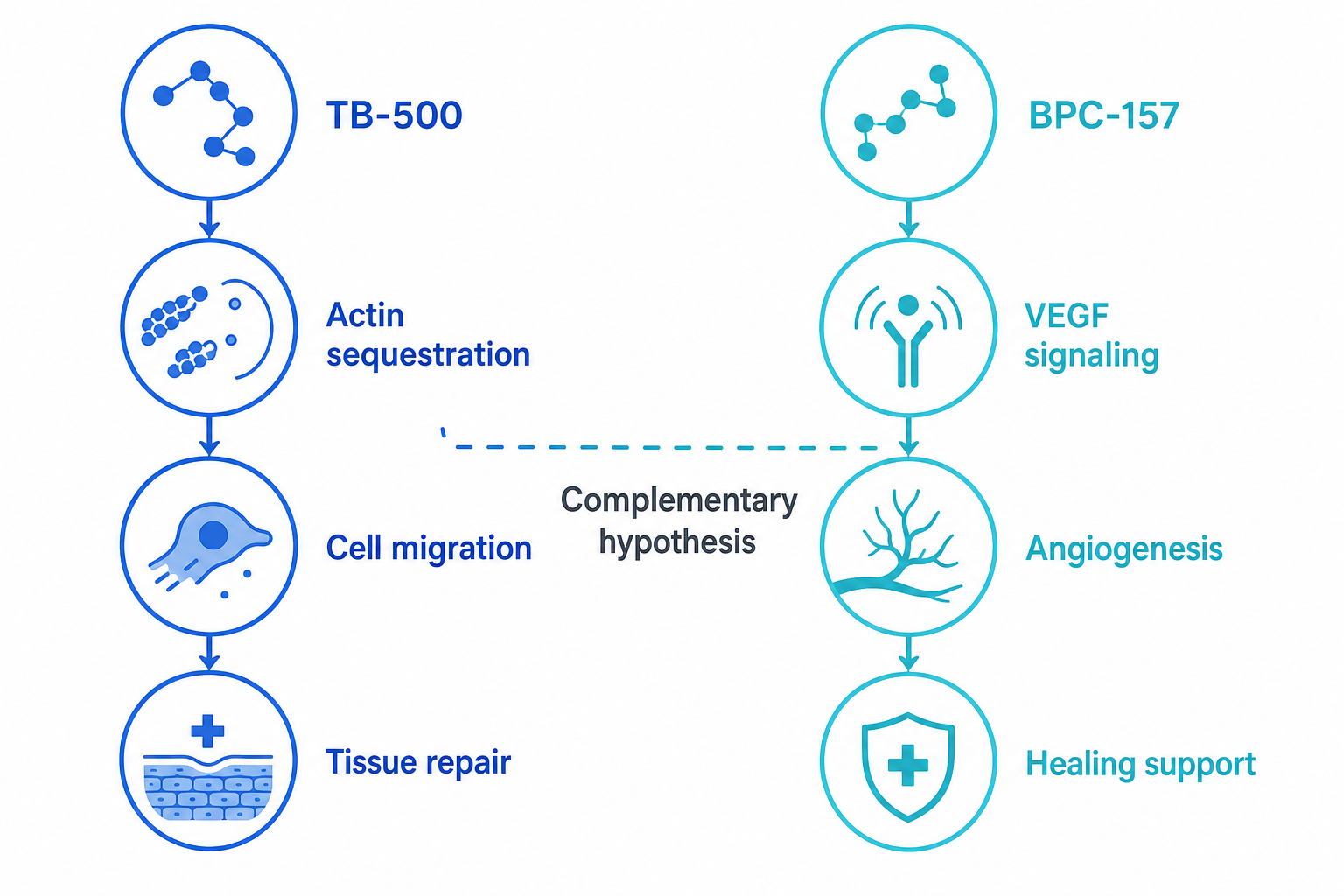
Complementary pathway hypotheses need extra documentation, not less.
The TB-500 and BPC-157 co-study hypothesis is mechanistically intuitive: Tβ4 fragment biology operates via G-actin sequestration and cell migration at the systemic or wound-edge level, while BPC-157 biology is framed around local tissue repair signalling, angiogenesis promotion via nitric oxide and VEGF pathways, and gastrointestinal motility effects. The argument is that these pathways are additive rather than redundant — one promotes cell migration to a repair site, the other supports the local vascular and matrix environment at that site. This complementary framing is coherent as a hypothesis and commonly discussed in peptide research communities.
However, several documentation requirements become more demanding when two compounds are combined in a single research record:

Separate COA for each compound.
A stack does not have a unified identity document. The TB-500 batch and the BPC-157 batch each require their own certificate of analysis confirming sequence identity, purity (HPLC grade), and mass confirmation (mass spectrometry). A single COA for one does not transfer identity assurance to the other.

Separate batch IDs in protocol records.
If anything is observed in a combined study, the ability to trace back to specific batches is essential. Using lot numbers from both compounds in documentation headers is a minimum standard.
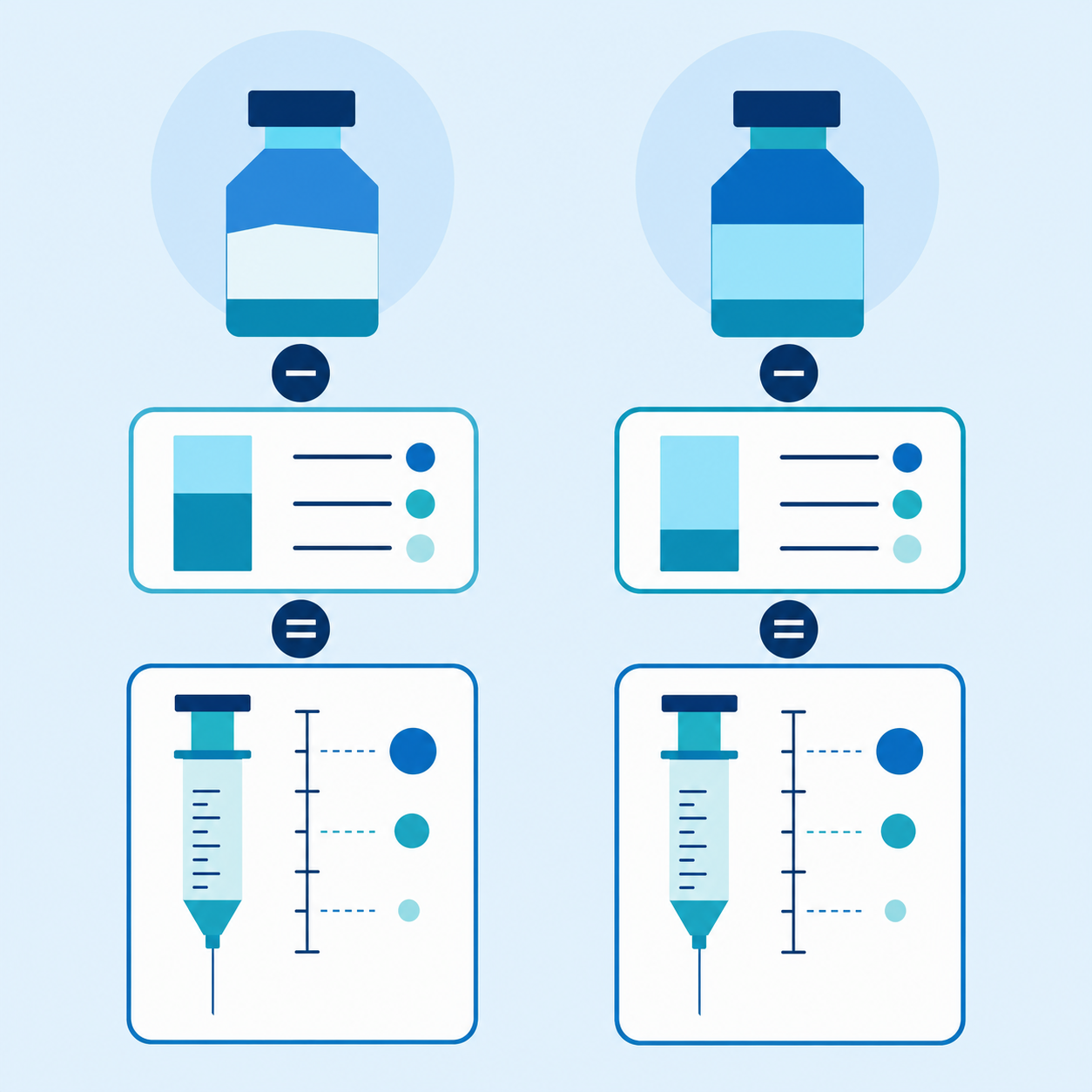
Separate reconstitution math.
Each compound has its own vial mass, concentration target, and syringe-volume calculation. Running the math for one compound and assuming the other follows the same arithmetic is a common error when vials have the same nominal mass but different potency labelling.

No proof of combined therapy benefit.
The mechanistic hypothesis is not a validated human therapeutic combination. The absence of documented interaction studies means researchers should record each parameter independently and not represent the combination as a proven synergy.
See BPC-157 vs TB-500, combo UAE guide, and combined product. Blend pages such as GLOW and KLOW illustrate how multi-analyte vials further increase documentation burden: a single vial containing multiple compounds requires a combined COA that specifies the identity and purity of each component separately.
05 · Reconstitution
Reconstitution math and technique for mg-scale draws
Make 2 mg draws land on readable syringe volumes with consistent technique.
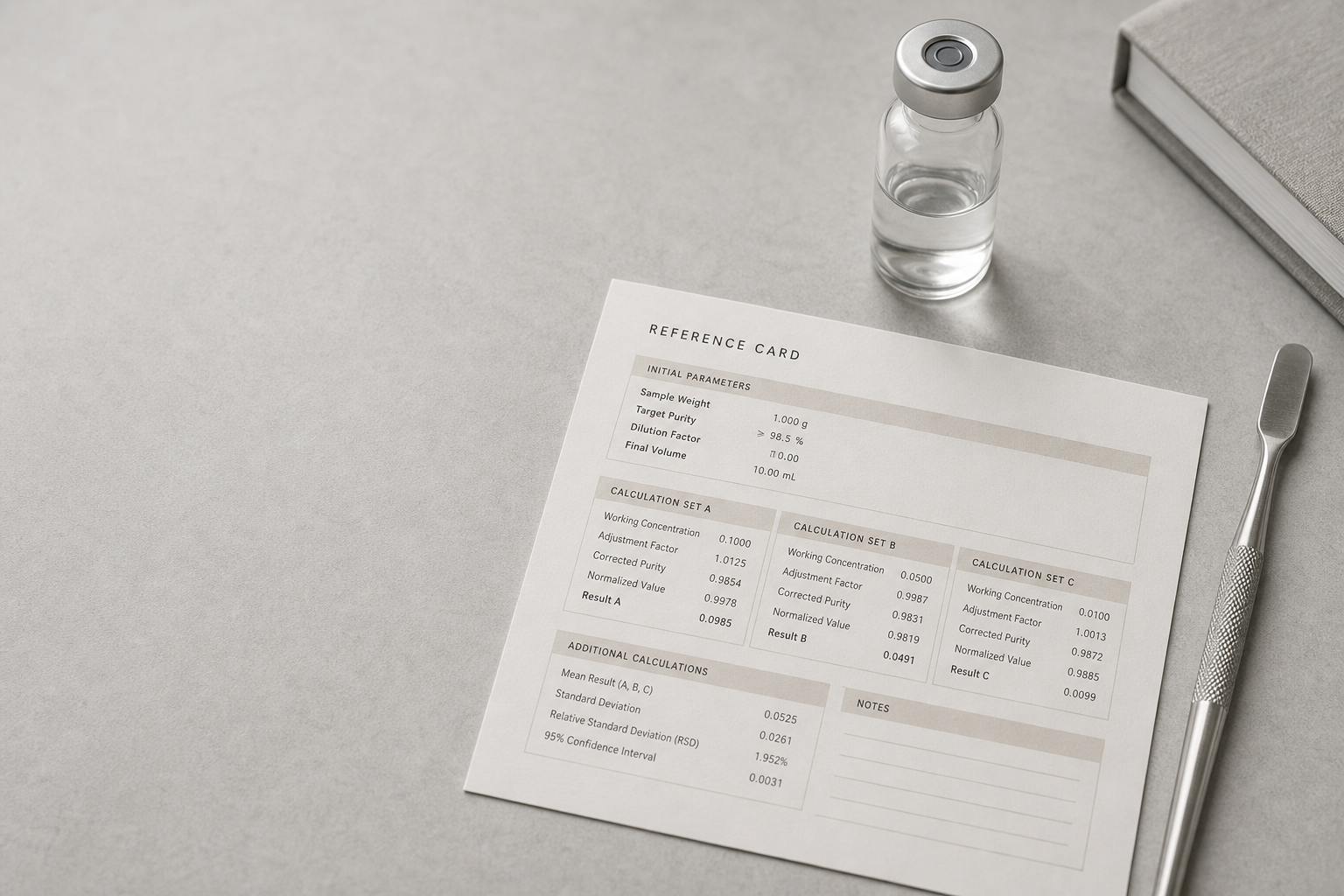
| Vial | BAC water | Concentration | 2 mg draw | 2.5 mg draw |
|---|---|---|---|---|
| 5 mg | 2 mL | 2.5 mg/mL | 0.8 mL | 1.0 mL |
| 5 mg | 1 mL | 5 mg/mL | 0.4 mL | 0.5 mL |
| 10 mg | 2 mL | 5 mg/mL | 0.4 mL | 0.5 mL |
| 10 mg | 4 mL | 2.5 mg/mL | 0.8 mL | 1.0 mL |
Reconstitution technique for a lyophilised TB-500 vial follows the same careful sequence used for any research-grade peptide, with particular attention at each step because small errors compound into meaningful dose inaccuracies at mg scale:
Pre-reconstitution hygiene. Work on a clean, alcohol-wiped surface. Gather all materials — vial, BAC water vial, appropriate syringe (typically 2–3 mL for adding diluent), 25–30 G needle, and the smaller insulin syringe for subsequent draws — before opening anything. Visual inspection of the lyophilised powder through the glass: fine white cake or powder is normal; any discolouration or obvious moisture contamination warrants discarding the vial.
Septum preparation. Wipe both the peptide vial septum and the BAC water vial septum with a 70% isopropyl alcohol swab. Allow each to air-dry for 15–20 seconds. This is not optional in a research setting — particulate or microbiological contamination introduced at this step cannot be removed after reconstitution.
Air injection and pressure management. Draw the target volume of BAC water (e.g. 2 mL for a 5 mg vial) into the draw syringe. Before injecting into the peptide vial, draw a small air bubble into the syringe tip. When you insert the needle through the septum, inject this air first to create slight positive pressure, which will assist in pulling the water off the plunger smoothly and prevent a vacuum from slowing the transfer. Inject the water slowly down the inside glass wall of the peptide vial — not as a direct jet onto the lyophilised cake, which can shear peptide structure or cause excessive foaming.
Mixing protocol. After adding all the BAC water, do not shake the vial. Gentle rolling between the palms for 30–60 seconds, followed by swirling, achieves complete dissolution for most lyophilised peptides without the mechanical shear of shaking. If any undissolved particulate remains after gentle mixing, allow the vial to sit refrigerated for 5–10 minutes before mixing again. A clear solution that is free of visible particles indicates successful reconstitution.
Confirming the draw volume. Always verify concentration math against the vial label mass before each use session, not just at initial reconstitution. If 0.4 mL of the initial reconstituted volume has already been used from a 5 mg / 1 mL vial, re-calculate remaining mass based on volume drawn, not on assumptions from a previous session. Record draw volumes and dates in a research log so that remaining vial volume can be audited at any time.
Syringe graduation marks for mg draws. On a 1 mL U-100 insulin syringe, 0.4 mL reads as 40 units and 0.8 mL reads as 80 units. At 5 mg/mL, each 10-unit mark on the U-100 scale equals 0.5 mg — making draws easy to read and consistent. At 2.5 mg/mL on the same syringe, each 10-unit mark equals 0.25 mg, which is precise enough for 2–2.5 mg research parameters. Choose your target concentration based on which syringe graduation delivers the most readable draw volume for your specific protocol.
Process hygiene mirrors other lyophilised peptides — see reconstitution guide. For mcg-scale contrast, read the sibling BPC-157 dosing protocol draft and the live GLP-3 dosing protocol.
06 · Storage
UAE storage parameters

Heat is a protocol variable in the UAE, not just a background condition.
Standard peptide cold-chain guidance — lyophilised at −20 °C for long-term storage, reconstituted solutions at 2–8 °C, use within 28 days — is modified by UAE environmental realities in three meaningful ways.
Ambient temperature exposure during transit. Summer ambient temperatures in UAE outdoor environments routinely exceed 40 °C and can approach 50 °C in direct sun or enclosed vehicles. A vial left in a bag on a car seat or in a delivery box on a doorstep for even 30–60 minutes may experience temperatures that begin peptide degradation. Research operators receiving peptide shipments should arrange signature-required delivery, receive into air-conditioned environments immediately, and inspect vials on receipt rather than storing unopened for days.
Power outage and refrigerator-off scenarios. UAE buildings do experience occasional power interruptions. A standard refrigerator at 4 °C will begin warming immediately when power is lost; the insulation buys time but does not prevent temperature creep. Research operators maintaining peptide stocks should be aware of their storage equipment’s temperature hold time without power and have a contingency plan (secondary storage location, ice packs, monitoring thermometer with alert function) for interruptions lasting more than two to three hours.
Freeze–thaw cycle discipline. The recommendation against repeated freeze–thaw cycles applies with particular force to peptides stored in household or lab freezers that may run a defrost cycle or vary in temperature near the door. Dedicated laboratory freezers with tighter temperature regulation and internal placement away from the door reduce freeze–thaw risk. Each unnecessary freeze–thaw cycle exposes the peptide to ice crystal formation, which can damage structure and reduce activity in subsequent biological assays.
Sealed vs reconstituted vials. Lyophilised sealed vials tolerate transit temperature fluctuations better than reconstituted solutions because the dry lyophilised state is inherently more stable. Prioritise moving reconstituted solutions in insulated, ice-packed containers for any transport of more than a few minutes outside air conditioning. If a reconstituted TB-500 vial must be transported, wrapping it in a small insulated pouch with a single ice pack (not direct contact — wrap in a cloth layer to avoid freezing the solution) provides reasonable short-duration protection.
Operational detail: storage best practices.
07 · Observations
Literature safety framing and prohibited-list status
Disclose uncertainty explicitly and check status proactively.
The preclinical literature on thymosin beta-4 and related fragments does not report striking adverse events in animal model systems at the concentrations studied. This relative preclinical tolerability is worth noting, but it must be contextualised carefully: animal model tolerability is not the same as human safety data, and the absence of reported adverse effects in a small number of animal studies is not a safety certificate for a research-supply fragment. No systematic human safety and tolerability study has been published for research-use TB-500 fragment supply.
Regarding prohibited-list status: WADA has historically listed thymosin beta-4 and related peptides in the prohibited category under peptide hormones, growth factors, and related substances (Section 2 of the Prohibited List). The list is updated annually, and TB-500 fragment status may change; researchers in sports science or athletic performance contexts must check the current year’s WADA list independently rather than relying on any third-party summary including this document. Non-sports laboratory research contexts may not be subject to WADA considerations, but institutional ethics frameworks may still apply.
Institutional review board (IRB) and ethics committee requirements should be evaluated for any research involving administration of research-grade peptide compounds. Research operators should not rely on the research-supply designation as a substitute for ethics review where applicable. The research-use-only label defines the commercial supply category, not the regulatory obligations of the research itself.
08 · Comparison
TB-500 vs BPC-157 dosing languages
Same research neighbourhood, different arithmetic, different documentation requirements.
| Comparison point | TB-500 | BPC-157 |
|---|---|---|
| Common discussion unit | mg / week (multi-mg totals) | mcg / day (200–500 mcg range) |
| Pattern shape | Loading → maintenance (two-phase community heuristic) | Relatively steady daily totals in most community discussion |
| Primary mechanism framing | G-actin sequestration, cell migration, ILK activation | Local repair signalling, angiogenesis, GI motility, NO pathway |
| Active region in research supply | LKKTEF fragment (shorter than full Tβ4) | Pentadecapeptide GEPPPGKPADDAGLV (named synthetic peptide) |
| Preclinical corpus orientation | Wound models, corneal, cardiac experimental systems | Soft tissue, tendon, GI tract, neurological models |
| Reconstitution scale | mg-scale; 2.5–5 mg/mL working concentrations | mcg-scale; 500 mcg/mL or lower working concentrations |
| Route discussed most often | Subcutaneous primarily | Subcutaneous and oral (animal models) |
| Fragment / identity verification priority | High — fragment claims vary across suppliers | Moderate — named sequence, but purity still matters |
| Stack compatibility discussion | Frequently co-discussed with BPC-157 | Frequently co-discussed with TB-500 |
| Overview guide | TB overview | BPC overview |
The single most important practical difference for a research protocol author is the unit scale. A researcher used to reading BPC-157 in micrograms who picks up a TB-500 vial labelled in milligrams needs to immediately re-anchor their mental model: where 500 mcg of BPC-157 is a typical single research-discussion dose, 2,000 mcg (2 mg) is the starting point of TB-500 research-discussion doses. Copying schedules across peptides without unit conversion is a fundamental design error that compounds through every subsequent calculation.
The mechanism difference also matters for protocol design. If a researcher is studying endpoints related to cell migration and wound-edge dynamics, TB-500 fragment biology has direct mechanistic relevance. If the primary endpoint is local tissue signalling, angiogenesis, or gastrointestinal motility, BPC-157 literature is the more proximate source. Choosing between them — or combining them — should follow mechanism logic, not general “repair” marketing language.
09 · FAQ
Frequently asked questions
What is TB-500 in research supply terms?
TB-500 typically refers to a synthetic peptide fragment related to thymosin beta-4 biology — most commonly the LKKTEF actin-binding region — studied for actin-linked cell migration and wound-model endpoints. It is not automatically the same as the full 43-amino-acid thymosin beta-4 protein, and researchers should confirm the specific fragment identity from their supplier’s COA before drawing conclusions from full-protein Tβ4 literature.
What loading and maintenance patterns appear in research discussion?
Informal research discussion most commonly cites roughly 2–2.5 mg twice weekly for several weeks (loading phase), then about 2–2.5 mg once weekly (maintenance phase). These are community research-discussion parameters, not validated clinical protocols. The loading/maintenance split is a heuristic borrowed from pharmacokinetic frameworks, not a formally characterised two-phase regimen for TB-500 fragment supply.
Are those mg schedules proven in human trials for TB-500?
No robust public programme establishes an approved therapeutic TB-500 dose for tissue repair. The ClinicalTrials.gov programmes that exist for thymosin beta-4 relate to full-protein pharmaceutical preparations, not research-use fragment supply. Researchers should distinguish fragment research-supply discussion from any separate medicine-development history of full thymosin beta-4 — these are different scientific and regulatory categories.
How does TB-500 dosing language differ from BPC-157?
TB-500 community discussion is in multi-milligram weekly totals; BPC-157 community discussion is in micrograms per day, typically 200–500 mcg. Copying schedules across the two peptides without unit conversion and mechanism analysis is a research design error. The scale difference reflects mechanistic difference: TB-500’s actin-sequestration biology may require greater absolute mass to shift pool ratios, while BPC-157 operates primarily via receptor-level signalling pathways.
How is a 5 mg or 10 mg TB-500 vial reconstituted?
Example laboratory math: 5 mg + 2 mL bacteriostatic water = 2.5 mg/mL (0.8 mL ≈ 2 mg). 10 mg + 2 mL = 5 mg/mL (0.4 mL = 2 mg). Confirm the vial label mass before calculating. Inject BAC water slowly down the glass wall, not directly onto the lyophilised cake, and mix by gentle rolling rather than shaking. Log draw volumes to track remaining vial mass accurately across multiple sessions.
Why is bacteriostatic water preferred over sterile water for injection?
Bacteriostatic water contains a benzyl alcohol preservative that inhibits microbial growth during the multi-draw laboratory use window typical of a single reconstituted vial. Preservative-free sterile water for injection is intended for single-use immediate administration — it does not provide the same microbiological protection for repeated laboratory draws over days or weeks. For research laboratory settings where a single reconstituted vial may be drawn from multiple times over a period of up to approximately 28 days, bacteriostatic water is the standard choice.
Can TB-500 and BPC-157 be studied together?
Combined study is common in research communities because the two peptides are framed as operating via complementary pathways — TB-500 for cell migration and actin dynamics, BPC-157 for local tissue repair signalling and angiogenesis. That mechanistic hypothesis is not a validated combined human therapy. Researchers combining the two should maintain separate COAs and batch records for each compound, perform independent reconstitution calculations, and record all parameters separately in protocol documentation. See the UAE combo guide and comparison article for further detail.
How should reconstituted TB-500 be stored in the UAE?
Refrigerate reconstituted TB-500 at 2–8 °C in a temperature-stable refrigerator, protect from light, avoid repeated freeze–thaw cycles, and plan to use within approximately 28 days unless the COA specifies otherwise. In the UAE, additional precautions include monitoring for power interruption events that could raise storage temperature, avoiding any transit outside air-conditioned environments without proper cold-pack insulation, and receiving shipments promptly into climate-controlled storage rather than leaving them in ambient conditions.
What evidence limits should protocol authors disclose?
Protocol authors should disclose: that most published endpoints are preclinical or in vitro; that fragment identity (LKKTEF vs full Tβ4) affects which papers are directly applicable; that supplier COA and batch verification is independent of any paper’s biological claims; that loading/maintenance schedules are community discussion patterns without validated clinical status; and that ClinicalTrials programmes for full Tβ4 do not validate research-use fragment supply dosing.
Where is documented TB-500 available for UAE laboratory research?
Emirates Peptides lists research-use TB-500 with documentation context including COA access on the product page. Supply is for laboratory research only — not for human administration or therapeutic use. Review the product page for current batch documentation availability and storage/shipping details relevant to UAE delivery conditions.
10 · References
References and research sources
- Goldstein AL, Hannappel E, Kleinman HK. Thymosin beta-4: actin-sequestering protein moonlighting as molecule of cellular repair. Reviews of Tβ4 biology establishing the G-actin sequestration model. PubMed: thymosin beta-4 actin
- Malinda KM, et al. Thymosin beta-4 accelerates wound healing. Foundational wound-model literature establishing Tβ4 activity in dermal repair models. PubMed search
- Philp D, et al. Thymosin beta-4 promotes matrix metalloproteinase expression and cell migration. Migration and MMP-endpoint papers establishing downstream remodelling activity. PubMed search
- Smart N, et al. Thymosin beta-4 is essential for coronary vessel development. Cardiac experimental systems providing mechanistic context for ILK and vascular biology claims. PubMed search
- Sosne G, et al. Thymosin beta-4 promotes corneal wound healing and modulates inflammatory mediators. Ocular model literature relevant to epithelial migration endpoints. PubMed search
- Bubb MR. Thymosin beta-4 interactions with G-actin — biochemical basis for sequestration models and stoichiometry. PubMed search
- Safer D, et al. Thymosin beta-4 and actin monomer sequestration mechanisms. Structural biochemistry underpinning G-actin/F-actin pool modelling. PubMed search
- Bock-Marquette I, et al. Thymosin beta-4 activates integrin-linked kinase and promotes cardiac cell migration and survival. ILK-pathway mechanistic literature relevant to downstream signalling claims. PubMed search
- Hinkel R, et al. Thymosin beta-4 related cardioprotection discussions in experimental systems. Cardiac injury model context for repair-related hypothesis framing. PubMed search
- Xu BJ, et al. Selected dermal and wound remodelling studies involving thymosin beta-4 pathways. Connective tissue endpoints in wound-model settings. PubMed search
- Sikiric P, et al. BPC 157 soft-tissue literature — cited for stack-comparison pathway context, not TB-500 identity. PubMed search
- Chang CH, et al. BPC 157 tendon outgrowth papers — complementary pathway comparison context. PubMed search
- WADA Prohibited List — verify current annual status for thymosin beta-4 and related peptides; list is updated each year and this document may not reflect the current year’s classification. WADA
- ICH peptide stability and cold-chain handling principles for lyophilised and reconstituted laboratory peptides — applicable to storage temperature discipline and freeze–thaw guidance.
- ClinicalTrials.gov searches for thymosin beta-4 full-protein programmes — useful to contrast medicine-pipeline language with research-fragment supply context and understand the category difference. ClinicalTrials.gov
- Manufacturer and COA identity confirmation practices — batch-level HPLC and mass spectrometry documentation for fragment peptides; identity verification independent of biological literature claims.
Glossary
| Term | Definition (research context) |
|---|---|
| Actin sequestration | Binding of G-actin monomers to prevent their incorporation into F-actin filaments — central to thymosin beta-4 motility and migration biology. |
| F-actin | Filamentous actin polymer; the structural form that provides mechanical rigidity to cell protrusions and governs migration. |
| G-actin | Globular actin monomer; the sequestered form that Tβ4 binds, held in a pool available for rapid filament extension. |
| Fragment vs protein | TB-500 research supply is typically a shorter sequence (LKKTEF region) rather than the full-length 43-AA Tβ4 protein; papers about full Tβ4 do not automatically transfer to the fragment. |
| ILK (Integrin-linked kinase) | Focal adhesion kinase activated by Tβ4 in cardiac and cell-migration models; mediates downstream survival and matrix-interaction signalling. |
| LKKTEF | Six-amino-acid actin-binding motif (Leu-Lys-Lys-Thr-Glu-Thr) within thymosin beta-4; the active region most research-supply TB-500 is said to represent. |
| Loading phase | Higher-frequency mg dosing pattern discussed informally in research communities before transitioning to maintenance — a community heuristic without formal pharmacokinetic validation for TB-500 fragment. |
| Maintenance phase | Lower-frequency mg dosing pattern discussed after the loading period in community research schedules. |
| MMP (Matrix metalloproteinase) | Enzyme class that degrades extracellular matrix components; upregulated in Tβ4-stimulated migration experiments, relevant to wound-remodelling endpoint framing. |
| RUO | Research use only — the regulatory supply category for laboratory peptides not approved for therapeutic use. |
| Tβ4 | Thymosin beta-4 — the full 43-amino-acid parent protein in the broader biology literature, distinct from the shorter research-supply fragment. |
Related reading
- TB-500 UAE research guide
- BPC-157 dosing protocol (draft sibling)
- BPC-157 vs TB-500
- TB-500 product page
- GLP-3 dosing protocol
- Reconstitution guide
- Storage best practices
Disclaimer: Figures combine published thymosin beta-4 biology with clearly labelled research-discussion schedules. TB-500 supplied by Emirates Peptides is for laboratory research only. Not for human administration. Not approved for therapeutic use.
Was this article helpful?

🔬 Related Research Peptides
Explore Research-Grade Peptides
HPLC-verified, lab-tested peptides for your scientific research. Fast delivery across the UAE.
Browse All PeptidesRelated Articles




Emirates Peptides Research Team
A dedicated coalition of biochemists and clinical researchers focusing on advanced peptide synthesis and pharmacological applications. All data is verified against current clinical trials.