
Blog

For research use only. Material is supplied as a lyophilized reference compound with HPLC purity verification.
- GHK-Cu Pen — 100 mg
- The short answer
- Key facts at a glance
- What is GHK-Cu?
- Why does GHK bind copper?
Evidence guide · Updated 28 July 2026 · Laboratory research only
01 · Research guide
The short answer
GHK-Cu is the copper(II) complex of the tripeptide glycyl-L-histidyl-L-lysine. “GHK” names the three-amino-acid peptide, while “Cu” indicates coordinated copper. Researchers have examined the complex in chemical, cell-culture, animal and limited human wound-study settings.
The most frequently cited laboratory work includes copper coordination, collagen-related responses in fibroblast cultures and changes in matrix metalloproteinase and tissue-inhibitor expression. Those findings are scientifically interesting, but they do not prove that every GHK-Cu product has the same quality, that every delivery format behaves alike or that laboratory effects guarantee cosmetic or therapeutic results in people.
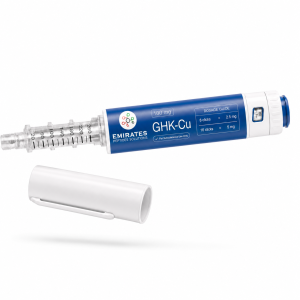
Emirates Peptides’ current GHK-Cu Pen is a self-contained research format containing 100 mg of copper tripeptide in an integrated 3 ml cartridge. It has a transparent inspection chamber, an adjustable mechanism and batch-labelled packaging. These specifications describe the laboratory format. The product is not supplied as a skincare applicator, treatment or medical device.
02 · Research guide
Key facts at a glance
Latest research insights. No spam, ever.
- GHK is a tripeptide made from glycine, histidine and lysine.
- GHK-Cu forms when GHK coordinates a copper(II) ion.
- Copper coordination can contribute to a blue appearance, but colour does not prove identity or quality.
- Much of the mechanistic evidence comes from cell culture and animal models.
- Fibroblast research has examined collagen synthesis, MMP-2, TIMP-1 and TIMP-2.
- A study that used AHK-Cu in human hair follicles should not be cited as direct GHK-Cu evidence.
- Formulation, route, concentration and experimental model strongly affect what a study can show.
- A pen format does not establish identity, purity, concentration, sterility or biological activity.
- Emirates Peptides supplies the pen only for qualified laboratory research.
03 · Research guide
What is GHK-Cu?

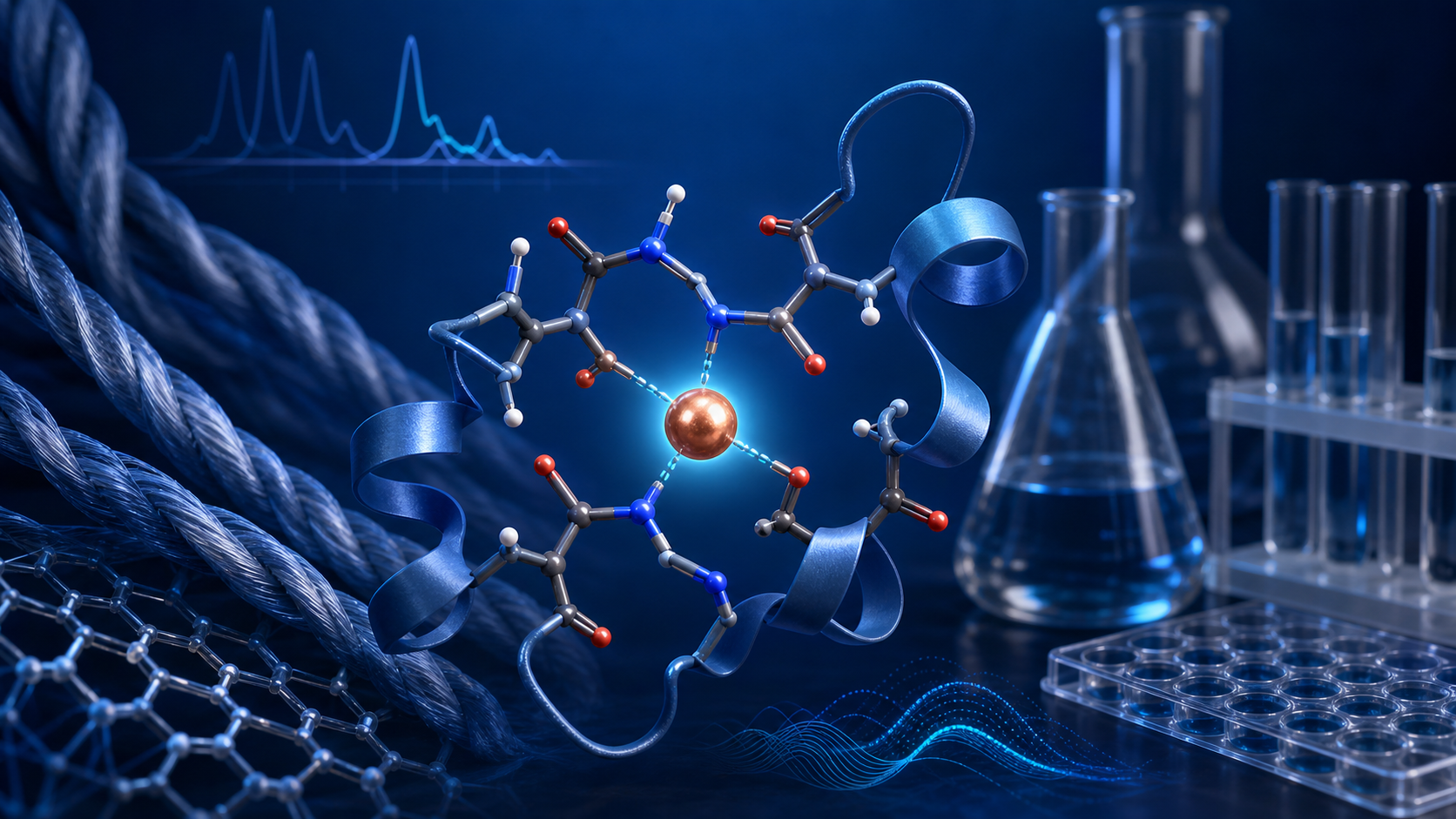
GHK is short for glycyl-L-histidyl-L-lysine. It contains three amino acids in a defined order: glycine, histidine and lysine. Because histidine and the peptide backbone can coordinate metal ions, GHK can bind copper(II) and form a distinct complex.
The complex is commonly written as GHK-Cu, GHK-Cu²⁺ or copper tripeptide-1 in different scientific and commercial contexts. Those names may appear similar, but researchers should still check the precise chemical description, counterions, formulation and batch documentation. A familiar name does not make two supplied materials analytically identical.
Classic spectroscopy work examined how copper coordinates with GHK across different pH conditions. In the pH range and experimental conditions studied, the data supported a major square-planar coordination arrangement involving oxygen and nitrogen donor atoms (Laussac et al., 1983). This chemistry helps explain why the copper-bound complex is not simply “GHK plus loose copper.”
Under the near-neutral aqueous conditions studied, the commonly described dominant solution complex is a 1:1 Cu(II):GHK species (Laussac et al., 1983). That description is condition-limited: it does not exclude minor species or establish what predominates outside the measured system.
The complex is not fixed under every condition. pH, competing ligands, solvent, oxidation, formulation components and storage can influence metal-peptide systems. The dominant species and copper-to-peptide stoichiometry can therefore vary with the system being measured. A label indicating GHK-Cu does not, by itself, prove which species predominates in a supplied formulation.
04 · Research guide
Why does GHK bind copper?
Peptides contain atoms that can donate electron density to a metal ion. In GHK, the N-terminal region, peptide nitrogen and histidine side chain contribute to copper coordination. The exact species present can vary with pH and other conditions.
This binding is central to the research question. In some experiments, GHK-Cu produces a response that GHK alone does not. In other cases, copper ions can reproduce part of the observed effect. Comparing GHK-Cu with GHK, copper and appropriate controls helps researchers separate effects associated with the intact complex from effects associated mainly with the metal. Detecting a copper-peptide complex is chemical evidence; it is not proof of biological activity.
The comparison is not a technical detail to hide in a methods section. It shapes the conclusion. If copper alone and GHK-Cu both alter an endpoint, the result should not automatically be described as a unique peptide effect.
05 · Research guide
Why can GHK-Cu look blue?
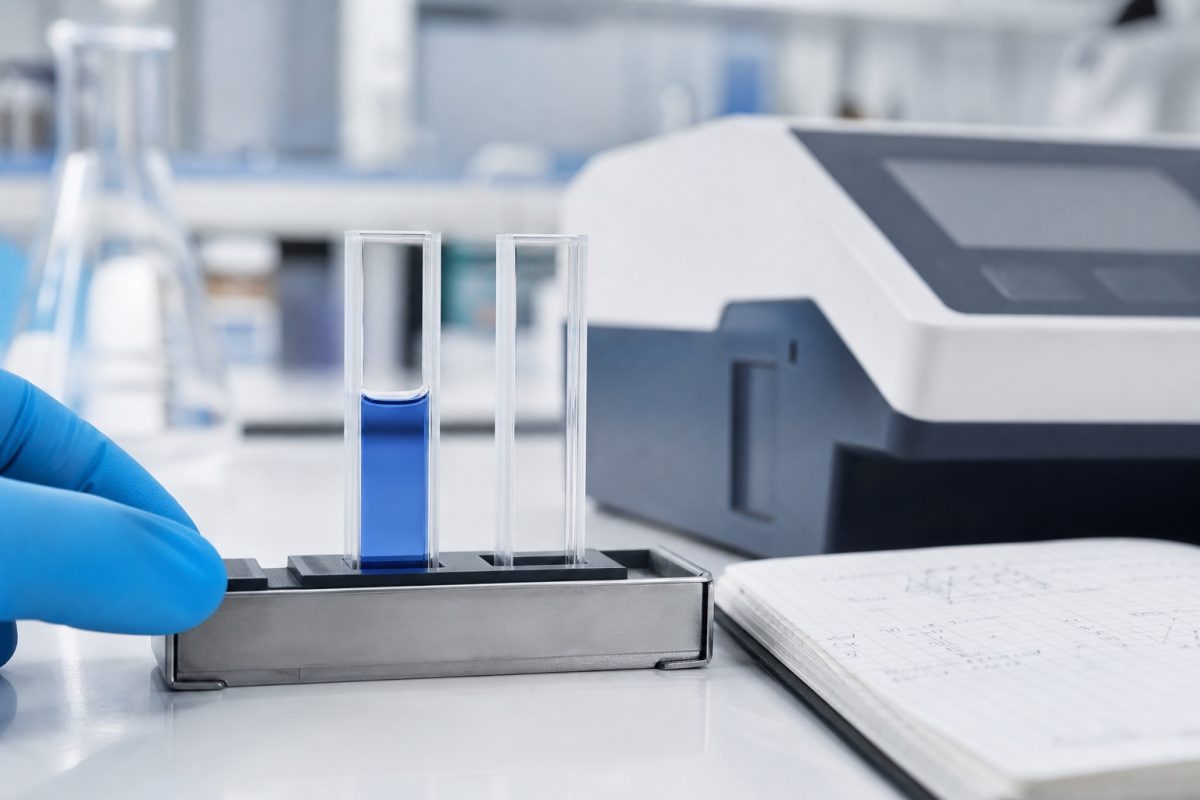
Copper(II) complexes often absorb visible light in ways that produce blue or blue-violet colour. GHK-Cu can therefore have a characteristic blue appearance depending on concentration, formulation, path length, lighting and other conditions.
Colour can be useful during a documented visual inspection, but it is weak analytical evidence. A blue solution is not automatically GHK-Cu, and an expected shade does not establish the correct concentration or purity. Colour also cannot confirm sterility, endotoxin status or stability.
Researchers should compare appearance with the relevant batch documentation and acceptance criteria. Unexpected particles, leakage, cloudiness or a marked appearance change are reasons to quarantine and review the item, not to improvise a conclusion.
06 · Research guide
What researchers study

GHK-Cu appears in several research areas, but the evidence is not equally strong across them.
| Evidence level | What it can show | Main limitation | Example |
|---|---|---|---|
| Coordination chemistry | Metal-binding species under defined analytical conditions | Species may shift with pH, solvent or competing ligands | NMR and EPR study (Laussac et al., 1983) |
| Cultured fibroblasts | Collagen-related or matrix-remodelling endpoints in isolated cells | Does not reproduce intact human skin | Collagen synthesis and MMP/TIMP studies (Maquart et al., 1988; Simeon et al., 2000) |
| Animal wound model | Tissue observations in a specified species and protocol | Does not establish a general human outcome | Rat wound-chamber study (Maquart et al., 1993) |
| Human study | Outcomes for one formulation, population and care protocol | Cannot validate another formulation, route or product | Topical wound-gel study (Mulder et al., 1994) |
| Formulation study | Stability or delivery behaviour under tested conditions | Cannot be generalized to every cartridge or formulation | Preformulation and microneedle studies (Badenhorst et al., 2016; Li et al., 2015) |
Copper coordination and chemical behaviour
Spectroscopic and analytical studies ask how the tripeptide binds copper, which atoms coordinate the ion, which species predominate under defined conditions and how the complex responds to changes in pH or formulation.
This chemical foundation is essential. Before asking what a material does in cells, researchers need a defensible account of what chemical species are present.
Fibroblast and extracellular-matrix research
Fibroblasts are cells involved in producing and organising extracellular-matrix components. In-vitro studies have examined how GHK-Cu affects collagen-related endpoints and matrix-remodelling signals in cultured fibroblasts.
One widely cited study reported stimulation of collagen synthesis in fibroblast cultures (Maquart et al., 1988). Another found increased MMP-2 levels and messenger RNA, together with increased secretion of TIMP-1 and TIMP-2 under the experimental conditions (Simeon et al., 2000).
MMPs are matrix metalloproteinases, enzymes involved in breaking down extracellular-matrix components. TIMPs are tissue inhibitors of metalloproteinases. Seeing changes in both does not translate into a simple “builds collagen” story. Matrix biology involves production, organisation, breakdown and regulation.
Animal wound models
Rat wound-chamber studies have measured collagen, glycosaminoglycans, DNA, total protein and other components after experimental GHK-Cu exposure (Maquart et al., 1993). These models can explore tissue-level mechanisms that a cell culture cannot reproduce.
They still do not establish a general human benefit. Species, wound model, exposure method and study design limit translation. A result inside an implanted rat wound chamber should be reported exactly that way.
Human wound research
A multicentre randomized study published in 1994 evaluated a specific topical GHK-copper gel as part of a standardized care protocol for diabetic neuropathic ulcers. The study reported differences in closure outcomes for the tested formulation and setting (Mulder et al., 1994).
This is human evidence, but it is not universal proof for every GHK-Cu material or format. The formulation, indication, protocol and patient population were specific. The Emirates Peptides research pen is not that topical gel and is not supplied for clinical wound care.
Formulation and delivery research
GHK-Cu is hydrophilic, which creates delivery questions in skin models. Researchers have studied formulation properties, stability under stressed conditions and experimental delivery approaches such as microneedle pretreatment (Badenhorst et al., 2016; Li et al., 2015).
These papers show why format matters. Evidence from a gel, buffer, microneedle model or integrated cartridge cannot be transferred automatically to another format.
07 · Research guide
What the evidence does not prove
The literature does not justify sweeping claims that GHK-Cu reverses ageing, removes wrinkles, regrows hair, repairs DNA or guarantees tissue regeneration in people. Those statements collapse distinct evidence levels into marketing promises.
Cell-culture changes are not clinical outcomes. Animal wound data are not cosmetic trials. One study of a particular human wound-care gel does not validate every supplier, concentration or route. The honest conclusion is narrower: GHK-Cu has been studied across several models, with mechanistic findings that support further investigation.
This distinction is not anti-research. It is what makes research credible.
08 · Research guide
GHK-Cu and collagen: what the studies actually measured
Collagen is not one simple material. It is a family of structural proteins produced, assembled and remodelled through regulated processes. A laboratory can measure collagen synthesis, gene expression, deposited matrix, hydroxyproline or other related endpoints. These measurements are not interchangeable.
In-vitro GHK-Cu work is often summarized as “boosts collagen.” A better description identifies the model and endpoint: cultured fibroblast studies reported changes in collagen synthesis under defined experimental conditions (Maquart et al., 1988).
The wording matters because a dish of fibroblasts lacks the full architecture, circulation, immune environment and exposure barriers of intact human skin. The result can support a mechanism hypothesis, but it cannot establish dermal remodelling in intact human skin or a visible personal outcome.
Researchers reading a collagen paper should note the cell source, passage number, medium, exposure time, concentration, comparator and assay. Small differences can affect the response.
09 · Research guide
GHK-Cu and matrix remodelling
Extracellular matrix is constantly produced and remodelled. MMP-2 can break down matrix components, while TIMPs regulate metalloproteinase activity. A study that observes both increased MMP-2 and increased TIMPs is describing a regulated remodelling response, not simple destruction or simple construction (Simeon et al., 2000).
This is why “remodelling” is more accurate than “repair” when discussing isolated laboratory endpoints. Repair is a functional tissue outcome. Remodelling can be measured through selected molecular signals without proving complete restoration.
The cited fibroblast study also found that copper ions reproduced the MMP-2 effect while GHK alone did not. That observation suggests the copper component was important under those conditions. It is a useful reminder to include copper controls.
10 · Research guide
GHK-Cu and hair research: avoid the AHK-Cu mix-up
Online discussions frequently cite a human hair-follicle study as proof for GHK-Cu. The compound in that study was AHK-Cu, not GHK-Cu.
AHK is alanyl-L-histidyl-L-lysine. GHK is glycyl-L-histidyl-L-lysine. The first amino acid differs, which means the peptides are not interchangeable. Similar initials and shared copper-binding themes do not turn one compound into the other.
The correct approach is to label the AHK-Cu study as related copper-tripeptide research and state that it does not directly establish a GHK-Cu hair effect. This single correction can prevent a large chain of copied misinformation.
11 · Research guide
Why formulation and stability matter
A chemical name does not describe the entire product. Solvent, pH, excipients, container, light exposure, temperature and time can affect a peptide complex.
A 2016 preformulation study used a stability-indicating HPLC method and mass spectrometry to examine GHK-Cu under stressed conditions. Under that study’s formulations and stress protocols, the authors reported susceptibility to hydrolytic cleavage under basic and oxidative stress, with less degradation under acidic stress. They also reported formulation-component differences (Badenhorst et al., 2016).
These findings cannot be generalized to every GHK-Cu formulation or integrated cartridge and do not replace batch-specific storage instructions. They show why a laboratory should document actual storage instead of assuming a universal stability profile.
An integrated cartridge may reduce some handling steps compared with a dry vial, but it creates its own quality questions. The researcher still needs to know the formulation, batch status, storage requirement and analytical evidence.
12 · Research guide
What a research pen changes
The Emirates Peptides GHK-Cu Pen combines the research material, cartridge and device body. The transparent chamber supports visual inspection. The package and label support batch traceability. The cartridge is already integrated, so it should be recorded as a different inventory format from a separate lyophilised vial.
The pen does not turn the material into a cosmetic product. It is not supplied for application to skin or hair. It is also not evidence that the contents are suitable for any particular experiment.
Researchers should choose a format based on the study plan, required controls, analytical needs and laboratory procedures. Convenience should not override method suitability.
13 · Research guide
Emirates Peptides GHK-Cu Pen format
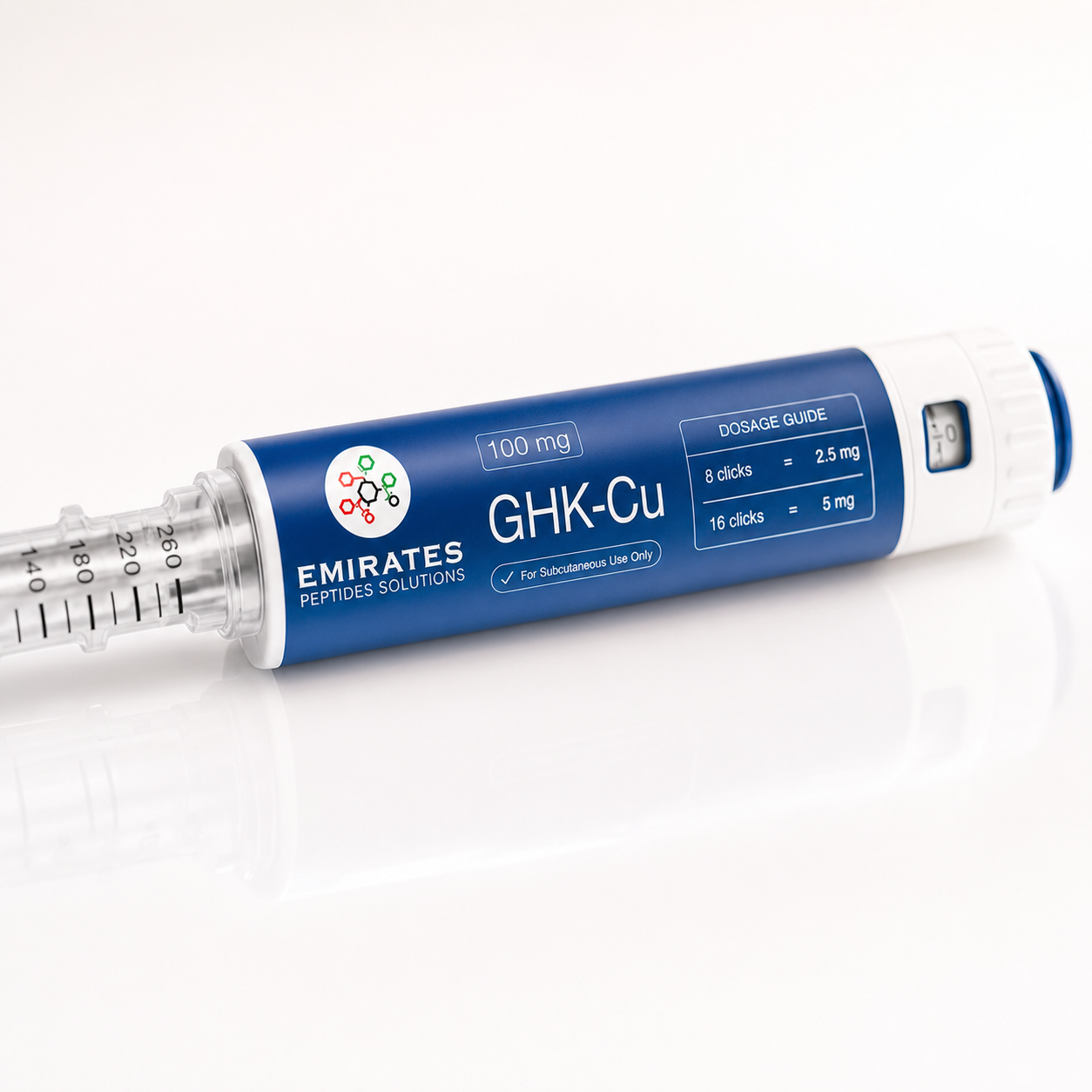
The live Emirates Peptides listing describes a self-contained pen with 100 mg of copper tripeptide in an integrated 3 ml cartridge. The device includes a transparent inspection chamber, a calibrated setting mechanism and batch-labelled packaging.
The useful inventory description is precise: “GHK-Cu Pen — 100 mg, integrated 3 ml cartridge.” Record that description, the batch number and the condition on receipt. Do not shorten it to “copper peptide” if the abbreviated name would make records ambiguous.
The current listing instructs refrigerated storage at 2–8°C, no freezing and protection from direct light and excessive heat. The pen should remain capped when it is not being inspected. Batch-specific documentation should be reviewed before the material is accepted into a study.
14 · Research guide
Receiving and traceability checklist
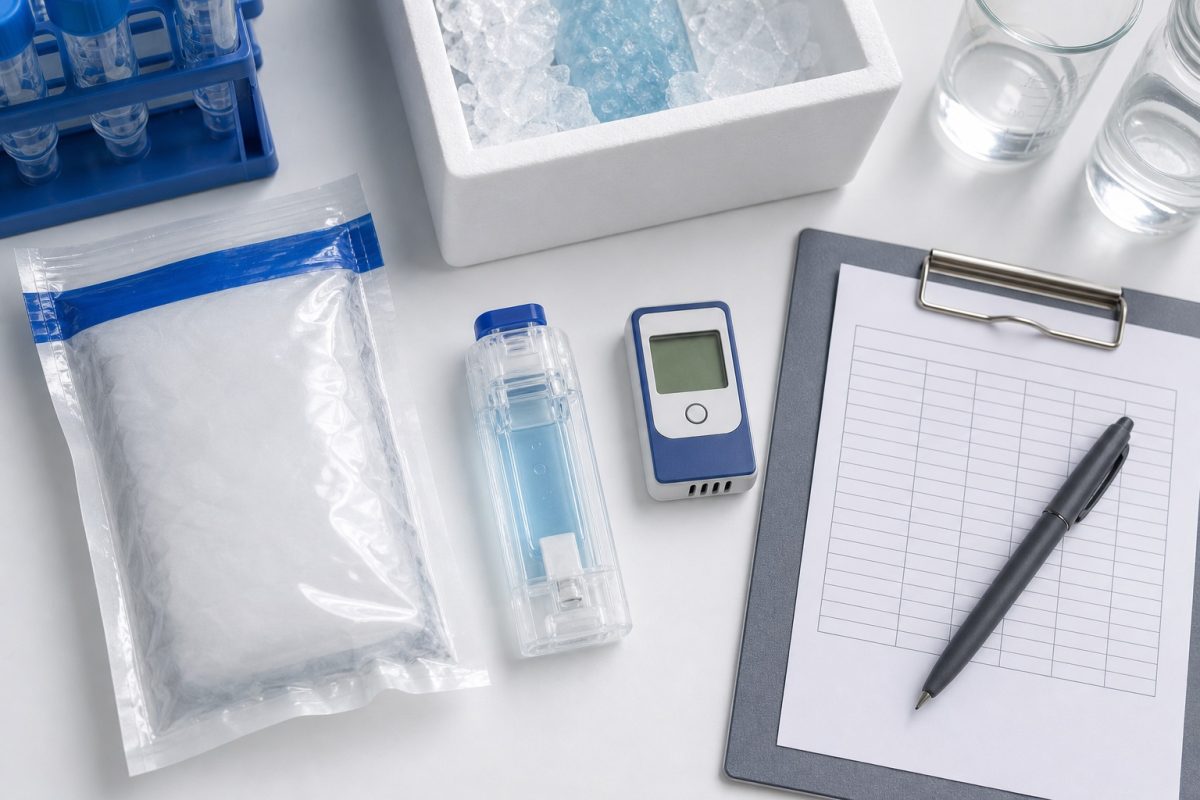
Begin by matching the item against the order and shipping record. Confirm that the product name, labelled content and batch details agree across the package, device and supplied documents.
Inspect the package for crushing, water exposure, opening or labelling problems. Inspect the pen for leakage, a damaged chamber, a loose or missing cap and unexpected visible changes. Record observations rather than relying on memory.
Create an inventory entry containing:
- supplier and exact product name;
- catalogue reference, if supplied;
- 100 mg labelled research content;
- integrated 3 ml cartridge format;
- batch or lot number;
- receipt date and time;
- arrival condition;
- expiry or retest information supplied;
- stated storage requirement;
- internal inventory code; and
- reviewer identity.
Quarantine discrepancies before the item joins accepted inventory. Photographing the sealed package and label can support the receiving record where laboratory policy permits it.
15 · Research guide
How to assess a certificate of analysis
A certificate should be connected to the physical item by a matching batch number. Check the test date, methods, reported result and acceptance criteria.
HPLC can describe chromatographic purity under the stated method. Mass spectrometry can support molecular-mass identity. Other methods may be needed for copper content, water, residual solvents, microbial status, endotoxin or concentration, depending on the material and planned study.
Do not read “99% purity” as “99% of everything is proven.” A purity result answers a defined analytical question. It does not automatically prove concentration, sterility, stability or biological activity.
If the project depends on a critical attribute, that attribute should have an appropriate method and acceptance criterion in the study plan.
16 · Research guide
Storage and temperature excursions
Follow the product and batch documentation. For the current Emirates Peptides listing, store at 2–8°C, do not freeze, and protect from direct light and excessive heat.
When an excursion is suspected, keep the item isolated under the stated refrigerated condition without freezing. Record the approximate temperature range, duration, time discovered, package condition and any visible change.
Do not clear the material based only on its blue colour. Colour is influenced by several factors and may remain similar even when another quality attribute changes. A documented, batch-specific review should determine whether the item remains suitable for its intended laboratory purpose.
17 · Research guide
Designing better GHK-Cu experiments

Start with a defined question. “Does GHK-Cu work?” is too broad. A useful question identifies the model, comparator, endpoint and time window.
Include controls that can separate the complex from its components. Depending on the question, these may include vehicle, GHK without copper, a copper control and a suitable positive control. The copper control is especially important when the endpoint may respond to copper itself.
Document pH, buffer, light exposure, temperature and preparation timing. Metal-peptide chemistry can be sensitive to experimental conditions. Record the product and batch identifier in the raw data.
Use independent biological replicates and predefined analysis rules. If multiple endpoints are measured, distinguish exploratory results from the primary question. Report null or contrary findings rather than selecting only the most favourable graph.
Most importantly, keep the conclusion at the evidence level. A change in cultured fibroblast MMP-2 expression is a cell-culture result. It is not a wrinkle claim, hair-growth claim or treatment recommendation.
18 · Research guide
Common GHK-Cu research mistakes
Using colour as proof
Blue appearance is compatible with copper coordination, but it cannot authenticate the material or establish purity and concentration.
Treating GHK and GHK-Cu as identical
The copper-bound complex can behave differently from the unbound peptide. The tested species should be named precisely.
Citing AHK-Cu as GHK-Cu
The peptides differ at the first amino acid. Related research may provide context, but it is not direct evidence for the same compound.
Turning cell findings into consumer promises
Fibroblast endpoints do not prove visible or clinical results in people.
Ignoring the formulation
A gel, buffer, dry vial and integrated cartridge are not interchangeable research formats. Their handling and stability questions differ.
Losing batch traceability
Without the batch number and receiving history, an unexpected result becomes much harder to investigate or reproduce.
19 · Research guide
Frequently asked questions
What does GHK-Cu stand for?
GHK is glycyl-L-histidyl-L-lysine, a three-amino-acid peptide. Cu refers to coordinated copper, normally copper(II), in the complex.
Is GHK-Cu the same as copper alone?
No. It is a coordinated peptide-copper complex. Some experimental effects may involve the copper component, which is why GHK, copper and GHK-Cu controls can be useful.
Why is GHK-Cu blue?
Copper(II) coordination can absorb visible light in a way that creates a blue appearance. The exact shade can depend on concentration, formulation, lighting and path length.
Does blue colour prove that a product is genuine?
No. Colour cannot establish sequence, identity, purity, concentration, sterility or stability. Use batch-linked analytical documentation and appropriate testing.
What has GHK-Cu been studied for?
Published work includes copper coordination, fibroblast collagen synthesis, extracellular-matrix remodelling signals, animal wound models, a specific human wound-gel study, and formulation or delivery research.
Does laboratory collagen research prove an anti-ageing effect?
No. A collagen-related endpoint in cultured cells does not establish a visible cosmetic or therapeutic outcome in people.
Is the hair-follicle study about GHK-Cu?
A commonly cited human follicle study tested AHK-Cu, a related but different tripeptide. It should not be represented as direct GHK-Cu evidence.
What is the Emirates Peptides GHK-Cu Pen format?
The live listing describes 100 mg of copper tripeptide in an integrated 3 ml cartridge with a transparent inspection chamber, a calibrated setting mechanism and batch-labelled packaging.
Is the pen a skincare applicator?
No. It is a laboratory research format and is not supplied for application to skin, hair, people or animals.
What should be recorded on receipt?
Record the exact product name, labelled content, cartridge volume, batch number, receipt date, expiry information supplied, storage condition, package and cartridge condition, and internal inventory reference.
How should the pen be stored?
The current listing states 2–8°C refrigeration, no freezing, and protection from direct light and excessive heat. Review the relevant batch documentation for any additional requirements.
What should happen after a suspected temperature excursion?
Isolate the pen, keep it refrigerated without freezing, document the event and request a batch-specific quality assessment. Do not rely on appearance alone.
Does a high HPLC purity result prove the material is suitable?
No. HPLC purity is one attribute under one method. Identity, concentration, copper content, sterility, endotoxin, stability and biological activity are separate questions.
Is GHK-Cu approved to treat skin, hair or wounds?
This Emirates Peptides product is not supplied or represented as an approved treatment. It is restricted to qualified laboratory research and is not for human consumption.
The practical takeaway
GHK-Cu is a chemically defined copper-tripeptide complex with a real, varied scientific literature. Its most useful story is not “miracle copper peptide.” It is the more interesting question of how copper coordination changes a small peptide’s chemistry and how that complex behaves in specific experimental systems.
The evidence is strongest when described precisely: spectroscopy under defined conditions, collagen-related responses in cultured fibroblasts, MMP and TIMP changes in cell models, tissue findings in animals, and limited human evidence tied to a particular wound-care formulation. Each result has a boundary.
For qualified laboratory work, Emirates Peptides supplies a 100 mg GHK-Cu Pen in an integrated 3 ml cartridge with batch-labelled packaging. The pen can support orderly inspection and inventory, but analytical documents and study controls remain essential. Interesting research deserves careful records, fair controls and conclusions that do not outrun the data.
21 · Research guide
References
- Laussac JP, Haran R, Sarkar B. N.m.r. and e.p.r. investigation of the interaction of copper(II) and glycyl-L-histidyl-L-lysine, a growth-modulating tripeptide from plasma. Biochemical Journal. 1983. PMID: 6303307. https://pubmed.ncbi.nlm.nih.gov/6303307/
- Maquart FX, et al. Stimulation of collagen synthesis in fibroblast cultures by the tripeptide-copper complex glycyl-L-histidyl-L-lysine-Cu2+. FEBS Letters. 1988. PMID: 3169264. https://pubmed.ncbi.nlm.nih.gov/3169264/
- Simeon A, et al. The tripeptide-copper complex glycyl-L-histidyl-L-lysine-Cu2+ stimulates matrix metalloproteinase-2 expression by fibroblast cultures. Life Sciences. 2000. PMID: 11045606. https://pubmed.ncbi.nlm.nih.gov/11045606/
- Maquart FX, et al. In vivo stimulation of connective tissue accumulation by the tripeptide-copper complex glycyl-L-histidyl-L-lysine-Cu2+ in rat experimental wounds. Journal of Clinical Investigation. 1993. PMID: 8227353. https://pubmed.ncbi.nlm.nih.gov/8227353/
- Mulder GD, et al. Enhanced healing of ulcers in patients with diabetes by topical treatment with glycyl-l-histidyl-l-lysine copper. Wound Repair and Regeneration. 1994;2(4):259–269. PMID: 17147644. https://pubmed.ncbi.nlm.nih.gov/17147644/
- Badenhorst T, et al. Physicochemical characterization of native glycyl-l-histidyl-l-lysine tripeptide for wound healing and anti-aging: a preformulation study for dermal delivery. Pharmaceutical Development and Technology. 2016. PMID: 25384620. https://pubmed.ncbi.nlm.nih.gov/25384620/
- Li H, et al. Microneedle-Mediated Delivery of Copper Peptide Through Skin. Pharmaceutical Research. 2015. PMID: 25690343. https://pubmed.ncbi.nlm.nih.gov/25690343/
- Pyo HK, et al. The effect of tripeptide-copper complex on human hair growth in vitro. Archives of Pharmacal Research. 2007. PMID: 17703734. This study used AHK-Cu, not GHK-Cu. https://pubmed.ncbi.nlm.nih.gov/17703734/
Was this article helpful?

🔬 Related Research Peptides
Explore Research-Grade Peptides
HPLC-verified, lab-tested peptides for your scientific research. Fast delivery across the UAE.
Browse All PeptidesRelated Articles



Emirates Peptides Research Team
A dedicated coalition of biochemists and clinical researchers focusing on advanced peptide synthesis and pharmacological applications. All data is verified against current clinical trials.
FROM INSTAGRAM