Blog
GHK-Cu and Menopausal Skin Research: Collagen, Elasticity and Evidence Limits


For research use only. Material is supplied as a lyophilized reference compound with HPLC purity verification.
- The five-second evidence check
- Why menopause changes the skin-research model
- Where GHK-Cu fits—and where it does not
- What the published evidence can support
- A stronger female-specific study starts here
Evidence reviewed: 25 Jul 2026 · 5-minute scan · 6 sources cited
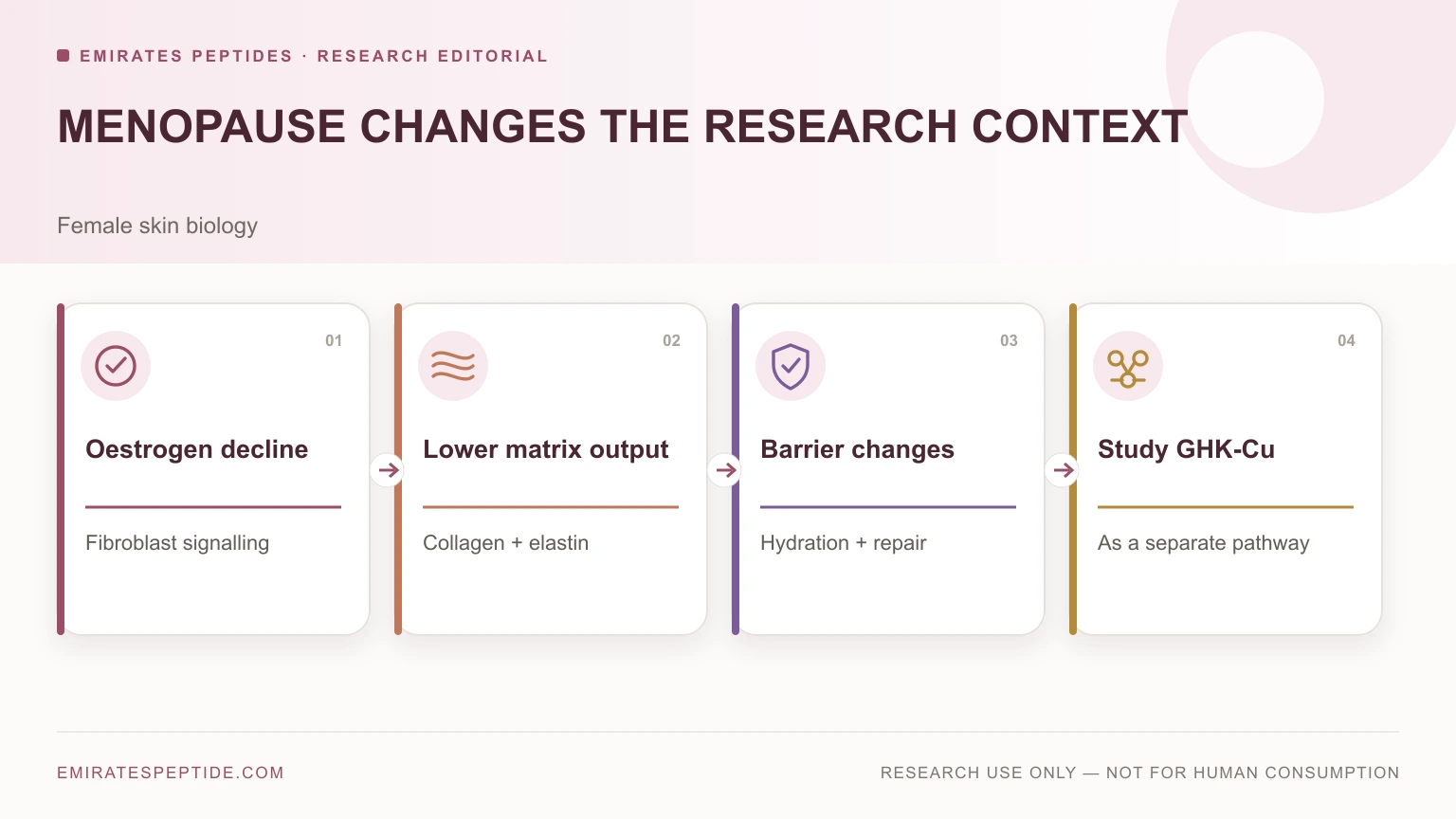
Menopause changes the biological starting point for skin research. That makes hormonal status a study variable—but it does not turn GHK-Cu into a hormone or a menopause treatment.
01 · Female biology
Why menopause changes the skin-research model
Chronological age and hormonal status are related. They are not interchangeable.
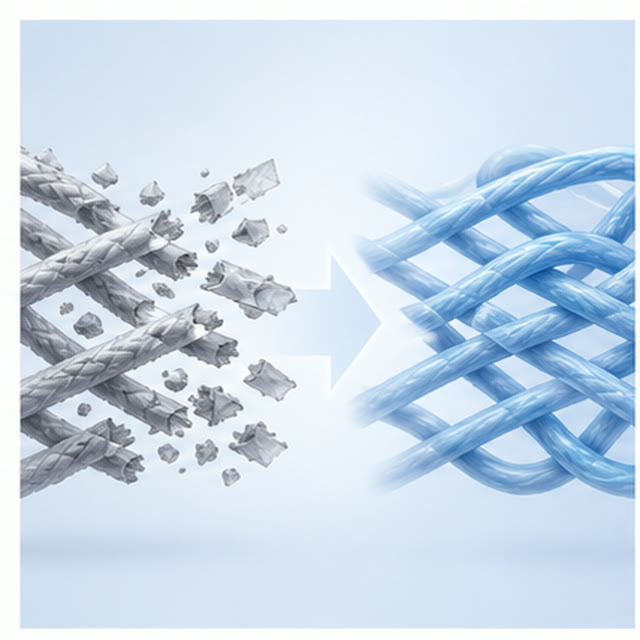
Collagen turnover
Reduced oestrogen is associated with changes in collagen synthesis and dermal structure.
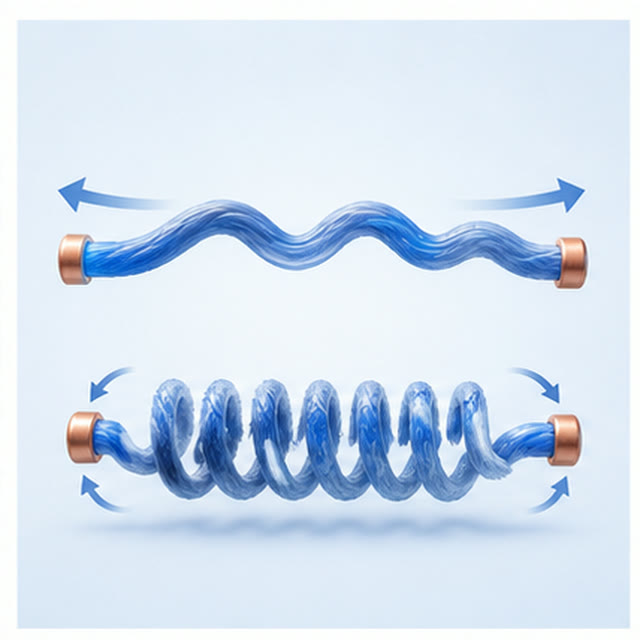
Elasticity
Elastic fibres and tissue recoil can change across the menopausal transition.
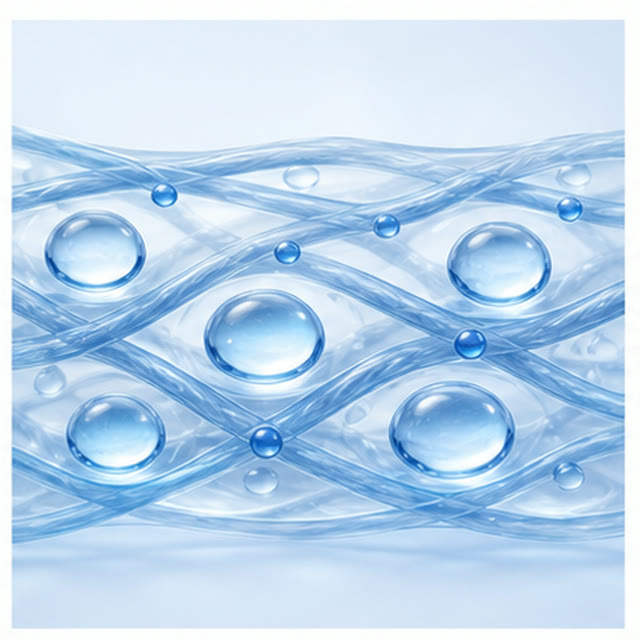
Hydration
Water-holding capacity and barrier-related measurements may begin from a different baseline.
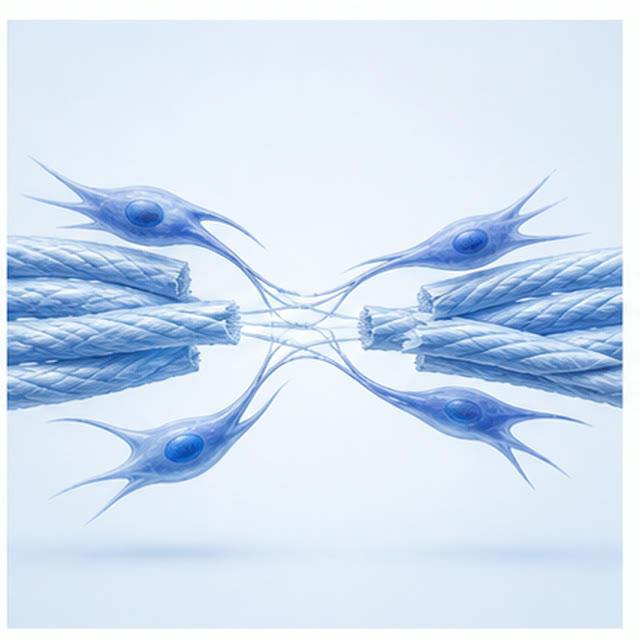
Repair
Inflammatory and wound-repair pathways can also shift as oestrogen declines.
- Record menstrual or menopausal status where ethically and practically available.
- Separate hormone-therapy exposure from chronological age.
- Declare anatomical site and photoexposure history.
02 · Mechanism
Where GHK-Cu fits—and where it does not
Latest research insights. No spam, ever.
Two pathways may touch the same endpoint without becoming the same mechanism.

Hormonal axis
Oestrogen-receptor biology
Acts across receptor-driven pathways in keratinocytes, fibroblasts, melanocytes, follicles and other structures.

Peptide axis
GHK-Cu remodelling research
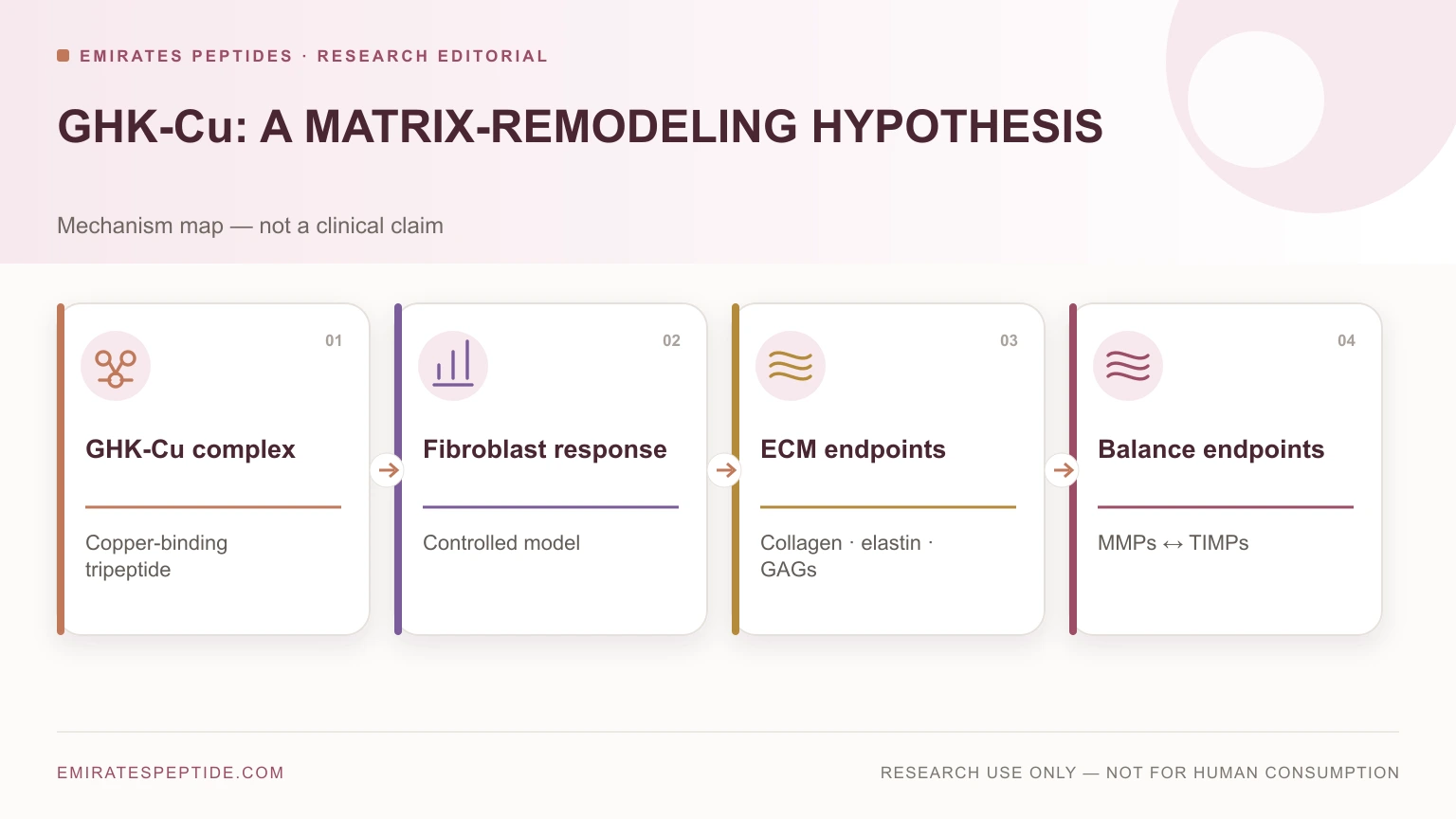
Investigated for copper binding, fibroblast matrix output and MMP/TIMP-related remodelling.
A testable question: does GHK-Cu change COL1A1, elastin, decorin or MMP/TIMP balance in fibroblasts from postmenopausal donors?
An unsupported claim: GHK-Cu “restores hormones,” “reverses menopausal skin” or recreates hormone therapy.
03 · Evidence
What the published evidence can support
The bridge between two evidence bases remains a research question.
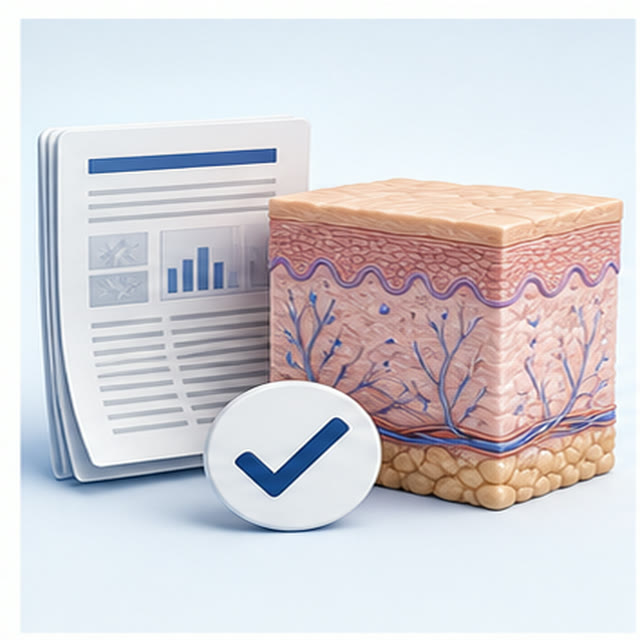
Menopause affects dermal biology
Human and review literature associates oestrogen decline with measurable skin changes.
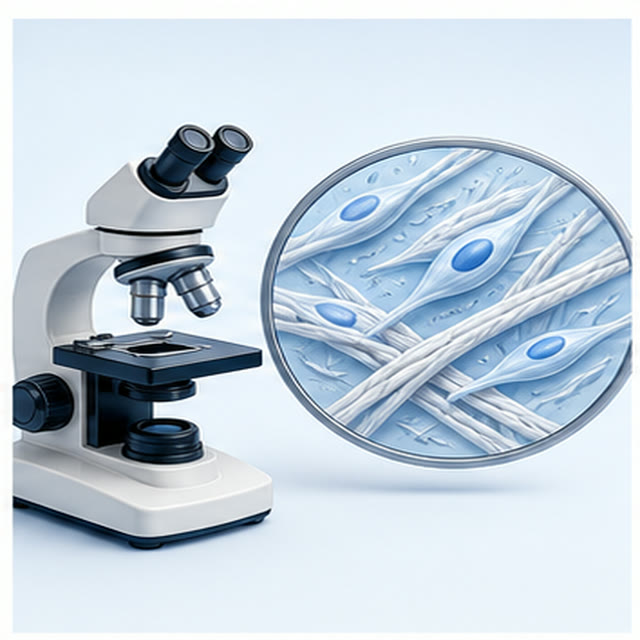
GHK-Cu affects matrix pathways
Cell, tissue and selected topical literature support continued investigation.

GHK-Cu treats menopausal skin
Direct menopause-specific clinical evidence remains limited.
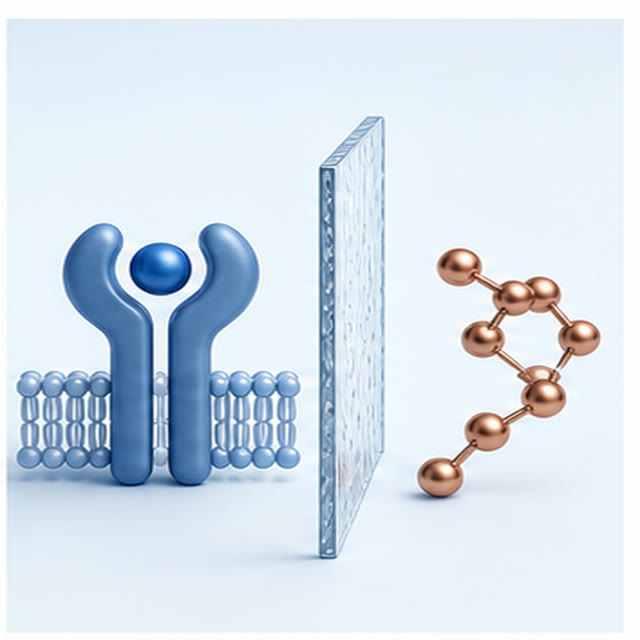
GHK-Cu replaces oestrogen
GHK-Cu is not a hormone or hormone-replacement therapy.
Read the evidence as a ladder
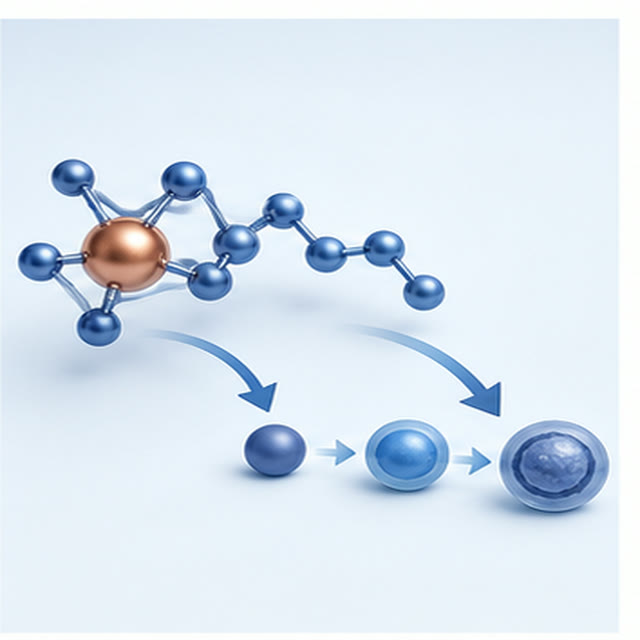
Molecular signals
Useful for copper binding, gene expression and mechanism. They cannot predict a complete human-tissue response.
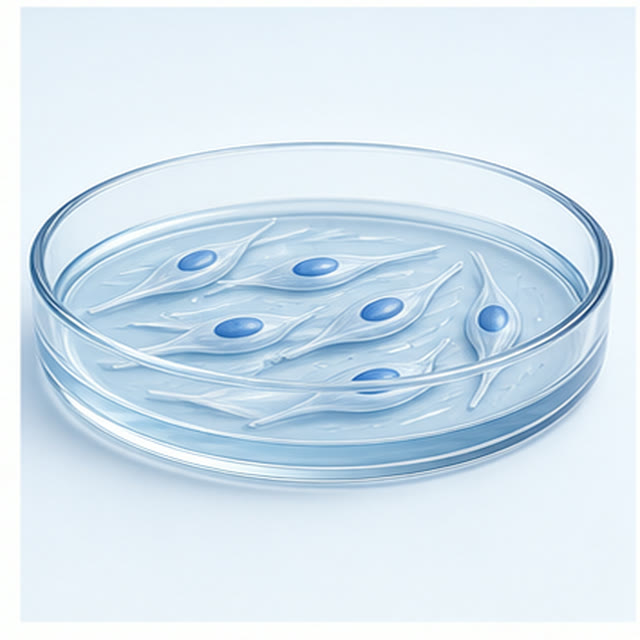
Cultured cells
Controlled and measurable, but missing circulation, barrier penetration and intact hormonal context.
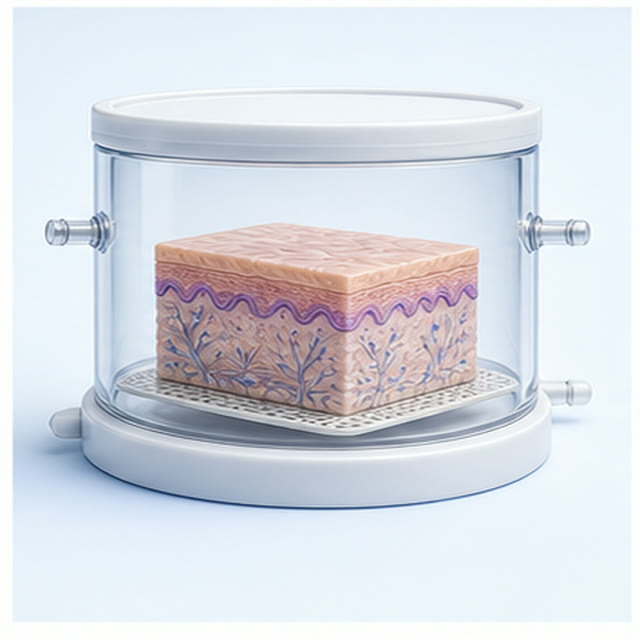
Skin models and explants
Preserve more architecture, although viability, donor variation and model fidelity remain limits.
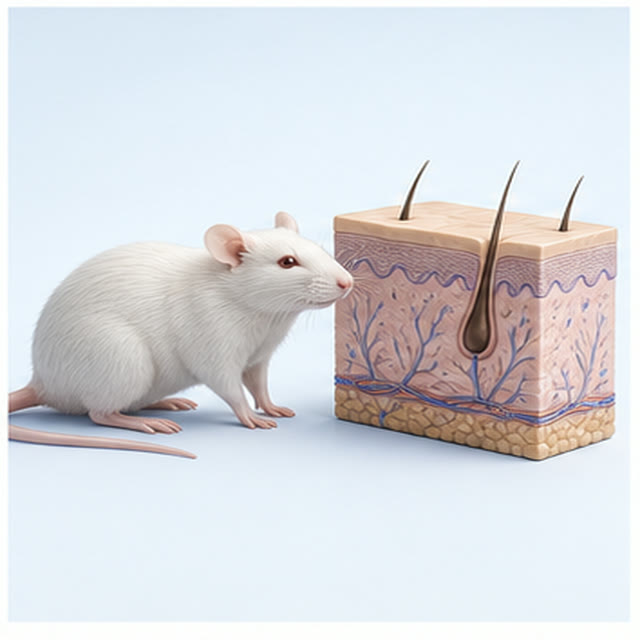
Animal models
Can test repair and systemic interactions, but species and hormone-biology differences complicate translation.
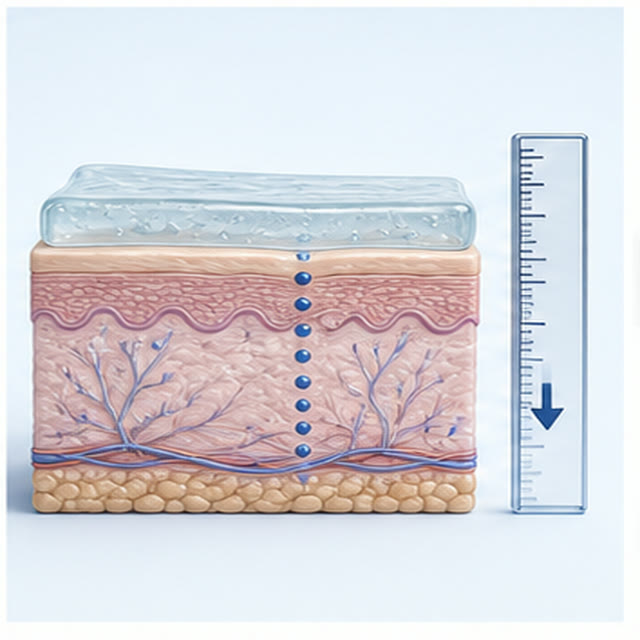
Human topical studies
Vehicle, stability, contact time and penetration are decisive. A finished cosmetic does not validate a research vial.

Menopause-specific trials
Population, comparator, blinding, endpoints and menopausal stage must be declared. This is the missing bridge.
04 · Study design
A stronger female-specific study starts here
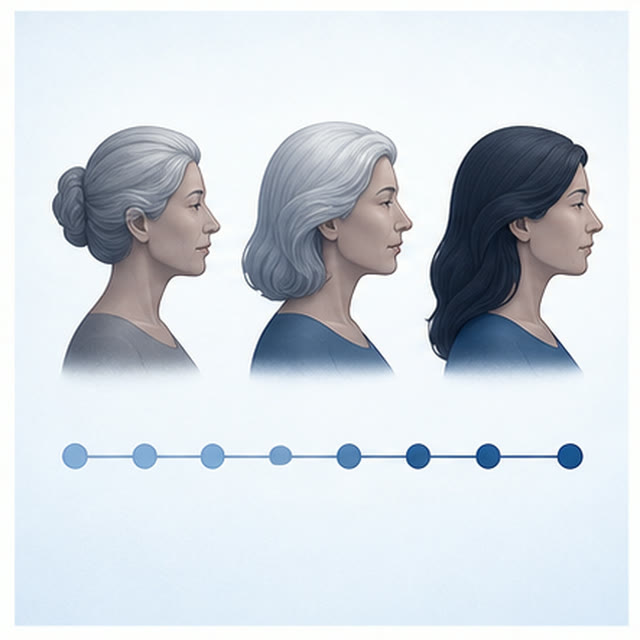
Stratification matters more than a gendered headline.
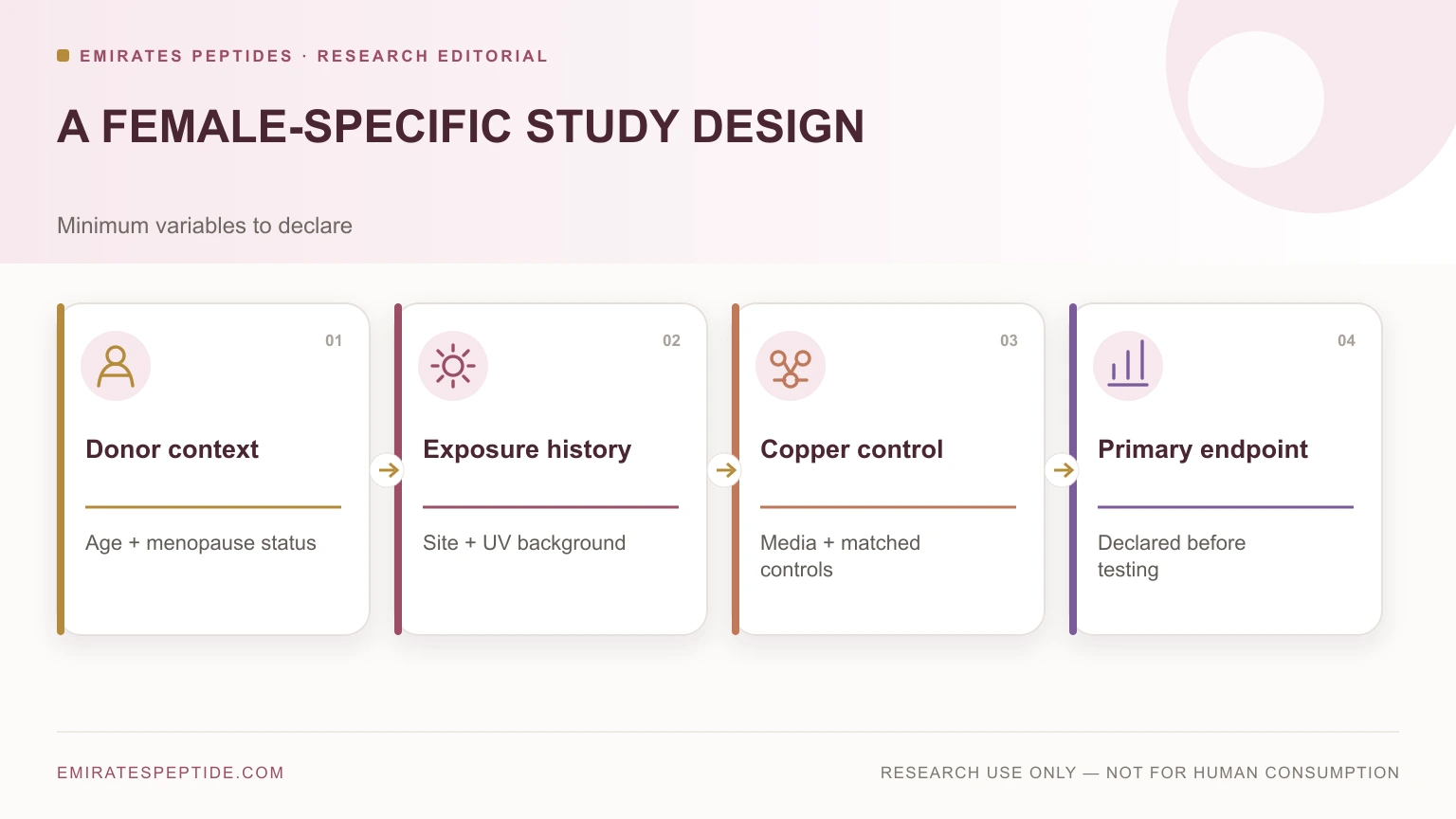


Record these before interpreting a result
- Donor age and menopausal stage
- Hormone-therapy exposure
- Anatomical site and UV history
- Passage number and serum lot
- Basal copper and treatment concentration
- Vehicle, delivery measurement and pre-registered endpoint
For in vitro work, compare donor-defined fibroblast lots instead of pooling all adult female cells. Keep basal copper, passage number, serum lot and GHK-Cu concentration controlled.
For reconstructed skin or explants, separate sun-protected from chronically exposed tissue. If a topical vehicle is tested, include a vehicle control and delivery measurements.
05 · Matrix depth
Collagen is only one part of the story
A thicker matrix is not necessarily a better-organised matrix.
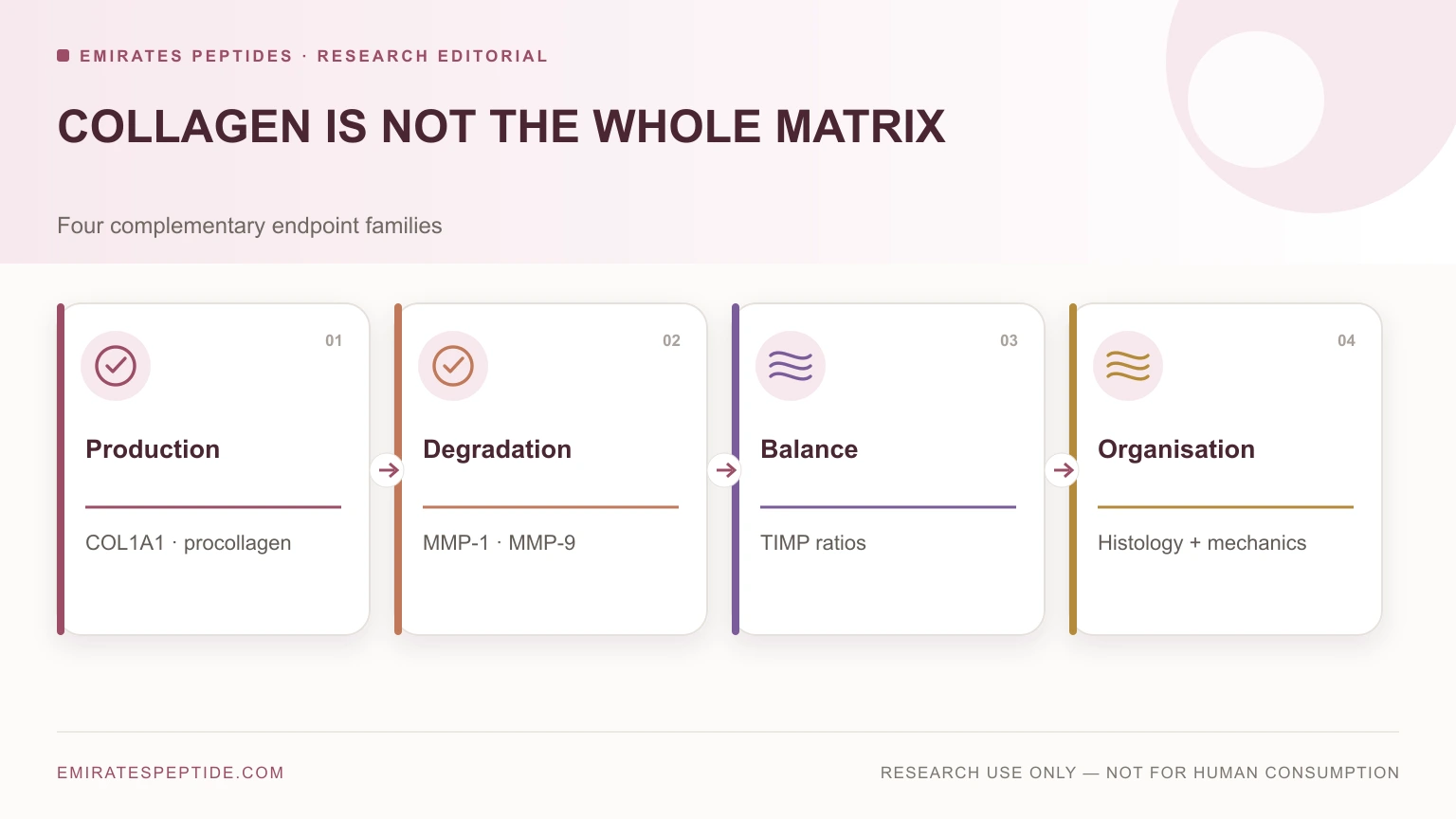
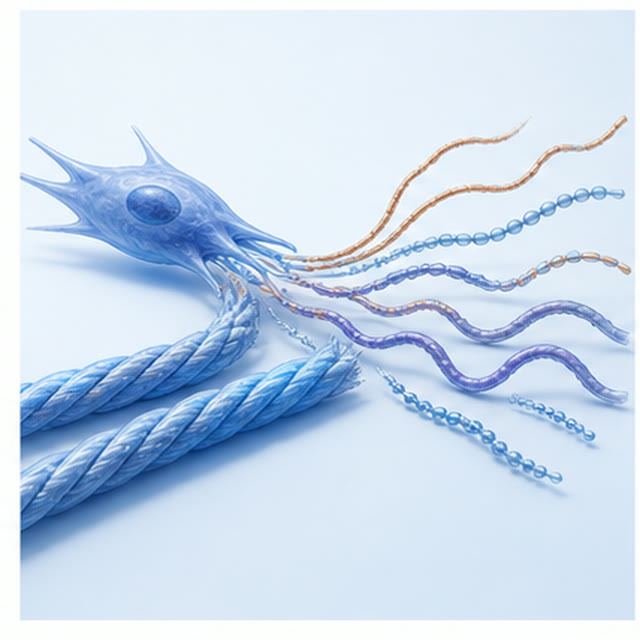
Production
Are collagen, elastin or decorin transcripts and proteins increased?
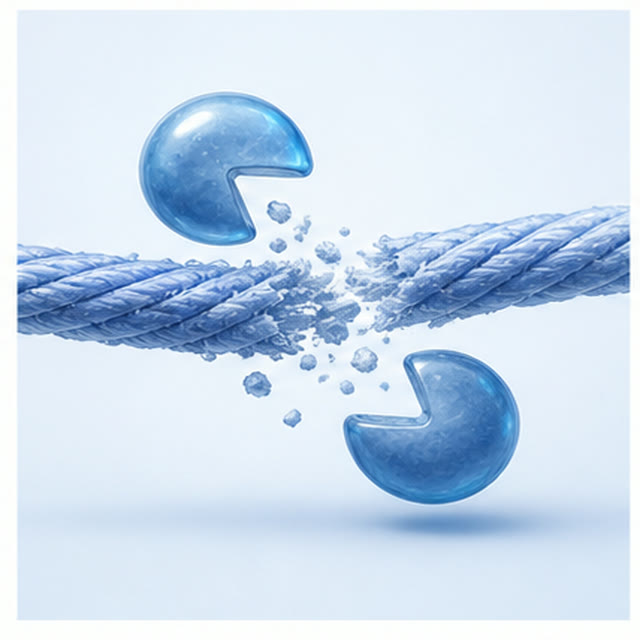
Degradation
Are MMP-1, MMP-2, MMP-9 or related proteolytic signals altered?
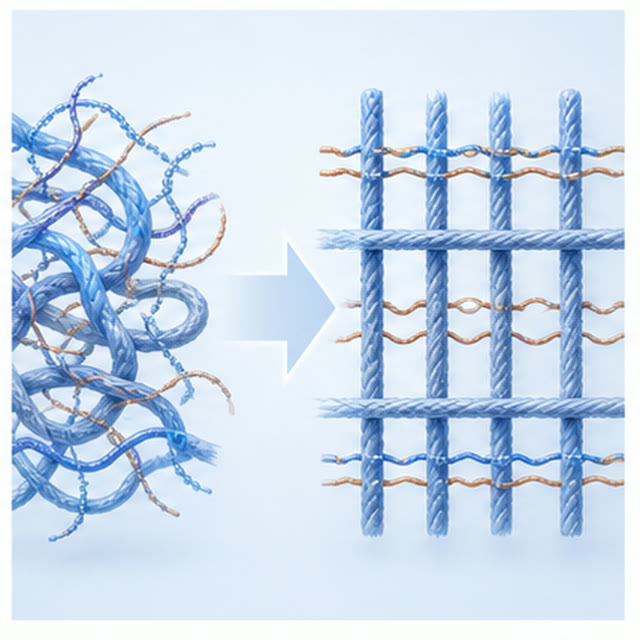
Organisation
Do histology, second-harmonic imaging or mechanical tests show more coherent architecture?
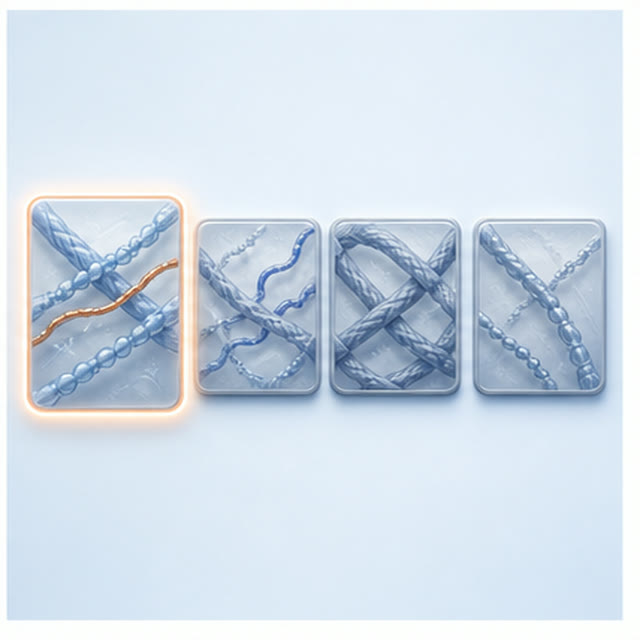
One result is not all results
A change in one category is not proof of success across the entire matrix.
06 · Limits
What readers should not infer
The evidence boundary protects scientific and regulatory accuracy.
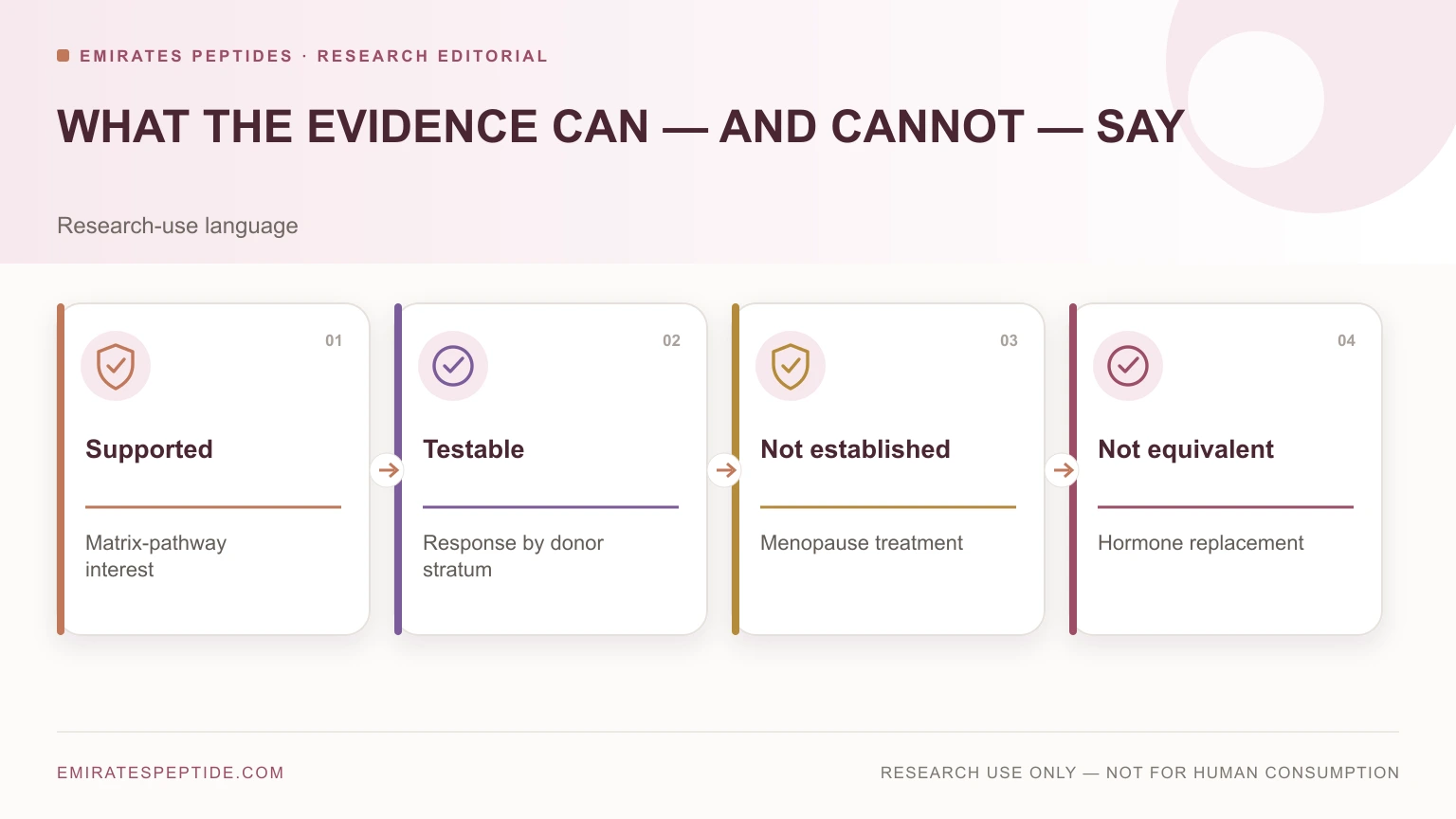

Do not infer
Personal suitability
A research paper does not determine whether a substance is suitable for a person.

Do not infer
Route or dose
Cell-culture concentrations are not human-use instructions.

Do not infer
Formulation transfer
Topical cosmetic findings do not automatically apply to lyophilised research material.

Do not infer
Clinical benefit
Do not claim treatment for dryness, wrinkles, menopause symptoms or impaired healing.
For the broader collagen background, read Copper Peptides & Collagen Research: Skin Density After 30.
07 · UAE integrity
Heat and handling belong in the methods
If the material changes, the experiment changes.
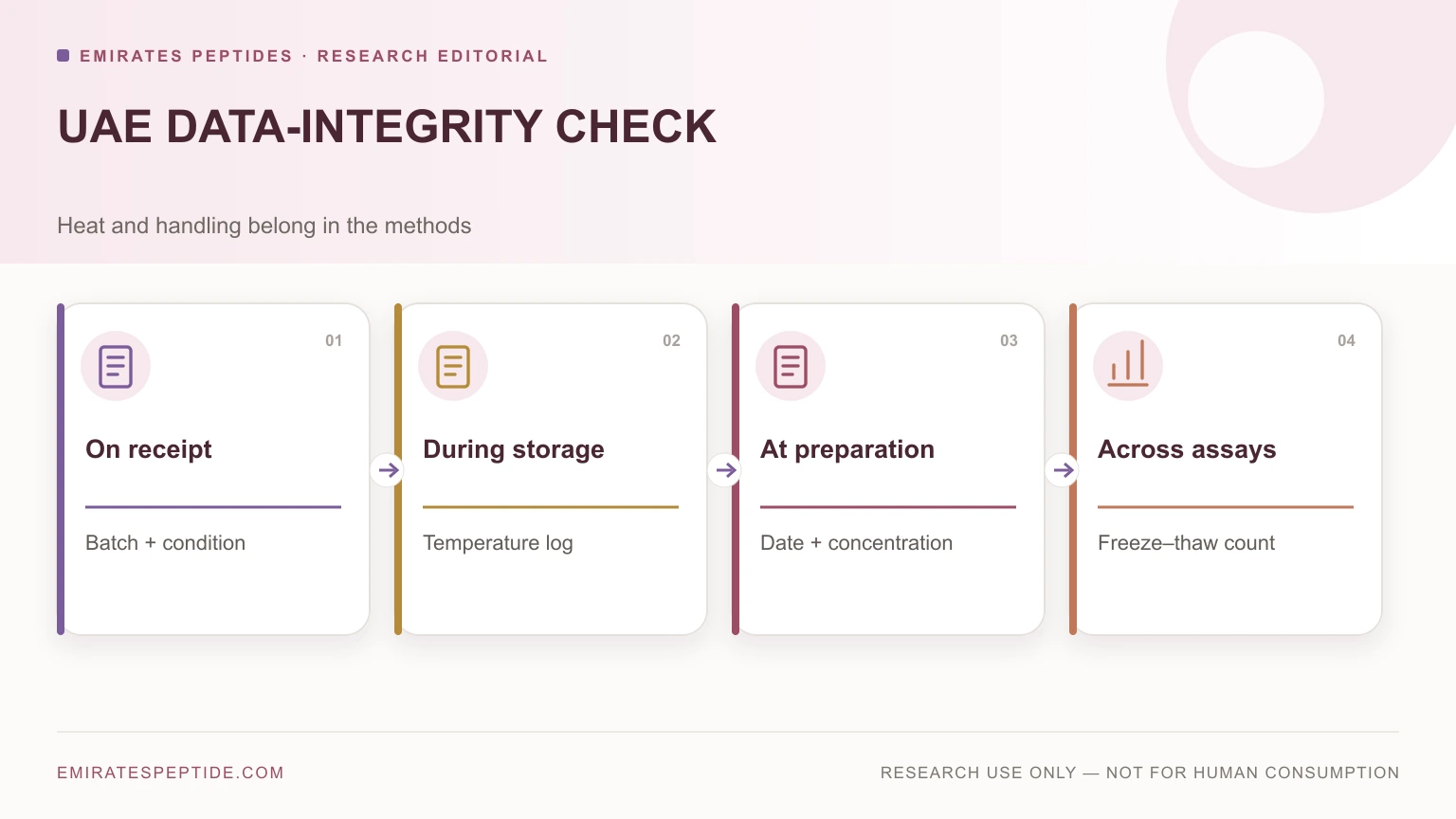
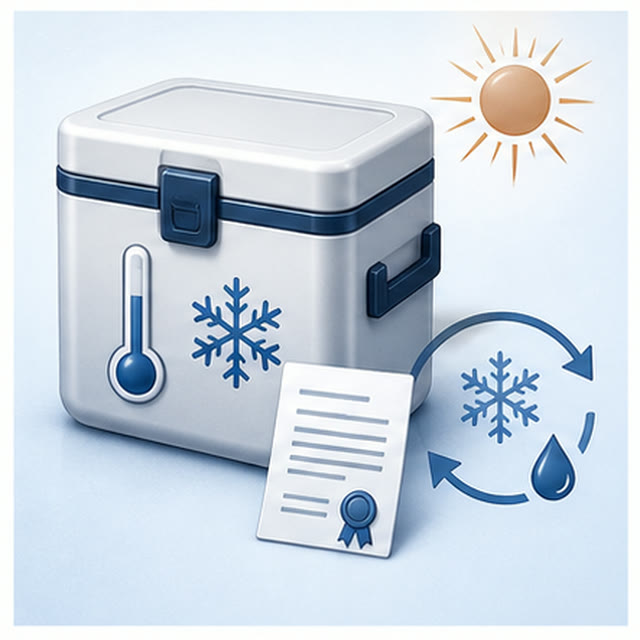
Document every condition that could alter the result
- Batch COA and receipt condition
- Storage temperature
- Reconstitution date
- Working concentration
- Freeze–thaw count
Review the peptide storage guide before beginning laboratory work.
08 · FAQ
Quick answers
 Is GHK-Cu a hormone?
Does research prove GHK-Cu reverses menopausal skin changes?
Why record hormone-therapy status?
Can topical cosmetic evidence be applied to research vials?
09 · References
References and research sources
- Pickart L. The human tri-peptide GHK and tissue remodelling. PMID 18644225
- Pickart L, et al. GHK peptide as a natural modulator of multiple cellular pathways in skin regeneration. PMID 26236730
- Campbell JD, et al. The potential of GHK as an anti-aging peptide. PMID 35083444
- Thornton MJ. Estrogens and aging skin. PMID 24194966
- Son ED, et al. Induction of collagen by estradiol in sun-protected and photodamaged skin. PMID 18794456
- Ashcroft GS, et al. Topical estrogen accelerates cutaneous wound healing in aged humans. PMID 10514397
Disclaimer: For laboratory research use only. Not for human administration. This article is not medical, menopausal, dermatological or cosmetic advice.
Was this article helpful?

🔬 Related Research Peptides
Explore Research-Grade Peptides
HPLC-verified, lab-tested peptides for your scientific research. Fast delivery across the UAE.
Browse All PeptidesRelated Articles

Emirates Peptides Research Team
A dedicated coalition of biochemists and clinical researchers focusing on advanced peptide synthesis and pharmacological applications. All data is verified against current clinical trials.
FROM INSTAGRAM