Blog
GHK-Cu and Female Hair-Cycle Research: Hormones, Follicles and Evidence


For research use only. Material is supplied as a lyophilized reference compound with HPLC purity verification.
- Key Facts at a Glance
- Why female hair research needs its own covariate map
- What copper-peptide follicle evidence actually shows
- The AHK-Cu versus GHK-Cu citation trap
- A stronger design for female follicle research
Evidence reviewed: 25 Jul 2026 · 9-minute read · 6 sources cited
Female hair thinning is not one biological event. Pattern thinning, postpartum shedding, menopause-associated change, nutritional deficiency, thyroid disease, stress and inflammatory scalp conditions can create similar visual complaints through different pathways. GHK-Cu is studied in tissue-remodeling and copper-peptide follicle models, but that literature does not establish it as a treatment for female hair loss. This guide shows how researchers can study the question without flattening female biology into a marketing promise.
01 · Female biology
Why female hair research needs its own covariate map
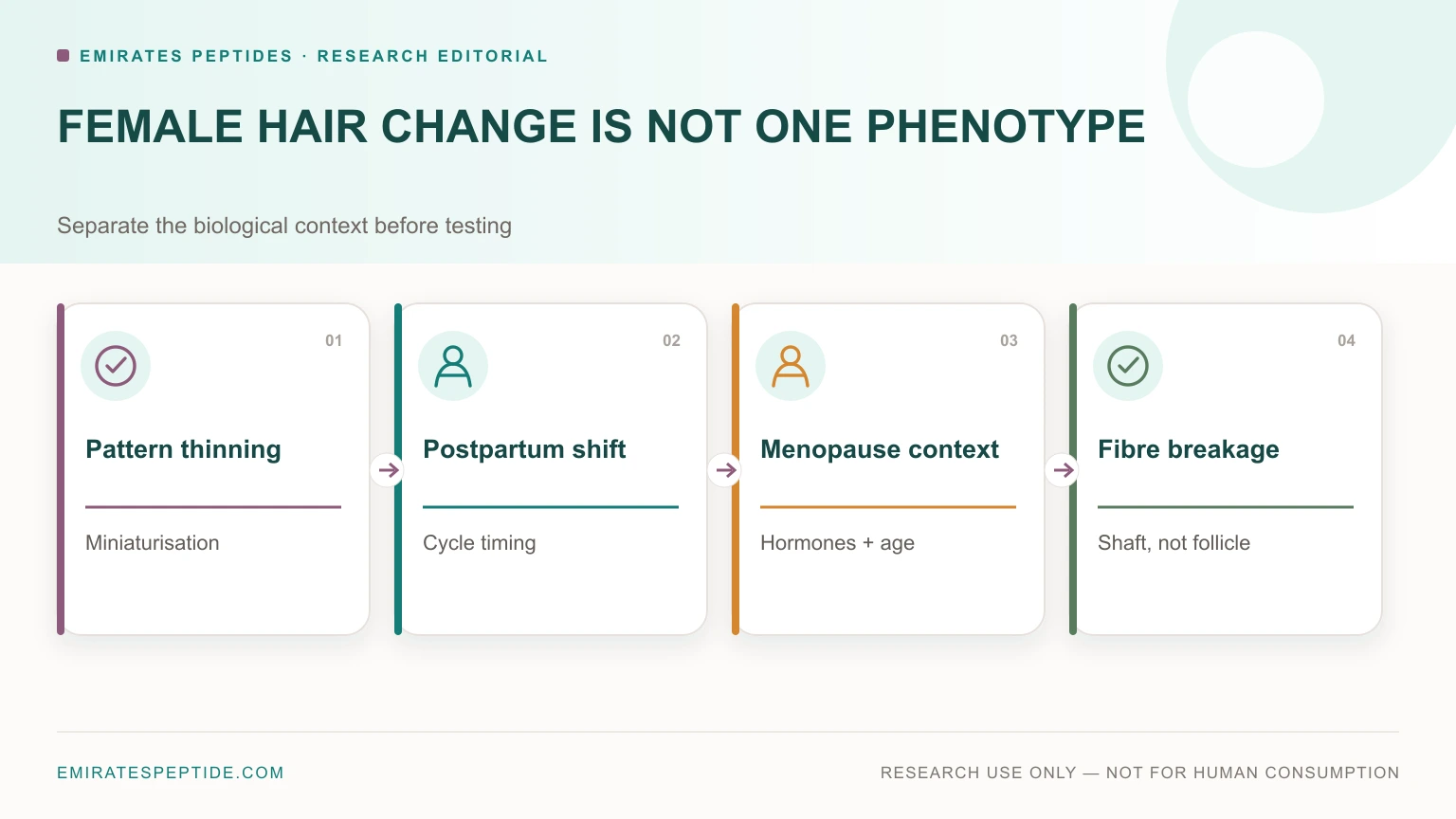
A diffuse part line does not reveal the underlying mechanism.
The human follicle cycles through anagen, catagen and telogen phases. Female hormonal transitions can change the proportion of follicles occupying those phases, while pattern hair loss involves progressive miniaturisation. Postpartum shedding is typically discussed as a cycle shift after pregnancy; menopause changes oestrogen-androgen balance; thyroid, ferritin and medication status can add further noise.
A peptide study that enrols “women aged 25–60” without stratification risks mixing biologically distinct conditions. Even in laboratory work, donor age, scalp site and follicle diagnosis matter. A follicle from a postpartum telogen-effluvium context is not interchangeable with a miniaturised follicle from female-pattern hair loss.
02 · GHK-Cu
What copper-peptide follicle evidence actually shows
Latest research insights. No spam, ever.
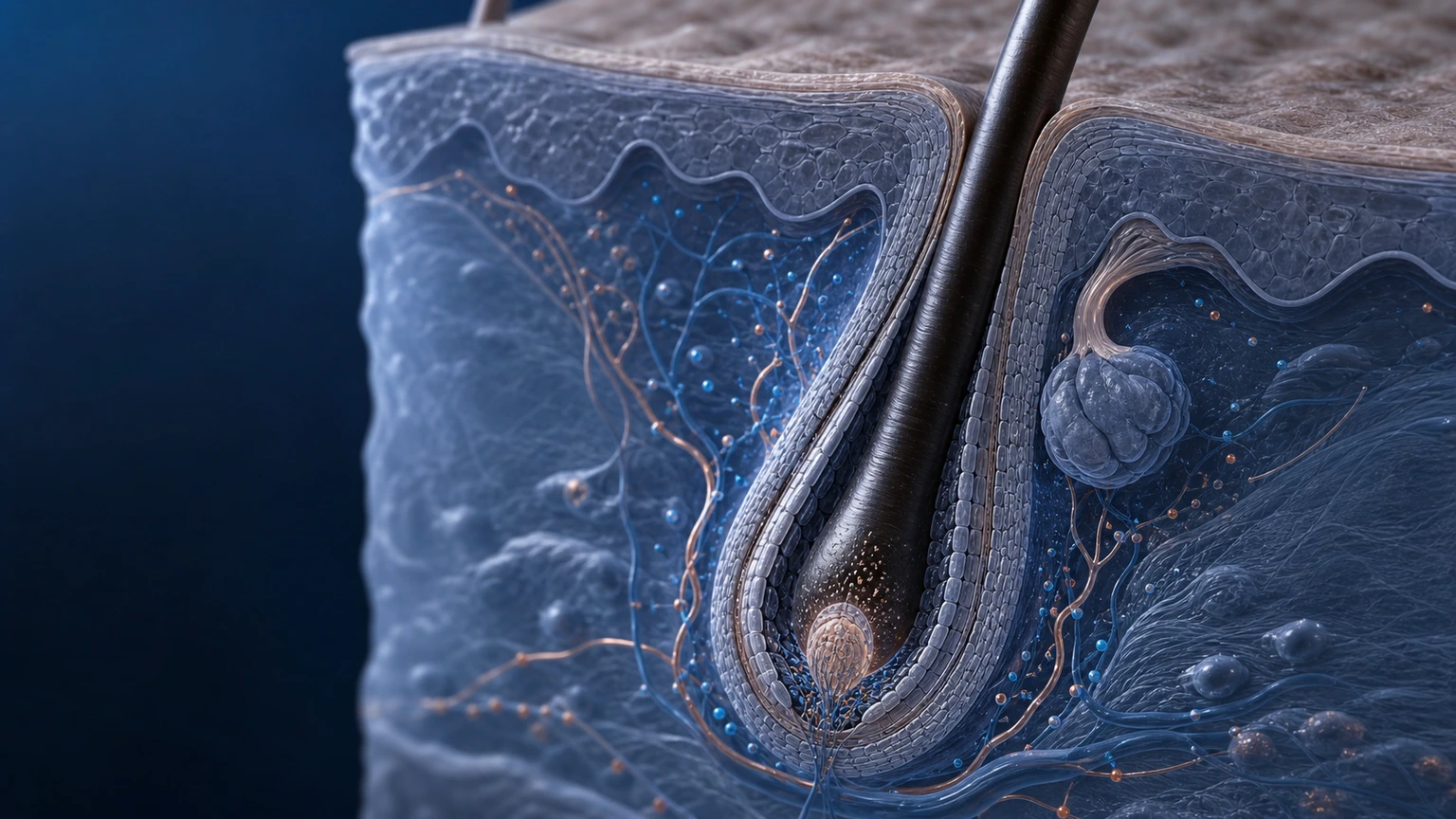
Experimental growth signals are not clinical regrowth proof.
GHK-Cu reviews discuss tissue remodeling, angiogenesis-related signals and reported increases in hair-follicle size. Separate copper-tripeptide experiments have measured human hair-shaft elongation in organ culture. These findings justify mechanistic research into the follicular extracellular matrix and dermal-papilla environment.
They do not prove that research-supply GHK-Cu reverses female-pattern thinning, prevents postpartum shedding or treats menopause-associated hair change. Most of the evidence sits below the level of large, controlled, sex-stratified human programmes. Route and formulation also matter: an organ-culture bath, topical delivery system and lyophilised research vial are not interchangeable.
03 · Identity
The AHK-Cu versus GHK-Cu citation trap
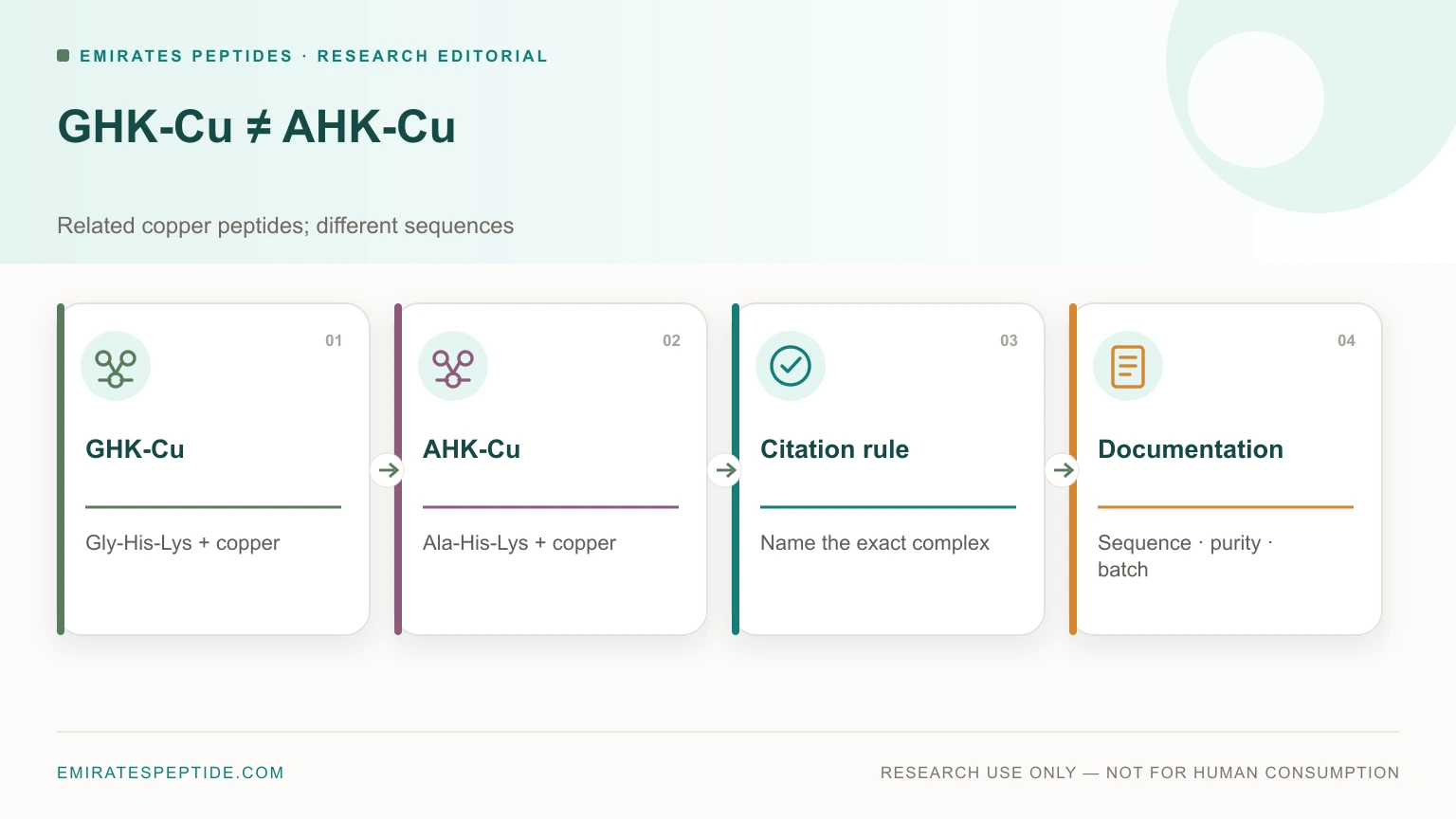
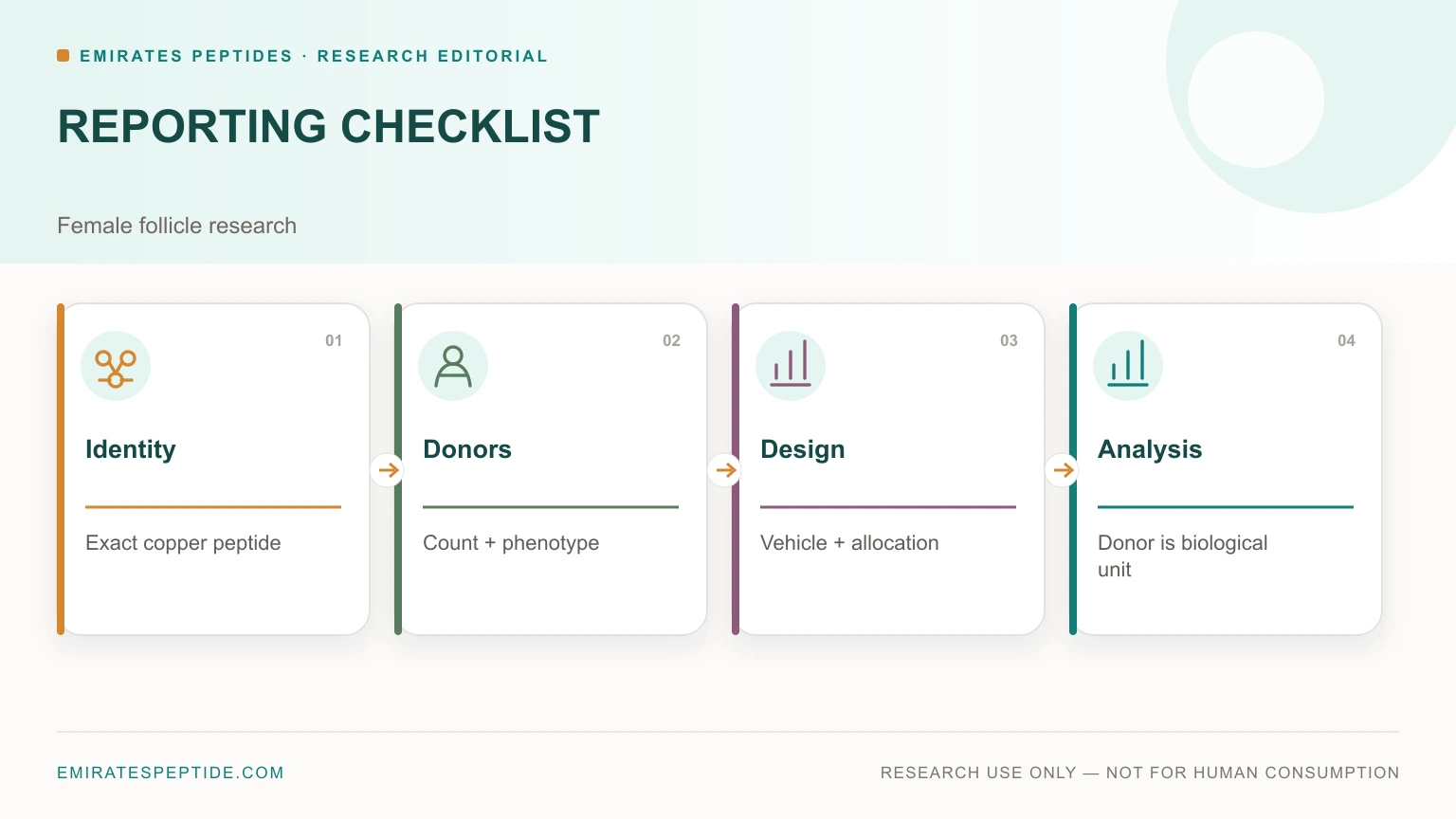
Hair-focused copper-tripeptide literature may involve GHK-Cu, AHK-Cu or another complex. They share a research neighbourhood but not an identical amino-acid sequence. Every methods table should name the exact peptide, copper stoichiometry, counter-ion, purity method and supplier lot. Citing an AHK-Cu result as direct GHK-Cu proof is a basic identity error.
| Question | Useful endpoint | Required covariates |
|---|---|---|
| Does a copper peptide alter shaft elongation? | Micrometre change in follicle organ culture | Exact peptide identity, donor sex, scalp site |
| Does it affect miniaturisation biology? | Follicle diameter and dermal-papilla markers | Diagnosis, age, androgen context |
| Does delivery reach the follicle? | Franz-cell flux or depth profiling | Vehicle, dose, stability, anatomical model |
| Does a blend outperform GHK-Cu? | Pre-registered component comparison | GHK-Cu-alone and vehicle controls |
04 · Design
A stronger design for female follicle research
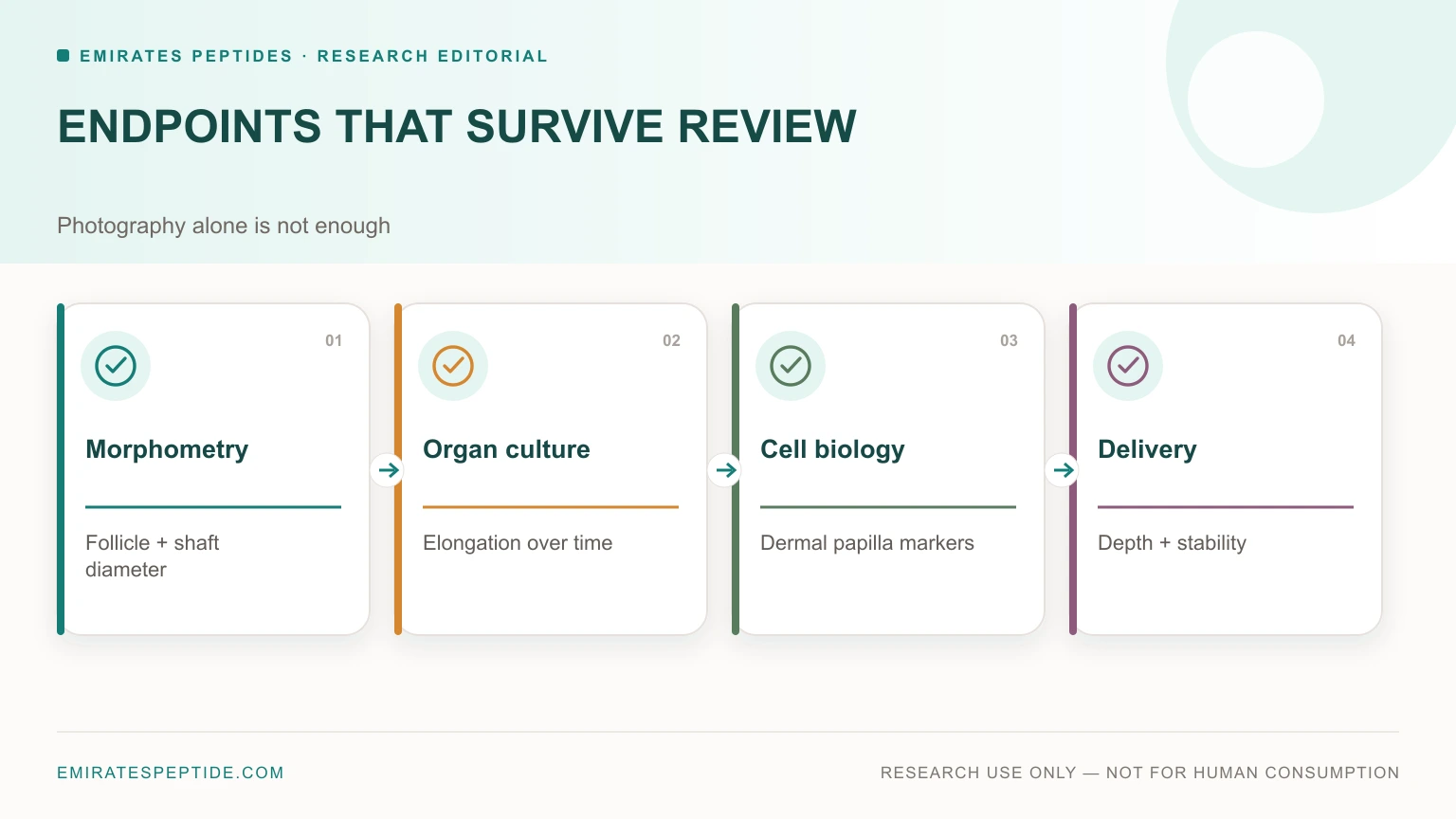
Start with a declared population and one primary endpoint. For organ culture, use follicles matched by scalp region and donor context, blind the person measuring shaft length and report excluded follicles. For dermal-papilla culture, control passage number and copper concentration. For any topical model, add vehicle-only and delivery controls.
If human observational material is involved, predefine reproductive stage, menopause status, postpartum window, relevant medicines and known endocrine or nutritional diagnoses where ethically collected. These are not side notes: they may explain more variance than the experimental peptide.
05 · Limits
Where the evidence ladder stops
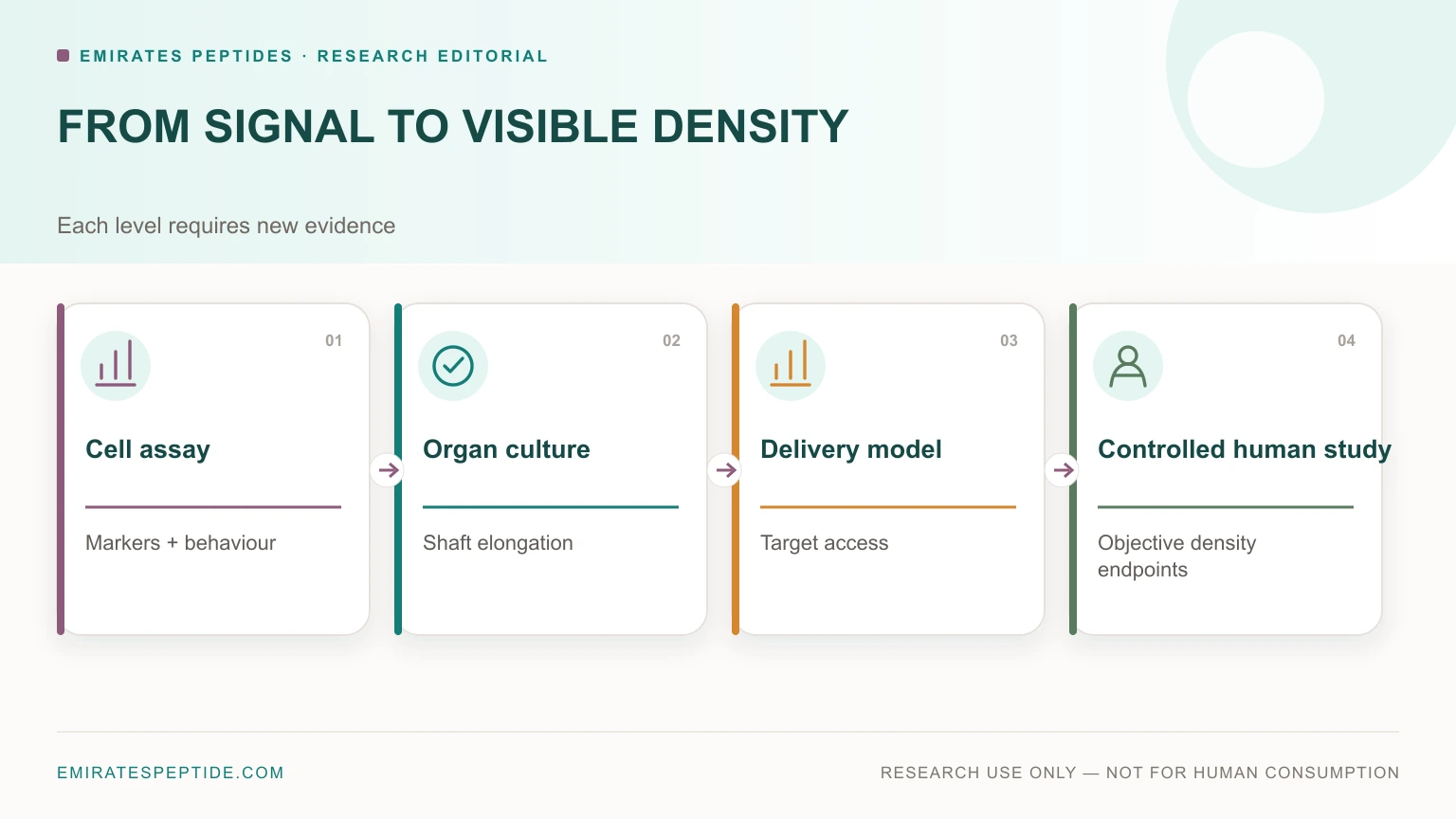
Molecular assays, dermal-papilla cultures, follicle organ cultures and animal delivery models can generate hypotheses. They do not automatically establish efficacy, safety or personal suitability in women. No article about research peptides should replace evaluation of sudden, postpartum, patchy or otherwise concerning hair loss by a qualified clinician.
For the broader pathway comparison, read Hair Thinning Research Pathways: GHK-Cu vs Recovery Peptides. That pillar compares GHK-Cu with BPC-157 and TB-500; this article adds female reproductive and endocrine variables.
06 · Cycle biology
Anagen, catagen and telogen are endpoints, not marketing stages
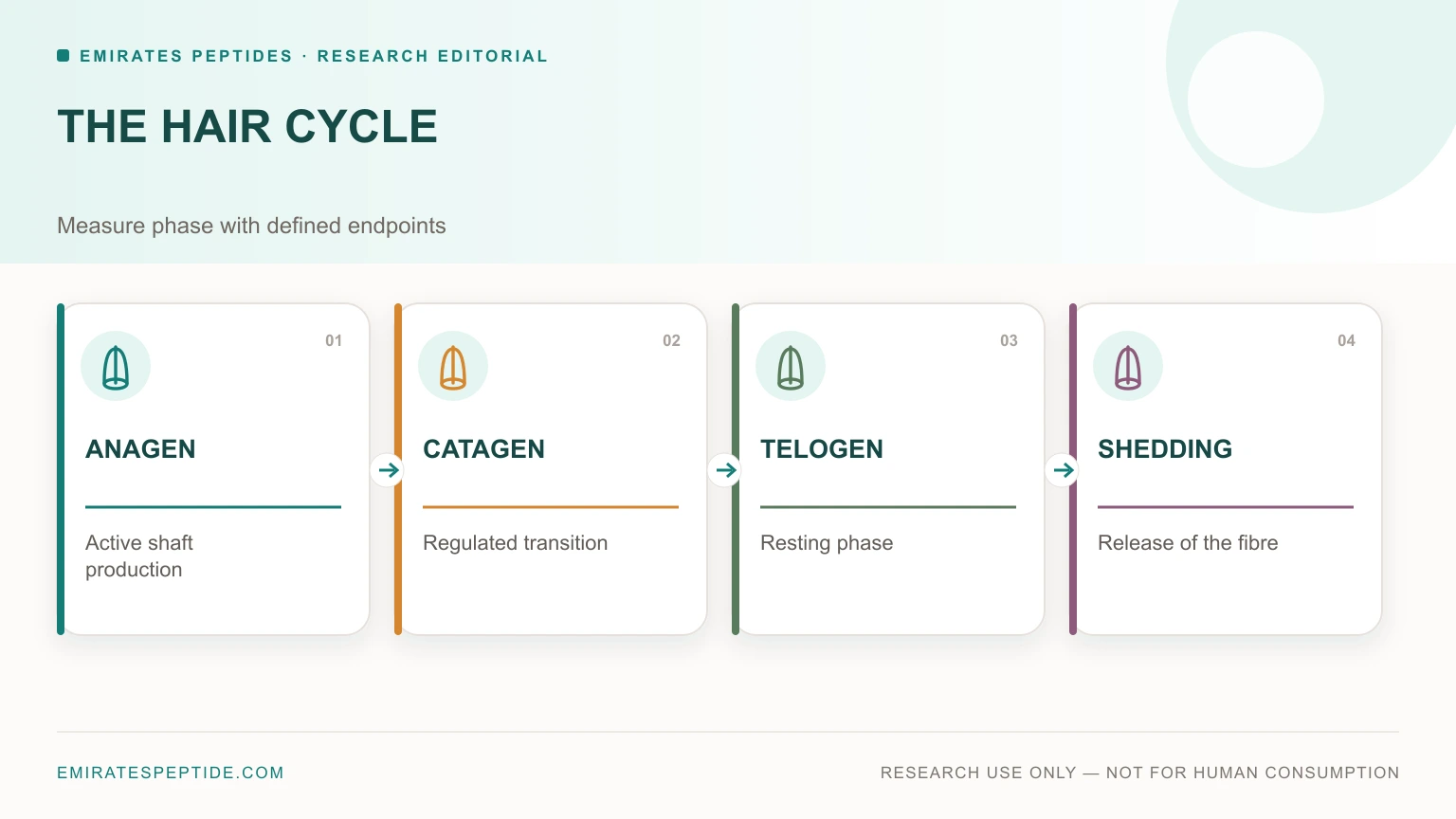
Hair-cycle language becomes useful only when the study can measure it.
Anagen is the active growth phase, catagen is a tightly regulated transition and telogen is a resting phase that precedes shedding. Human scalp follicles do not all move through these phases together, which is why a single photograph provides little mechanistic information. A study interested in cycle effects should define how phase is identified: morphology, established molecular markers, shaft production or a combination of measures.
Female reproductive events can change the distribution of follicles across the cycle. Pregnancy-associated hormonal conditions may retain a larger proportion of follicles in anagen, followed by a postpartum shift that can produce delayed shedding. That pattern is biologically different from progressive miniaturisation in female-pattern hair loss. It is also different from breakage of the fibre shaft, which can resemble density loss without being a follicle-cycle disorder.
Menopause adds another context rather than one universal pattern. Changes in oestrogen-androgen balance, age, genetics and health can interact. A study that labels every older female donor “menopausal hair loss” risks confusing chronological ageing with a defined follicular phenotype. Diagnosis and histological or trichoscopic characteristics should lead the classification whenever human material is used.
GHK-Cu does not need to affect every part of this system to remain an interesting research tool. A defensible experiment might test extracellular-matrix markers around the follicle, dermal-papilla behaviour, shaft elongation in organ culture or delivery into follicular structures. Each is a distinct hypothesis. None should be described as clinical regrowth unless controlled human research directly measures that outcome.
07 · Follicle anatomy
Which compartment is the experiment actually studying?
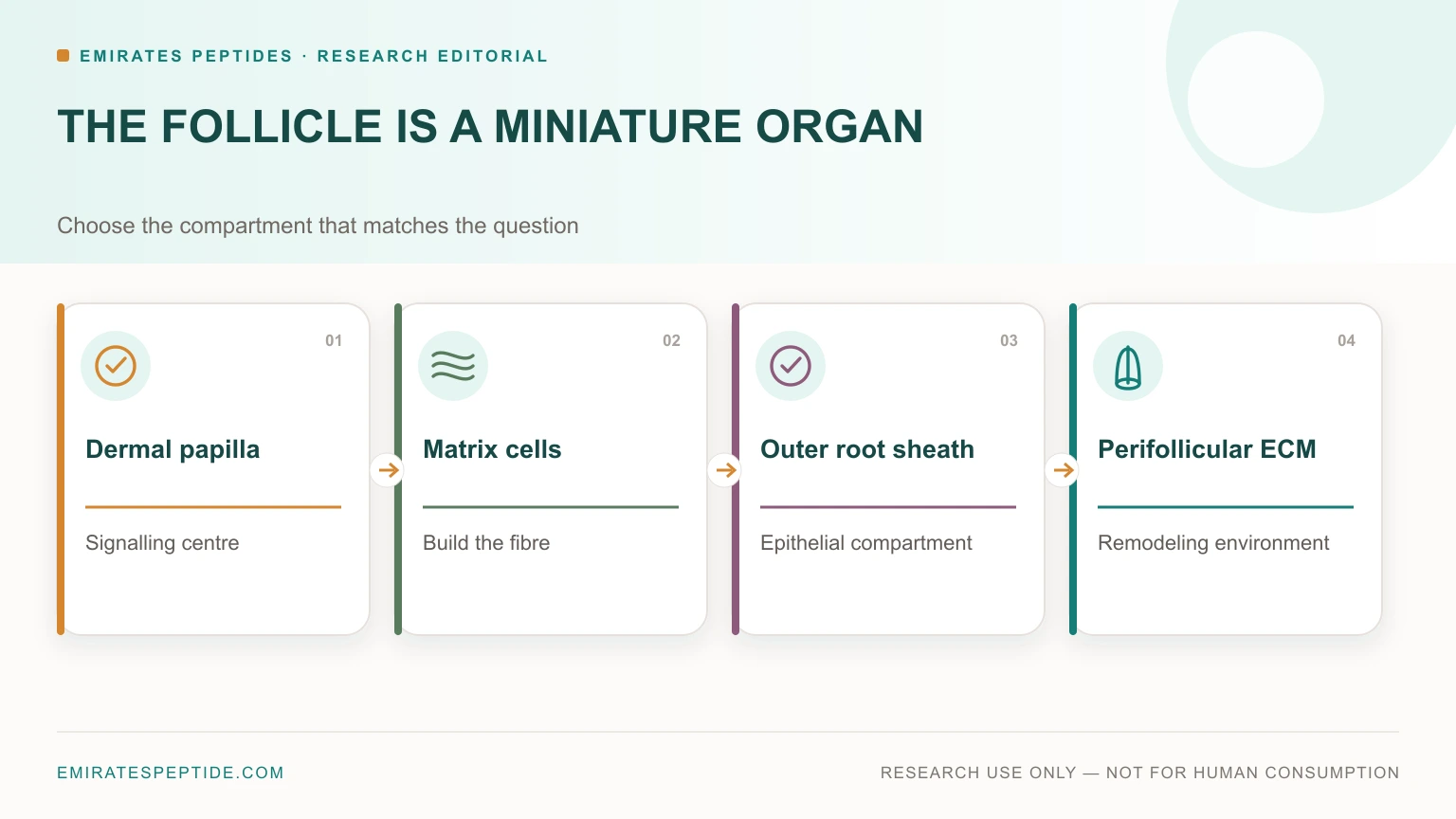
The follicle is a miniature organ, not a single population of “hair cells.”
The dermal papilla is a specialised mesenchymal signalling centre at the follicle base. Matrix keratinocytes generate the hair fibre, while the outer root sheath, bulge region, perifollicular matrix, immune environment, sebaceous unit and local vasculature contribute to follicle behaviour. A signal observed in one compartment should not automatically be assigned to the entire organ.
GHK-Cu’s broader remodeling literature makes the perifollicular extracellular matrix a logical area of interest. Researchers might measure collagen organisation, proteoglycans, MMP/TIMP balance—the balance between matrix-breaking enzymes and the proteins that limit them or migration-related markers around follicular structures. Dermal-papilla assays can add information about proliferation or inductive markers, but cells in monolayer culture may lose characteristics across passages. Passage number and culture conditions therefore belong in the reported methods.
Hair-shaft elongation in organ culture is more integrated than a single-cell assay, yet it remains an ex-vivo system with a limited experimental window. Follicles must be carefully microdissected and assigned to groups without selection bias. Baseline shaft production and morphology can help match follicles before treatment. Blinded measurement reduces the risk that expectations influence manual length readings.
Follicular delivery is another separate question. A topical formulation may concentrate around the follicular opening without reaching the dermal papilla. Fluorescent tracking, depth profiling or validated analytical chemistry can distinguish surface deposition from meaningful penetration. Without those measurements, a negative biological result cannot tell researchers whether the peptide was inactive or simply absent from the target compartment.
08 · Differential context
Female hair concerns that should remain separate in research
Similar appearance does not mean shared cause.
| Research context | Typical question | Why separation matters |
|---|---|---|
| Female-pattern thinning | Is there progressive follicle miniaturisation? | Distribution, genetics and androgen biology are central covariates. |
| Postpartum shedding | Has a reproductive transition shifted cycle timing? | Often a diffuse cycle phenomenon rather than the same miniaturisation process. |
| Menopause-associated change | How do hormonal stage and age interact? | Age, time since menopause and hormone therapy vary. |
| Inflammatory or scarring loss | Is inflammation damaging follicular structures? | Potentially urgent clinical categories should not be represented as cosmetic peptide questions. |
| Fibre breakage | Is the shaft failing above the scalp? | A fibre-material problem can imitate reduced density. |
This separation is not an invitation to self-diagnose. It is a study-design requirement and a reason that sudden, patchy, painful or scarring changes require professional evaluation. Emirates Peptides materials are not diagnostic products and should never be positioned as substitutes for clinical assessment.
Researchers working with archived cells or follicles should resist adding a diagnosis that the source documentation does not contain. If the only known variables are donor sex, age and anatomical site, report exactly that. A narrower honest conclusion is more valuable than a female-hair claim built on missing metadata.
09 · Evidence ladder
Researcher deep dive: from cell signal to visible density
Each step requires new evidence.
A gene-expression change in cultured dermal-papilla cells is an early mechanistic observation. Proliferation or migration adds functional information, but still does not show that a complete follicle produces more fibre. Organ culture can measure shaft elongation and morphology, bringing the model closer to the organ. Animal work can test delivery and cycling in an intact system, although species differences remain substantial.
Human exploratory research then needs objective methods such as standardised global photography, phototrichograms, shaft counts, diameter distribution or trichoscopy. Patient-reported impressions can be valuable secondary outcomes but are sensitive to expectation and styling. Controlled allocation, blinding where possible and sufficient duration are necessary before discussing visible outcomes.
Large, replicated clinical programmes sit beyond those exploratory stages. The GHK-Cu hair evidence discussed here does not occupy that final level. The correct conclusion is that copper peptides remain an area of experimental follicle interest, with identity, delivery and female-subgroup questions still open.
This evidence ladder protects both readers and research quality. It prevents a mouse delivery result, an analogue study or a cell-culture marker from being transformed into a claim that women can expect regrowth. “Promising” should identify the next test, not act as a substitute for it.
10 · FAQ
Frequently asked questions
Does GHK-Cu regrow women’s hair?
Experimental literature supports follicle-related research interest, but clinically proven female hair regrowth is not established by that evidence.
Is postpartum shedding the same as female-pattern hair loss?
No. They can involve different biological drivers and must not be merged into one study group.
Is AHK-Cu the same as GHK-Cu?
No. They are related copper tripeptides with different sequences.
What is the strongest laboratory endpoint?
There is no universal endpoint. Follicle organ-culture elongation, diameter morphometry and dermal-papilla markers answer different questions.
11 · References
References and research sources
- Pickart L. The human tri-peptide GHK and tissue remodeling. PMID 18644225
- Pickart L, et al. GHK and skin regeneration. PMID 26236730
- Pyo HK, et al. The effect of tripeptide-copper complex on human hair growth in vitro. PMID 17703734
- Ramos PM, Miot HA. Female Pattern Hair Loss: a clinical and pathophysiological review. PMID 26375223
- Asghar F, et al. Telogen Effluvium: A Review of the Literature. PMID 32607303
- Samrao A, Mirmirani P. Postpartum Telogen Effluvium Unmasking Traction Alopecia. PMID 35983466
Disclaimer: For laboratory research use only. Not for human administration. Not a treatment for alopecia, postpartum shedding, or female-pattern hair loss.
Was this article helpful?

🔬 Related Research Peptides
Explore Research-Grade Peptides
HPLC-verified, lab-tested peptides for your scientific research. Fast delivery across the UAE.
Browse All PeptidesRelated Articles




Emirates Peptides Research Team
A dedicated coalition of biochemists and clinical researchers focusing on advanced peptide synthesis and pharmacological applications. All data is verified against current clinical trials.
FROM INSTAGRAM