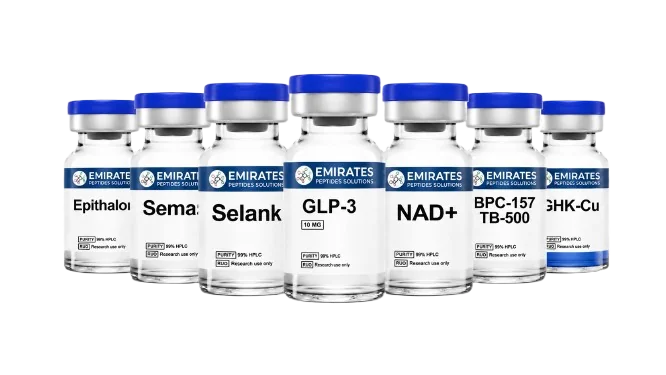

Blog
The complete guide to research peptides: science, evidence, quality and safety


For research use only. Material is supplied as a lyophilized reference compound with HPLC purity verification.
- The short answer
- What is a peptide?
- What makes a peptide a “research peptide”?
- Major categories of peptide research
- How research peptides are made
Research peptides are defined amino-acid sequences used to investigate biological, chemical or analytical questions. Some mimic natural signalling molecules; others are fragments, modified analogues, cyclic structures or entirely designed sequences. Their value depends on exact identity and experimental context. A research-use label does not make a peptide a medicine, prove safety or authorise human use.
01 · Short
The short answer
Research peptides are laboratory tools, not one therapeutic category. To interpret them, identify the exact sequence and modification, verify batch quality, match the molecule to a defined model, and keep conclusions at the correct evidence level. HPLC purity, mass identity, content, sterility, endotoxin, stability and biological activity are separate claims. Human use requires a different regulatory and evidence pathway.
02 · Peptide
What is a peptide?
A peptide is a chain of amino acids joined by peptide bonds. There is no single universal length boundary separating a peptide from a protein, but peptides are generally shorter and may have less complex folding. They can act as hormones, neurotransmitters, antimicrobial molecules, enzyme inhibitors, targeting ligands or structural signals.
Sequence is only the beginning. Peptides may include:
- an acetylated or otherwise modified amino terminus;
- an amidated carboxyl terminus;
- disulfide bonds;
- cyclisation;
- D-amino acids or non-canonical residues;
- lipid, polymer, metal or drug conjugation;
- a salt or counter-ion;
- isotopic or fluorescent labels.
Each change can alter mass, conformation, solubility, stability, binding and biological behaviour. Two products with similar names may not be the same molecule.
03 · Makes
What makes a peptide a “research peptide”?
Latest research insights. No spam, ever.
“Research peptide” usually describes intended laboratory use rather than a scientific family or regulatory approval. A peptide can be used as an analytical reference, assay control, receptor probe, calibration material, synthesis intermediate or experimental candidate.
The label does not answer:
- whether the sequence is correct;
- whether the material is pure;
- how much peptide is present;
- whether it is sterile or low in endotoxin;
- whether it remains stable;
- whether it has the expected activity;
- whether it is safe or effective in humans.
Those questions require evidence. A trustworthy supplier states what was tested and does not let “research grade” imply untested properties.
04 · Major
Major categories of peptide research
Natural signalling peptides
These include sequences found in organisms, such as hormones and neuropeptides. Researchers may study receptor binding, signalling, metabolism or physiological roles. A synthetic copy still needs identity and quality verification.
Fragments and derived sequences
A fragment may contain one active region of a larger peptide or protein. TB-500 catalogue naming illustrates the risk: a short thymosin beta-4-related fragment should not inherit every finding from the 43-amino-acid parent molecule.
Modified analogues
Substitution, lipidation, cyclisation or terminal modification can improve a desired property or change selectivity. The modified analogue is a new test article. Evidence for the parent does not automatically transfer.
Metal-peptide complexes
GHK-Cu combines a tripeptide with copper(II). Solution conditions, stoichiometry and competing ligands can affect the species present. Colour alone cannot prove identity or purity.
Multi-receptor and chimeric peptides
Designed peptides may combine activity at multiple receptors. Their profile depends on potency and efficacy balance, not only the number of named targets. “GLP-3” is a catalogue label, not a universal molecule name.
Conjugates and delivery peptides
Peptides can be linked to payloads, radionuclides, polymers, lipids or labels. The complete conjugate needs separate characterisation and evidence.
05 · Research
How research peptides are made
Solid-phase peptide synthesis is widely used. Amino acids are coupled stepwise to a growing chain attached to a resin. Protecting groups help control which reactive sites participate. After assembly, the peptide is cleaved, deprotected, purified and characterised.
The process can generate deletion sequences, incomplete coupling products, racemisation, oxidation and protecting-group remnants. Longer or hydrophobic sequences can aggregate during synthesis. Purification reduces impurities but does not make every batch identical.
Recombinant production may be used for longer peptides or proteins. Fermentation, expression, purification and host-related impurities create a different quality profile. The manufacturing route should match the analytical plan.
Lyophilisation removes water under controlled freezing and vacuum conditions to improve handling or stability. It does not guarantee a universal shelf life or protect against every stress.
06 · Identity
Identity, purity and content are different
Identity
Mass spectrometry can support expected molecular mass. Sequence-level or structural methods may be needed for isomers, modifications or complex peptides. The evidence should be tied to the batch.
Chromatographic purity
HPLC or UPLC separates detectable components under a stated method. The main peak area is often reported as a percentage. Method selectivity and integration affect the result, and co-elution can hide impurities.
Peptide content
Content describes how much target peptide is present relative to the vial or weighed material. Water, counter-ions and residual material can reduce content without greatly changing main-peak purity. Quantitative studies need to know the content basis.
Related impurities
Deletion sequences, oxidation, deamidation, epimers, aggregates and residual reagents may require LC-MS, mapping, chiral or other methods. The important impurities depend on the molecule and study.
Microbiological attributes
Bioburden, endotoxin and sterility are separate from chemical purity. Endotoxin can confound inflammatory assays. “Sealed” or “clear” does not mean sterile.
07 · Read
How to read a peptide certificate of analysis
A useful COA contains enough information to connect the report to the received material:
- Product and exact material description.
- Batch or lot number.
- Sample or report identifier.
- Test methods or method references.
- Specifications and results.
- Test date or release date.
- Testing laboratory identity.
- Approval or review record.
The chromatogram and mass spectrum should carry sample information. Generic images reused across batches are not reliable evidence. A COA is also not permanent truth; retest dates, storage and later deviations can affect batch status.
08 · Evidence
Evidence levels: from assay to human outcome
Peptide content often fails because it collapses evidence layers. Use this ladder:
| Level | What is tested | Appropriate wording |
|---|---|---|
| Chemical | Binding, mass, coordination or degradation | “The material bound or changed under these conditions” |
| Biochemical | Enzyme or receptor assay | “Activity was measured in this assay” |
| Cell | Signalling, viability, migration or secretion | “The cell system responded” |
| Tissue | Ex-vivo or organoid endpoint | “Organised tissue showed a response” |
| Animal | Exposure, injury or disease model | “A preclinical effect was observed” |
| Human biomarker | Imaging, blood or physiological measure | “The biomarker changed in the study” |
| Human clinical outcome | Symptoms, function or events | “The controlled trial found or did not find an outcome” |
A cell result is not a human benefit. An animal repair model is not clinical rehabilitation. A biomarker change is not necessarily meaningful function.
09 · Negative
Why negative studies matter
Research marketing tends to select positive findings. Science improves when negative and neutral results are preserved. Davunetide, a peptide developed for neurodegenerative research, did not meet primary endpoints in a large progressive supranuclear palsy trial despite a plausible preclinical rationale.
That result does not make all peptide neuroprotection research useless. It shows that translation must be tested. Negative results help refine models, endpoints and target assumptions.
A balanced article states primary outcomes before highlighting secondary findings. It does not use a subgroup or laboratory marker to erase a negative clinical endpoint.
10 · Research
Research quality begins before the order
A laboratory should define the material specification before choosing a supplier. Include sequence, modification, form, required content, purity, relevant impurities, microbiological needs, storage and acceptable documentation.
Supplier qualification should verify legal identity, batch traceability, testing laboratory, complaint handling and research-only claims. A local UAE address, low price or quick delivery is not a substitute for the specification.
At receipt, record package condition, shipment, temperature evidence where used, vial condition, batch, COA match and storage placement. Quarantine discrepancies until reviewed.
11 · Designing
Designing a peptide experiment
Start with a falsifiable question. “Does this peptide work?” is too broad. Name the exact material, model, comparator, endpoint and time.
Controls depend on the question. They may include vehicle, positive control, scrambled sequence, parent peptide, metal-only control or component-only arms for a blend. A cytotoxicity control helps prevent a damaged cell population from being misread as pathway inhibition.
Predefine the primary endpoint and analysis. Randomise sample assignment where possible, blind outcome assessment, preserve failed runs and report exclusions. Replication across batches or laboratories is stronger than repeated wells on one plate.
Link every result to the sequence, batch, preparation, method version, instrument and raw data. If the material degrades during the assay, the effective test article may change over time.
12 · Stability
Stability and storage
Peptide stability can be affected by heat, moisture, light, oxygen, pH, agitation, concentration, surfaces and freeze-thaw cycles. Sequence-specific liabilities include oxidation, deamidation, hydrolysis and aggregation.
Lyophilised and solution states require separate consideration. A stability statement for unopened dry material cannot be assigned to a prepared solution. Findings from one peptide or formulation cannot define a universal storage time for another.
UAE laboratories should pay particular attention to shipment and receipt during hot weather. Temperature excursion decisions should use product-specific evidence. Appearance alone cannot rule out chemical change.
13 · Safety
Safety and regulatory boundaries
Research-use materials are not evaluated like approved medicines. The FDA has highlighted safety and characterisation concerns for several peptides that appear in online catalogues, including BPC-157, CJC-1295, GHK-Cu for injectable compounding, KPV, Melanotan II, MOTS-C, Selank, Semax and thymosin beta-4 fragments.
These statements are not a global list of banned laboratory chemicals. They do show that absence of known harm is not proof of safety and that peptide impurities and aggregation can matter.
In the UAE, clinical research with investigational products requires ethics and regulatory processes. Responsibilities for several pharmaceutical and research services moved to the Emirates Drug Establishment in 2026. Researchers should use current official sources.
A website disclaimer cannot authorise human or veterinary administration. It should be backed by customer qualification, content controls and refusal to provide dosing or treatment advice.
14 · Research
Research peptides in Dubai and the UAE
Dubai offers strong logistics, universities and an expanding R&D ecosystem. The 2026 Dubai RDI Grant Initiative supported projects across 14 institutions and involved international collaboration. This environment can support analytical, computational, cell and translational research.
Regional sourcing can reduce transit time and improve access to batch documentation. It does not automatically guarantee quality. UAE buyers should apply the same identity, purity, content, stability and governance standards to local and international suppliers.
The search phrase “buy peptides Dubai” is transactional. This guide intentionally owns informational intent. Product and shop pages should handle verified price, stock, delivery and catalogue information without turning this educational page into a duplicate storefront.
15 · Common
Common research-peptide myths
“99% purity means 99% of the vial is peptide”
Not necessarily. It may be a chromatographic peak-area result. Actual peptide content can differ.
“Mass spectrometry proves purity”
It supports mass and identity questions. It does not quantify every impurity or establish sterility.
“Research grade means pharmaceutical grade”
No. Pharmaceutical quality is a controlled manufacturing and regulatory system, not a purity adjective.
“A natural peptide is safe”
Natural origin does not establish safety for a synthetic preparation, concentration, route or population.
“A cell study proves a benefit”
It supports a response in that cell model. Translation needs additional evidence.
“GLP-3 always means retatrutide”
No. GLP-3 is not a universal molecular term. Emirates Peptides uses it as a catalogue convention, which should be verified rather than generalised.
16 · Essential
Essential research-peptide glossary
Amino-acid sequence: The ordered residues that define the peptide backbone. One substitution can change identity and function.
Analogue: A molecule intentionally modified from a parent sequence. Evidence for the parent may not transfer.
Assay: A controlled test that measures a chemical or biological endpoint. Its result is limited to the method and conditions.
Batch or lot: A defined quantity produced under a common manufacturing record. Test documents should identify it.
Counter-ion: An ion associated with a charged peptide, such as acetate or trifluoroacetate. It can contribute to material mass and solution behaviour.
Chromatographic purity: The relative distribution of detected peaks under a stated chromatographic method. It is not the same as peptide content.
Endotoxin: Bacterial lipopolysaccharide that can provoke biological responses and confound immune assays. It is separate from sterility.
Identity: Evidence that the material is the expected molecule. Mass, sequence and structure questions may require more than one method.
Lyophilised: Freeze-dried under controlled conditions. The term does not specify purity or universal stability.
Peptide content: The amount of actual target peptide relative to the stated material basis.
Reference standard: A well-characterised material used to support identity, quantitation or method performance.
Research use only: An intended-use restriction. It is not proof of quality, legal permission for every experiment or approval for humans.
Stability-indicating method: A method capable of distinguishing the target from relevant degradation products as material changes over time.
Sterility: Absence of viable microorganisms under the conditions of a defined test. It is not shown by clarity or HPLC.
This vocabulary should remain consistent across product pages, COAs, articles and laboratory records. Changing terms to sound more impressive creates ambiguity.
17 · Questions
Frequently asked questions
What are research peptides used for?
They are used as analytical standards, receptor probes, assay controls, synthesis targets and experimental tools in chemistry, cell biology, pharmacology and other fields. Use depends on the exact sequence and approved laboratory protocol.
Are research peptides medicines?
Not by default. A peptide medicine has a defined product, manufacturing system, clinical evidence and regulatory status. A research-use peptide is not approved for treatment merely because a similar sequence appears in a medicine or paper.
What is the difference between a peptide and a protein?
Peptides are generally shorter amino-acid chains, but there is no single universal length boundary. Structure, folding and function are more useful than relying on a rigid number.
What should a peptide COA prove?
It should report batch-linked results for named tests. Identity, HPLC purity, content, impurities, endotoxin, sterility and stability are separate attributes. The COA proves only what suitable methods tested.
Is HPLC purity the most important result?
It is important but incomplete. A clean chromatogram for the wrong molecule is still wrong. Identity and content are essential, and the experiment may require microbiological and stability data.
Can research peptides be self-administered?
This guide does not support self-administration. Emirates Peptides materials are not intended for humans or animals. Health concerns should be discussed with a qualified professional using approved care pathways.
Why are some peptide names confusing?
Catalogue labels, fragments, modifications and salts may be shortened into similar names. Researchers should rely on sequence, mass and batch documents. Examples include TB-500, CJC-1295 variants and GLP-3.
How should peptides be stored?
Follow product- and batch-specific conditions supported by stability information. Dry and solution states can differ. Temperature, moisture, light, oxidation, surfaces and freeze-thaw history may matter.
Are peptide blends easier to research?
They may be convenient but are harder to interpret. Component-only controls and verified amounts are needed to attribute an effect or test interaction.
Where can UAE laboratories learn more?
Use primary literature, USP analytical resources and current UAE government sources. Emirates Peptides educational pages can provide orientation but should not replace institutional procedures or regulatory advice.
18 · Conclusion
Conclusion
Research peptides are precise chemical and biological tools. Their scientific value comes from exact sequence, quality evidence, a suitable model and restrained interpretation. The words “research grade” or “99% pure” cannot carry that burden alone.
For laboratories, the durable workflow is to specify, verify, test, document and review. For public content, the durable rule is to separate research findings from human claims. That is how peptide education can be useful without becoming medical marketing.
As the broad informational pillar, this page should not compete with the homepage or shop for buying terms. Its calls to action should lead readers to quality, evidence and storage resources before the catalogue. Search Console should be checked for queries drifting toward individual molecules; those questions belong on the relevant guide. The article should display a named author and scientific reviewer only after real credentials are supplied. An anonymous or invented expert biography would weaken the trust signals the page is designed to build.
19 · Practical
Practical takeaway for first-time laboratory buyers
Begin with the protocol, not the catalogue. Convert the protocol into an exact sequence, form, content and quality specification. Review a batch-linked COA before release and record what each test does not prove. At receipt, check the shipment and document storage. In the experiment, connect every sample to raw data and controls. If the project cannot support these steps, a less complex or better-characterised reference material may produce a more defensible result.
20 · References
References
- Muttenthaler M, et al. Trends in peptide drug discovery. 2021.
- Macherla S, et al. Reference standards to support quality of synthetic peptide therapeutics. 2023.
- Zapadka KL, et al. Factors affecting the physical stability of peptide therapeutics. 2017.
- US Food and Drug Administration. Bulk drug substances that may present significant safety risks.
- UAE National Center for Health Research. About NCHR.
- UAE Ministry of Health and Prevention. Assessment of medical products for pharmacological research and clinical studies.
- Boxer AL, et al. Davunetide phase 2/3 trial in progressive supranuclear palsy. 2014.
21 · Interpret
How to interpret and apply this evidence
A disciplined peptide project begins by defining the research question before selecting a material. The intended assay, required identity confidence, acceptable impurity profile, content information, controls and storage conditions should be written in advance. This reverses a common but weak workflow in which a catalogue item is purchased first and the question is shaped around whatever documentation arrives later.
Evidence should then be organised by level. Analytical identity supports what the material is; a biochemical assay measures activity in a simplified system; cell and tissue models add biological context; animal studies add organism-level complexity; and controlled human research addresses different questions again. No level automatically guarantees the next. Reporting limitations, failed experiments and alternative explanations makes the final conclusion more useful and reproducible.
The same discipline applies to public claims. Research-use labelling, a certificate or a high purity value does not establish regulatory approval, sterility, safety, effectiveness or suitability for people. Current institutional and legal requirements should be verified for every project and location. This guide is an educational framework for laboratory research and evidence assessment only; it contains no personal-use recommendation, medical advice, dosing, injection or administration protocol.
Was this article helpful?

🔬 Related Research Peptides
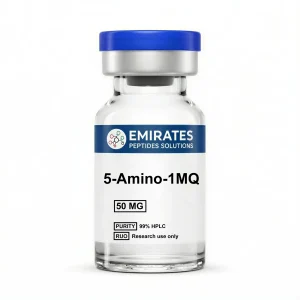
Explore Research-Grade Peptides
HPLC-verified, lab-tested peptides for your scientific research. Fast delivery across the UAE.
Browse All PeptidesRelated Articles




Emirates Peptides Research Team
A dedicated coalition of biochemists and clinical researchers focusing on advanced peptide synthesis and pharmacological applications. All data is verified against current clinical trials.