
Blog
Peptide reconstitution in research: quality controls and documentation


For research use only. Material is supplied as a lyophilized reference compound with HPLC purity verification.
- The short answer
- Why there is no universal peptide reconstitution method
- Reconstitution is part of the experimental method
- Step 1: confirm authority, scope and protocol
- Step 2: verify the material before opening
Reconstitution changes a lyophilised peptide from a dry preparation into a solution governed by new risks. Identity can be lost through labelling error, concentration through an incorrect content basis, and activity through aggregation, oxidation, adsorption or contamination. A good laboratory does not follow a universal internet recipe. It follows a material-specific, approved method with traceable calculations, controls and release criteria.
01 · Short
The short answer
Safe, reproducible peptide preparation begins before liquid contacts a vial. Verify the exact material, batch, content basis, approved method, diluent specification, compatibility, stability and required microbiological controls. Record who prepared it, when, under which conditions, and what was observed. Release the solution to an assay only if predefined acceptance criteria are met.
02 · There
Why there is no universal peptide reconstitution method
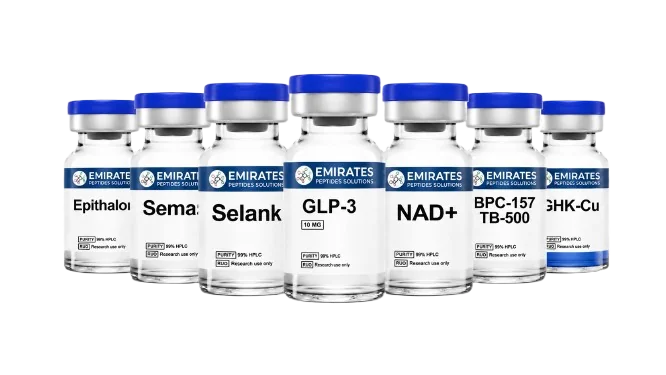
🔬 Research-grade peptides referenced in this article:

Peptides differ in sequence, charge, hydrophobicity, modification and formulation. One may dissolve readily in a specified aqueous buffer; another may adsorb to surfaces, aggregate near a certain pH or require a validated formulation. Metal-binding peptides can change speciation with solution conditions. Disulfide-rich or cyclic peptides create other stability questions.
The lyophilised cake may include excipients, counter-ions and residual moisture. The vial label may express total fill, nominal peptide amount or another basis. A method copied from an unrelated peptide can therefore produce the wrong concentration or damage the material.
Published formulation research shows that reconstitution medium can affect soluble recovery and aggregation. That result does not create a single recommended medium. It shows why each material and assay need compatibility evidence.
03 · Reconstitution
Reconstitution is part of the experimental method
Latest research insights. No spam, ever.
Researchers sometimes treat preparation as a minor task before the “real” assay. In fact, it defines the test article delivered to the experiment. If preparation varies across days or operators, the assay may be comparing preparation differences rather than biological effects.
A controlled method should specify:
- exact material and batch;
- amount basis used for calculations;
- approved diluent or buffer specification;
- required water and reagent quality;
- container and labware compatibility;
- environmental or aseptic controls where relevant;
- mixing and handling limits defined by the validated SOP;
- visual and analytical acceptance criteria;
- hold time and storage condition;
- labelling and chain of custody;
- disposal and deviation procedure.
These details belong in a laboratory SOP or batch-specific method, not improvised customer support.
04 · Step
Step 1: confirm authority, scope and protocol
Before preparation, confirm that the project and material fall within the institution’s approved scope. Human or animal research requires separate ethics, regulatory and facility controls. A “research use only” label does not authorise administration.
The laboratory should have an approved protocol naming the material or a controlled class. Staff should be trained on the relevant SOP. Equipment status, calibration and required environmental conditions should be current.
If the protocol is absent, ambiguous or copied from a personal-use source, stop and escalate through the institution’s quality or scientific review process. Do not create an unofficial method at the bench.
05 · Step
Step 2: verify the material before opening
Match the vial to the purchase and study records. Confirm product name, sequence or form, batch, nominal amount, storage condition and physical state. Compare the vial batch with the COA and any identity report.
Inspect the container without assuming appearance proves quality. Record cracks, stopper movement, seal damage, unusual colour, collapsed cake, residue on the stopper or evidence of moisture. Photograph a deviation according to laboratory policy.
For ambiguous names, resolve identity first. “TB-500” may refer to a fragment rather than full-length thymosin beta-4. “GLP-3” is a catalogue convention, not a universal sequence name. GHK-Cu and GHK are different materials.
06 · Step
Step 3: verify the amount basis
Nominal vial mass is not always equal to net peptide content. Water, counter-ions and excipients can contribute to total material. HPLC main-peak purity does not correct this automatically.
The controlled calculation should use the amount basis specified by the method. Where quantitative accuracy matters, peptide content or assigned value may be needed. Record the source of the value and its units. A second trained person or validated software should verify the calculation according to institutional policy.
This article does not provide a concentration formula or example because a generic worked example can be misused as a personal dosing tool and may not match the product’s content basis. Laboratories should use their approved calculation template.
07 · Step
Step 4: qualify the diluent and reagents
“Water” is not one laboratory material. Purified water, sterile water, bacteriostatic water, buffered solutions and culture media have different specifications and uses. Preservatives, salts, pH and ionic strength can affect the peptide and the assay.
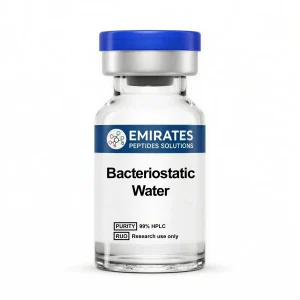
Bacteriostatic water contains a preservative and may be discussed online as a universal choice. It is not universally suitable for laboratory assays. The preservative may affect cells, enzymes or analytical measurements. A vehicle control does not automatically solve an incompatibility if the preparation changes peptide stability.
The approved method should identify the exact diluent specification, manufacturer or internal preparation, lot, expiry, storage and acceptance status. Reagents outside expiry or with compromised containers should not be used.
08 · Step
Step 5: control the workspace and contamination risk
The required environment depends on the assay. An analytical chemistry preparation may have different controls from a cell-culture material. A sterile or low-endotoxin requirement needs suitable facilities, trained technique, qualified consumables and defined monitoring.
Chemical purity does not establish microbiological quality. Endotoxin can change inflammatory and immune endpoints even when no visible contamination is present. Sterility and endotoxin are also different tests.
Prepare only within the facility conditions stated by the SOP. Record environmental or cabinet status where required. Use uniquely identified, compatible labware. Prevent sample mix-up by allowing one open material or another controlled arrangement specified by the laboratory.
09 · Step
Step 6: follow the validated material-specific procedure
The operator should follow the approved SOP exactly, including the specified order, handling limits and mixing approach. This article does not reproduce those physical steps. Peptides can respond differently to agitation, interfaces, bubbles, local concentration and pH, so a universal instruction such as “shake” or “never shake” is not a substitute for validation.
Record actual start and completion time, operator, reagent lots, equipment and any departure from the method. A deviation should be documented when it happens, not reconstructed after an unexpected assay result.
If the material does not behave as expected, do not keep changing conditions without a plan. Quarantine or hold the preparation and investigate against the method, stability information and analytical controls.
10 · Step
Step 7: inspect and test the prepared solution
Visual inspection can identify particles, unexpected colour, haze, precipitation or container damage. It cannot prove identity, concentration, sterility or activity. Acceptance criteria should define what is expected for the exact material.
Depending on the study, release checks may include pH, concentration, chromatography, recovery, particle assessment, bioburden, endotoxin or a functional control. Not every exploratory experiment needs every test, but the chosen checks should cover the important risks.
If concentration is critical, an analytical measurement can be stronger than relying entirely on nominal calculation. Adsorption, incomplete recovery or content uncertainty can make nominal and measured values differ.
11 · Step
Step 8: label for traceability
The prepared solution should have a unique identifier linked to the source vial and batch. A label or electronic record may include material, preparation ID, concentration basis, diluent lot, preparation date and time, storage, hold time, preparer and hazard or research-only status.
Avoid labels that omit units or use unexplained abbreviations. Do not use a consumer dose label. The record should be understandable to another trained researcher after the original operator is unavailable.
Aliquots need a parent-child link so every tube can be traced to the preparation. If an aliquot is moved, thawed, tested or discarded, update the record.
12 · Step
Step 9: define storage and hold time
Prepared peptide solutions can be less stable than dry material. Stability depends on concentration, pH, buffer, excipients, light, oxygen, surface and temperature. A generic “four to six weeks refrigerated” statement is not scientifically reliable for every peptide and formulation.
Use a hold time supported by material-specific data or the laboratory’s validation. Record storage start, location, temperature range and excursions. A solution that exceeds hold time should not be used merely because it looks clear.
Freeze-thaw history matters for some peptides. If aliquoting is part of the approved method, track each aliquot. Do not repeatedly return a warmed container to storage without recording and assessing the event.
13 · Step
Step 10: release, use and close the record
Release should be a documented decision against acceptance criteria. The assay record should reference the preparation ID, not only a peptide name. If the material fails an acceptance check, mark it clearly and prevent accidental use.
After the study, reconcile used, retained and discarded quantities according to institutional policy. Preserve raw analytical files, observations and deviations. If an assay produces an unexpected result, the preparation record is part of the investigation.
Closing the record creates a reusable history. Repeated low recovery, aggregation or drift across batches can indicate a method problem that deserves formal change control.
14 · Non-Operational
A non-operational preparation checklist
| Phase | Required question | Evidence to retain |
|---|---|---|
| Authorisation | Is this work approved and is the operator trained? | Protocol and training record |
| Identity | Is this the correct sequence, form and batch? | Vial, COA and identity record |
| Amount | Is the calculation based on the correct content value? | Controlled calculation and review |
| Reagents | Are diluent and consumables qualified and compatible? | Lot and release status |
| Environment | Are required contamination controls active? | Facility or cabinet status |
| Procedure | Was the approved SOP followed? | Method version and operator record |
| Acceptance | Did the solution meet predefined criteria? | Observation and test results |
| Traceability | Can every aliquot be linked to the source? | Preparation and aliquot IDs |
| Stability | Is storage and hold time supported? | Time, temperature and excursion log |
| Closure | Were use, deviations and disposal reconciled? | Completed batch or preparation record |
15 · Common
Common preparation failures
Using HPLC purity as content
The main-peak percentage is not the amount of peptide in the vial. Quantitative work can be biased from the start if this distinction is ignored.
Copying a method from another peptide
Different sequences and formulations can have different solubility, adsorption and stability. Similar vial appearance is not enough.
Treating bacteriostatic water as universal
Preservative and formulation effects may interfere with the assay. Use the diluent validated for the material and model.
Relying on visual clarity
A clear solution may still be degraded, contaminated, misidentified or incorrectly concentrated.
Applying a universal refrigerated shelf life
Stability is product-, state- and condition-specific. Generic online times are not batch evidence.
Failing to link aliquots
Untracked tubes break chain of custody and can mix batches or preparation dates.
Repeating a failed preparation until it “looks right”
Undocumented trial-and-error destroys reproducibility. Investigate and change a method through controlled review.
16 · Investigate
How to investigate an unexpected result
Begin with the data and records, not with the assumption that the peptide is biologically unusual. Check sample identity, batch, amount basis, reagent lots, timing, storage, instrument performance and controls. Review whether the solution changed appearance or whether recovery was measured.
Compare other preparations from the same batch and other batches prepared by the same method. If only one operator or consumable lot is associated with the issue, that pattern can guide investigation. Preserve remaining sample for analytical testing where appropriate.
Do not silently exclude the run. Record the deviation, root-cause assessment and corrective action. An unexplained failure may still be valuable information.
17 · Training
Training and competency
Reading an SOP once does not establish competency. New operators should observe the controlled process, perform it under supervision and demonstrate accurate documentation and calculation review. The institution should define who can release a preparation and who can approve deviations.
Competency can be reassessed through periodic observation, record review and blinded sample exercises. Trends such as repeated labelling corrections, low recovery or missed time records may signal a training need even when no assay has failed.
The training record should name the SOP version. When the method changes, assess whether retraining is required. Informal bench knowledge should be converted into controlled instructions when it materially affects results.
For shared facilities, responsibilities need clarity. The person who prepares the solution, the investigator who owns the assay and the quality reviewer may be different. Handoffs should identify preparation status, acceptance results, storage and hold time. A verbal “it is ready” is not a release record.
18 · Reconstitution
Reconstitution and public content
Public research pages should explain quality without becoming personal-use manuals. Do not publish syringe conversions, injection routes, dose schedules, bodyweight calculations or “how many units” answers. A calculator framed as research-only can still facilitate human use if its fields and outputs are dosing instructions.
For Emirates Peptides, the safer public approach is to link qualified laboratories to batch documents and advise them to follow their approved SOP. Customer support should not improvise a method. If a customer asks for personal administration advice, the response should state the research-only boundary and avoid operational details.
19 · Questions
Frequently asked questions
What is peptide reconstitution?
In laboratory work, it is the controlled preparation of a solution from a dry or lyophilised peptide using a material-specific approved method. It changes the stability, contamination and traceability risks and must be treated as part of the experiment.
Why does this guide not give volumes or syringe units?
Generic quantities can be wrong for the material’s content basis and can facilitate unsafe personal use. Qualified laboratories should use approved protocols, controlled calculations and fit-for-purpose equipment.
Is bacteriostatic water always the correct diluent?
No. It contains a preservative that may affect some assays. Suitability depends on the peptide, formulation, model and validated method. “Standard online choice” is not scientific validation.
Can HPLC purity be used to calculate concentration?
Not by itself. HPLC peak-area purity and actual peptide content are different. Quantitative preparation should use the amount basis specified and verified by the laboratory’s method.
Does a clear solution mean reconstitution succeeded?
It shows only that no obvious visible problem was observed. Identity, concentration, aggregation, degradation, sterility, endotoxin and activity may still be unknown.
How long is a reconstituted peptide stable?
There is no universal answer. Stability depends on molecule, content, buffer, concentration, container, light, oxygen, temperature and other conditions. Use material-specific stability data and a validated hold time.
Should a peptide solution be shaken?
Follow the exact approved method. Different peptides and formulations respond differently to agitation and interfaces. A public universal instruction would be unreliable.
Can filtration make a research solution sterile?
Filtration may be one controlled processing step, but it does not prove the starting material was sterile, remove all endotoxin or guarantee final sterility. Sterile processing requires a validated system and appropriate testing.
What should happen after a temperature excursion?
Quarantine the affected material, document the event and review batch-specific stability evidence. Do not release it based only on appearance or a generic storage statement.
Is this procedure suitable for human injection?
No. This article is not an administration procedure. Emirates Peptides research materials are not intended for humans or animals.
20 · Conclusion
Conclusion
Reconstitution is a controlled scientific transition, not a casual mixing step. The dry material, content basis, diluent, environment, handling, storage and record all shape the solution that reaches an assay. A universal recipe erases those variables.
The reliable path is material-specific: verify, follow the approved method, inspect, test, label, store, release and preserve the record. That approach protects both data quality and the research-only boundary.
The live page currently has strong potential to attract personal-use searches. Its title, introductory answer, FAQ schema and internal links must reinforce laboratory governance rather than dosing intent. Remove calculator, syringe, injection and “dose” anchors from the revised article. If the old page has external links for those terms, preserve the canonical URL but replace the unsafe content and monitor the resulting queries. Customer-support scripts should match the new page so a visitor cannot obtain the omitted operational instructions through chat.
21 · Practical
Practical takeaway for laboratory managers
Treat each preparation as a controlled sub-batch. Give it a unique identifier, link it to source material and reagents, and define release and expiry independently from the unopened vial. Review preparation failures across operators and batches. If a public webpage is used for training, keep it conceptual and direct staff to the current internal SOP. The internet page should never become the uncontrolled master method for a laboratory or a route to personal-use instructions.
22 · References
References
- Zhang MZ, et al. Effect of the reconstitution medium on keratinocyte growth factor stability. Pharmaceutical Research. 1996.
- Zapadka KL, et al. Factors affecting the physical stability of peptide therapeutics. 2017.
- Macherla S, et al. Reference standards to support quality of synthetic peptide therapeutics. 2023.
- Lee H, et al. Formulation for a novel inhaled peptide therapeutic. 2017.
- UAE Ministry of Health and Prevention. Guidelines for conducting clinical trials with investigational products and medical devices.
23 · Interpret
How to interpret and apply this evidence
A reconstitution record is useful only when it connects the prepared sample to its original identity and analytical history. The record should allow a reviewer to trace the lot, container, receipt condition, storage history, responsible operator, approved laboratory procedure and downstream assay. That chain supports investigation of unexpected results without implying that one universal preparation method is suitable for every peptide, formulation or analytical objective.
Quality controls should be selected around the study question. Visual inspection may reveal an obvious problem but cannot establish identity, purity, concentration, sterility or stability. Likewise, a supplier document does not replace laboratory verification when the study requires confirmed material attributes. Researchers should define acceptance criteria before handling begins and document deviations, environmental excursions and instrument status in a form that can be reviewed independently.
The safest interpretation of this guide is procedural rather than operational: it explains what evidence a controlled research workflow should preserve, not quantities or personal-use steps. Exact laboratory methods depend on validated institutional procedures, risk assessment, the material’s properties and the intended assay. Nothing here provides injection instructions, dosing, treatment advice or a protocol for use outside qualified laboratory research.
Was this article helpful?

🔬 Related Research Peptides
Explore Research-Grade Peptides
HPLC-verified, lab-tested peptides for your scientific research. Fast delivery across the UAE.
Browse All PeptidesRelated Articles



Emirates Peptides Research Team
A dedicated coalition of biochemists and clinical researchers focusing on advanced peptide synthesis and pharmacological applications. All data is verified against current clinical trials.