
Blog


For research use only. Material is supplied as a lyophilized reference compound with HPLC purity verification.
- Key Facts at a Glance
- Amylin signalling vs triple-agonist incretin biology
- Why a women-focused research reading is useful
- Cagrilintide evidence snapshot
- GLP-3 evidence snapshot
Last updated: 14 Jul 2026 · Reviewed by the Emirates Peptides Research Team · 17-minute read · 16 sources cited
Weight-management peptide research increasingly separates amylin-pathway tools from multi-incretin / triple-agonist tools. This guide compares Cagrilintide and GLP-3 through a women-focused research lens: trial demographics, body-composition covariates, mechanism contrast, and published combination literature (CagriSema). It is a literature map for researchers — not medical advice, not a “best peptide for women” ranking, and not personal dosing guidance. Emirates Peptides materials are research-use only.
Approved GLP-1 medicines and research-catalogue peptides are different categories. Do not treat published obesity-trial percentages as instructions for research-supply material. No personal dosing, no disease treatment claims, no substitution advice for prescription medicines.
01 · Mechanism
Amylin signalling vs triple-agonist incretin biology
Two different receptor stories that both touch energy intake and body-composition endpoints.
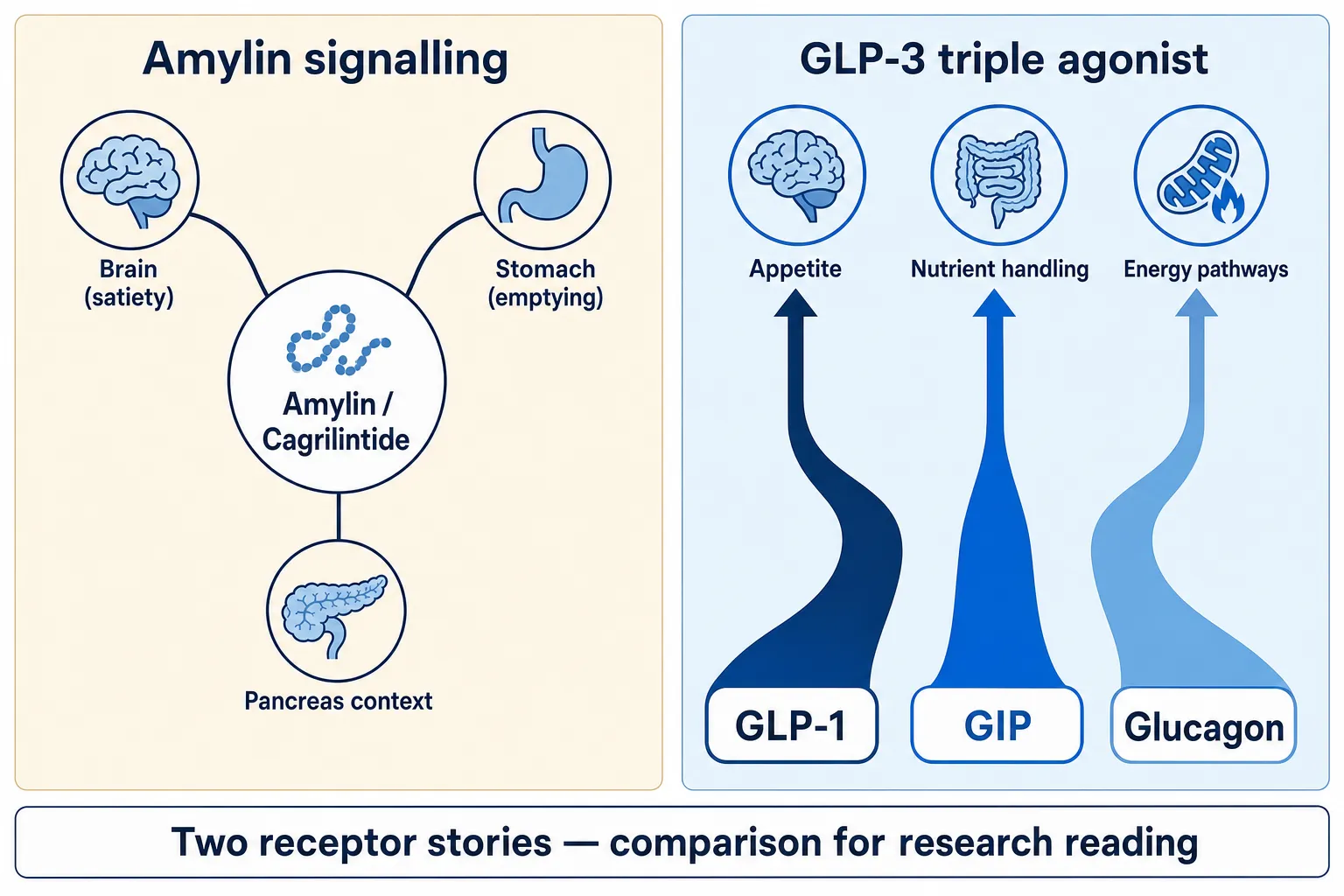
Amylin is co-secreted with insulin and contributes to meal-related satiety and gastric-emptying biology in physiologic models. Long-acting analogues such as cagrilintide extend that pharmacology into once-weekly research and clinical-development schedules. Triple-agonist (GLP-3 class) research instead stacks incretin and glucagon pathways — a design intended to combine appetite, nutrient-handling, and energy-expenditure hypotheses in one molecule. For GLP-3 schedule literature used in laboratory discussions, see the benchmark GLP-3 dosing protocol and What is GLP-3?.
02 · Women lens
Why a women-focused research reading is useful
Latest research insights. No spam, ever.
Demographics and body-composition covariates — not a gendered product pitch.
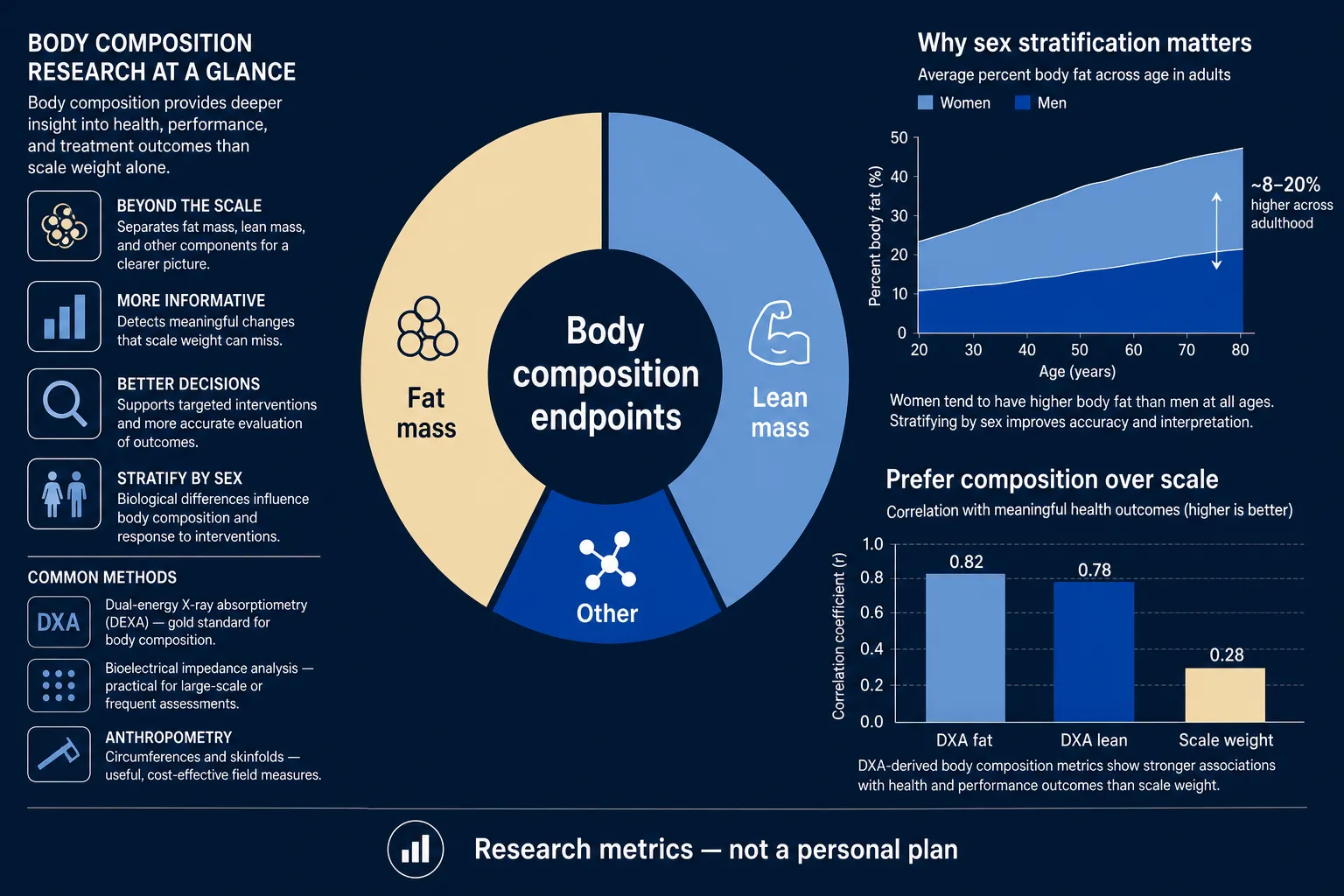
A women-focused article is justified because search intent and trial demographics overlap — not because peptides are sex-exclusive. Researchers should pre-specify whether primary analyses are sex-pooled or sex-stratified, and whether lean-mass preservation is an explicit secondary endpoint. Avoid therapeutic language (“treats obesity in women”); prefer “body-weight and composition endpoints in predominantly female trial cohorts.”
03 · Cagrilintide
Cagrilintide evidence snapshot
Amylin analogue alone and as part of CagriSema.
| Programme | Design note | Citation start |
|---|---|---|
| REDEFINE 1 | 68-week Phase 3a; CagriSema vs semaglutide vs cagrilintide vs placebo in overweight/obesity without diabetes | PMID 40544433 |
| REDEFINE 2 | 68-week Phase 3a; CagriSema vs placebo in overweight/obesity with type 2 diabetes | PMID 40544432 |
| Phase 2 T2D | 32-week CagriSema vs components; HbA1c primary | PMID 37364590 |
| Meta-analysis | Pooled weight and AE synthesis | PMID 39676787 |
04 · GLP-3
GLP-3 evidence snapshot
Triple-agonist research depth — cite primary trials via the EP comparison cluster.
05 · Compare
Head-to-head research comparison
Mechanism, maturity, and what each table can answer.
| Dimension | Cagrilintide | GLP-3 class |
|---|---|---|
| Core pathway | Long-acting amylin analogue | GLP-1 / GIP / glucagon triple agonist research framing |
| Highest-visibility Phase 3a weight data | Strongest as CagriSema (with semaglutide) | See EP GLP-3 dosing + comparison cluster for trial maps |
| Women-relevant covariates | Enrolment often majority female in obesity programmes | Same — stratify analyses; do not assume identical depot responses |
| Common published AE theme | GI events; combination arms may increase vomiting vs GLP-1 alone | GI events typical of incretin-class programmes |
| EP catalogue link | Cagrilintide | GLP-3 |
06 · Combinations
Combination literature vs single-agent research questions
CagriSema answers a co-administration question — not a licence to invent stacks.
07 · UAE
UAE research supply context
Documentation first.
08 · Tolerability
GI and tolerability notes from published programmes
Observation layer for protocol risk sections — not personal coaching.
05b · Depth
Body composition, lean mass, and why mean weight % is an incomplete headline
Women-focused reading means reading composition tables, not only scale change.
Obesity RCTs frequently enrol majority-female samples. That improves overall precision for women as a group inside those trials, but it does not automatically publish sex-stratified forest plots for every secondary endpoint. When reviewing REDEFINE-style CagriSema data, note the analysis method, the lifestyle co-intervention, and whether diabetes was excluded (REDEFINE 1) or required (REDEFINE 2).
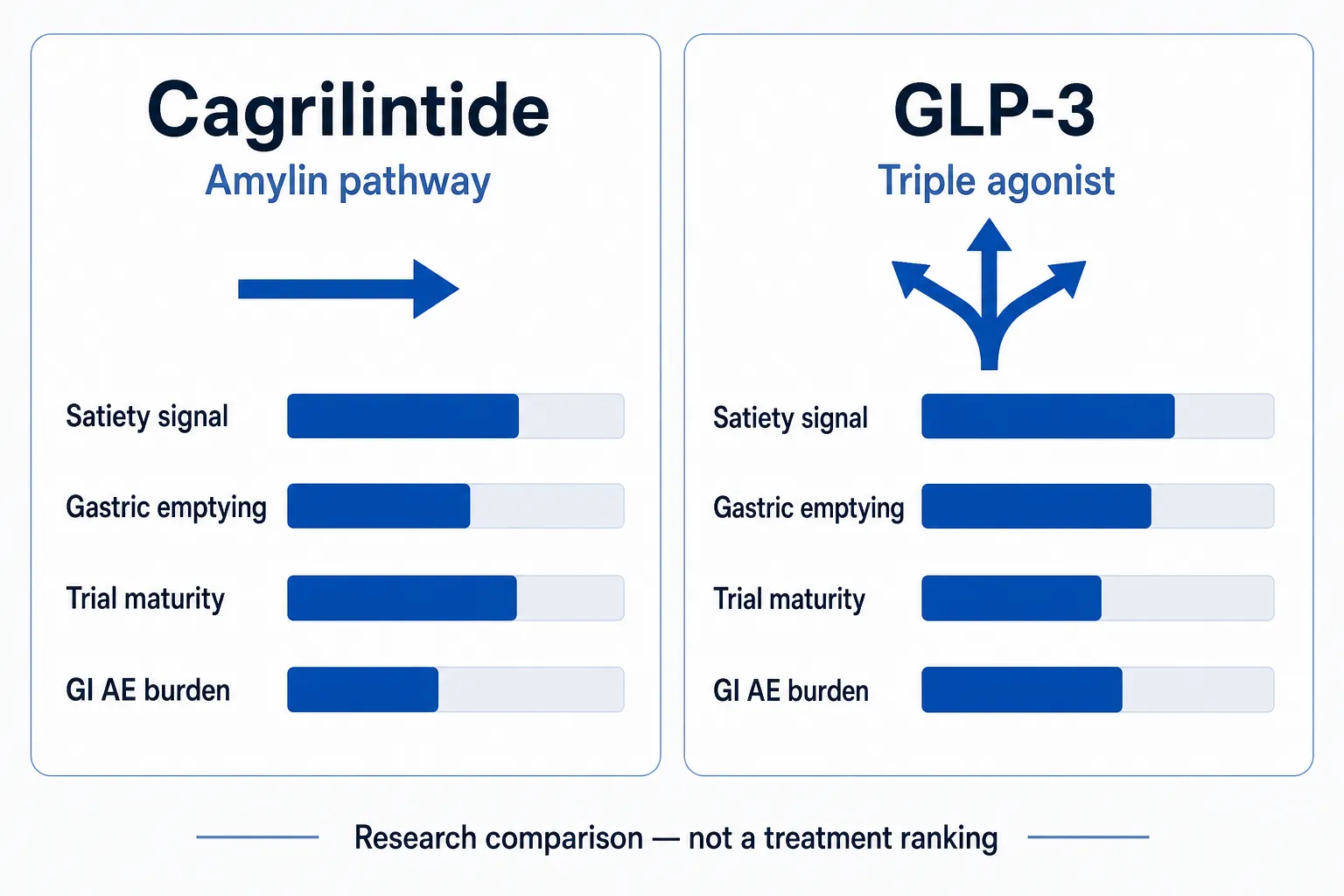
Amylin-pathway pharmacology emphasises satiety signalling and gastric-emptying biology; incretin/glucagon triple-agonist framing adds nutrient handling and energy-expenditure hypotheses. Those are not mutually exclusive research programmes, but they generate different expected AE shapes and different rationales for combination therapy. CagriSema answers a cagrilintide + semaglutide co-administration question. It does not license an improvised cagrilintide + GLP-3 research stack without new controls.
GI tolerability dominates both amylin-combination and incretin-class AE appendices. Vomiting rates in combination arms can exceed GLP-1 monotherapy in pooled summaries — a design fact for risk sections, not a reason to invent personal “anti-nausea peptide stacks.” Escalation schedules exist in trials because exposure tolerability is part of the pharmacology.
For female cohorts specifically, document menstrual status, pregnancy exclusion criteria (standard in these programmes), and any peri-menopausal stratification if composition is a primary interest. Gluteofemoral versus visceral depot differences mean two women with identical scale loss can show different metabolic-risk trajectories — another reason DXA or imaging secondaries beat scale-only narratives.
For researchers in the UAE, keep approved medicines (when discussed) clearly separated from research-use catalogue materials. Emirates Peptides public copy uses GLP-3 for the triple-agonist research class. Comparison depth lives in GLP-3 vs tirzepatide vs semaglutide and the GLP-3 dosing protocol .
Practical research checklist before claiming a “women’s weight-management peptide comparison” is complete: (1) receptor class map, (2) monotherapy vs combination arm clarity, (3) sex enrolment and any stratified tables, (4) composition endpoints, (5) GI AE rates with exposure schedule, (6) explicit non-equivalence between approved medicines and RUO supply.
06b · Depth
Reading REDEFINE-style results into a research comparison memo
Percentages without study arms and analysis methods are incomplete.
REDEFINE 1 and REDEFINE 2 answer different population questions (without vs with type 2 diabetes). Pooling their headlines without labels creates false precision. Meta-analyses help orientation but still defer to primary tables for protocol writing.
When the research question is “amylin vs triple agonist,” build a two-column mechanism memo first, then hang trial cards underneath each column. Resist the marketing urge to declare a winner for women. The scientifically honest output is a decision tree: satiety/amylin hypothesis → cagrilintide literature; multi-incretin/glucagon hypothesis → GLP-3 cluster; combination with GLP-1 medicine → CagriSema literature only.
Discontinuation and rescue rules in Phase 3 programmes affect mean weight change. Intention-to-treat analysiss keep participants in the analysis after deviations; trial-product estimands answer a different counterfactual. Quoting a number without the estimand is incomplete scientific communication — especially when AI engines scrape the percentage alone.
For EP catalogue users in the UAE, the actionable checklist is documentation and category clarity: HPLC/COA on receipt, cold-chain in summer, keep approved-medicine literature distinct from research-use catalogue items, and use the dosing protocol plus comparison pillars for deeper GLP-3 context. None of those steps is a use instruction.
Women-focused framing here means reading trial demographics and body-composition covariates carefully — not turning research compounds into gendered therapeutics.


09 · FAQ
Frequently asked questions
Which is better for women — GLP-3 or Cagrilintide?
Neither is framed here as a recommended therapy. They are different receptor classes with different trial programmes. Women-focused reading means examining demographics and covariates — not crowning a winner.
Is CagriSema the same as Cagrilintide alone?
No. CagriSema refers to co-administered cagrilintide with semaglutide. Monotherapy and combination arms answer different questions.
Is GLP-3 an approved weight-loss medicine in the UAE?
Emirates Peptides supplies GLP-3 as research-use material. Approved prescription medicines are a separate regulatory category. See local MOHAP/medical guidance for licensed products — not this research article.
Why do obesity trials enrol so many women?
Recruitment patterns in contemporary obesity programmes often yield majority-female samples. That improves precision for women as a group in those trials, but subgroup analyses are still required for sex-specific inference.
Can researchers stack Cagrilintide with GLP-3 because CagriSema worked?
No automatic transfer. CagriSema pairs cagrilintide with semaglutide, not with a triple agonist. New combinations need dedicated experimental controls.
Where is the GLP-3 reconstitution and schedule literature?
See the Emirates Peptides GLP-3 dosing protocol for research-framed reconstitution and schedule discussion.
What language should protocols use for female cohorts?
Prefer body-weight change, composition imaging, and appetite-signalling endpoints. Avoid disease-treatment claims and personal-use instructions.
Are GI side effects worse in women?
Some incretin programmes report sex differences in adverse-event rates; check each trial’s safety appendix. Do not generalise without the primary table.
10 · References
References and research sources
- Coadministered cagrilintide and semaglutide in adults with overweight or obesity (REDEFINE 1). PMID 40544433
- Cagrilintide–semaglutide in adults with overweight or obesity and type 2 diabetes (REDEFINE 2). PMID 40544432
- Phase 2 CagriSema in type 2 diabetes. Lancet Diabetes Endocrinol. PMID 37364590
- Meta-analysis: cagrilintide alone and CagriSema. PMID 39676787
- Amylin physiology and analogue development reviews (verify selected review PDF).
- Emirates Peptides. GLP-3 dosing protocol.
- Emirates Peptides. GLP-3 vs tirzepatide vs semaglutide.
- Emirates Peptides. Cagrilintide UAE guide.
- Emirates Peptides. What is GLP-3?
- Emirates Peptides. Weight-loss peptides complete guide.
- ClinicalTrials.gov REDEFINE registrations (NCT05567796, NCT05394519) — verify statuses.
- Incretin / glucagon dual and triple agonist mechanism reviews (verify current annual reviews).
- Sex differences in obesity pharmacotherapy adverse events — use trial-specific safety appendices.
- Peptide storage — EP storage guide.
Glossary
| Term | Definition (research context) |
|---|---|
| Amylin analogue | Peptide tool mimicking amylin satiety signalling; cagrilintide is long-acting. |
| CagriSema | Co-administered cagrilintide + semaglutide in published programmes. |
| GLP-3 | EP public name for triple-agonist research class (GLP-1/GIP/glucagon). |
| Intention-to-treat analysis | Analysis style used in many modern obesity Phase 3 reports; includes participants after some protocol deviations. |
| RUO | Research use only. |
Related reading
Disclaimer: For laboratory research use only. Not medical advice. Not for human consumption. Approved medicines discussed only as published literature context.
Was this article helpful?

🔬 Related Research Peptides
Explore Research-Grade Peptides
HPLC-verified, lab-tested peptides for your scientific research. Fast delivery across the UAE.
Browse All PeptidesRelated Articles




Emirates Peptides Research Team
A dedicated coalition of biochemists and clinical researchers focusing on advanced peptide synthesis and pharmacological applications. All data is verified against current clinical trials.
FROM INSTAGRAM